Each day leading up to the 2026 NFL Draft — April 23-25 — TeamFB7 will break down a different team’s biggest draft need and the best selection to address it. Granted, teams will most often use their first-round pick on the best available player/value and not necessarily always their biggest need, so this isn’t going to compile together into a mock draft in the end. It’s more a breakdown of how each team could best address its most paramount priority if it chooses.
The Baltimore Ravens are among the NFL teams truly all-in on the 2026 season.
That’s not to say most of the league isn’t optimistic and intent on contending this year, but there’s an extra sense of urgency for a few teams for one reason or another.
The Los Angeles Rams want to maximize whatever is left of their Super Bowl window with 38-year-old quarterback and reigning MVP Matthew Stafford. The Buffalo Bills are going to want to justify the divisive decision to fire longtime head coach Sean McDermott for falling short of the Super Bowl too many seasons in QB Josh Allen’s prime. The Dallas Cowboys and 83-year-old owner Jerry Jones, well, they treat every season like it’s an all-in hand of Texas Hold’em.
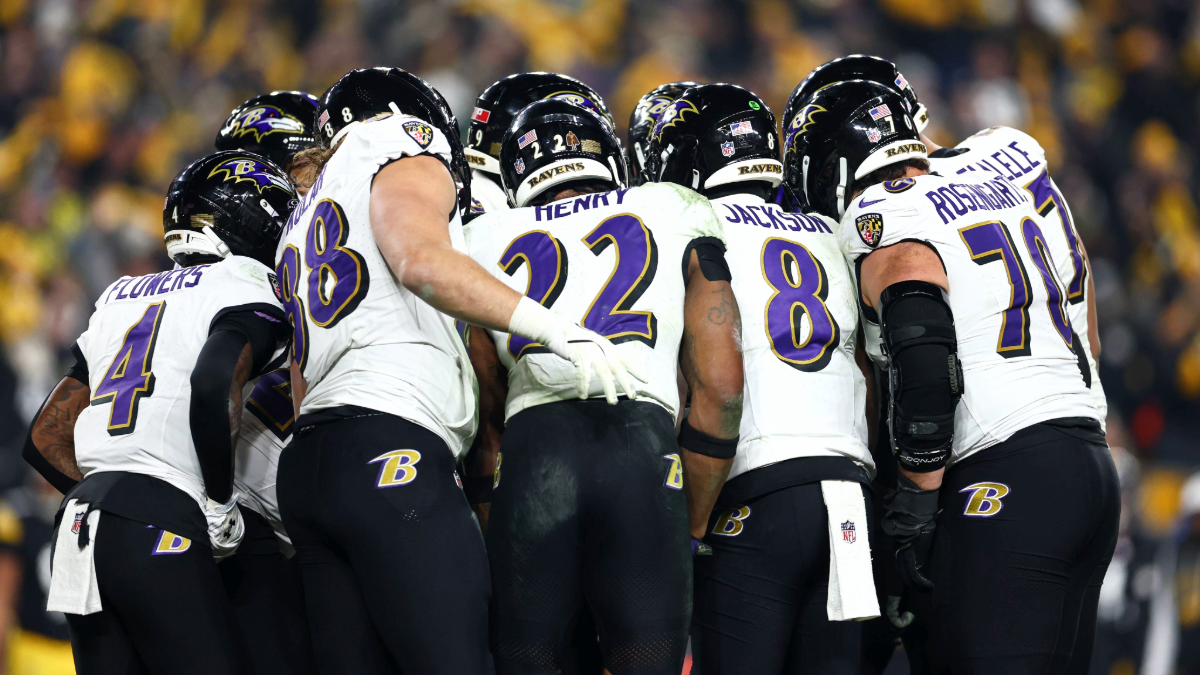
And then there’s the Ravens, who much like the Bills, made a bold decision to fire longtime head coach John Harbaugh after 18 seasons, a Super Bowl title and fairly consistent success.
Whether there was any real truth to the reports of friction between Harbaugh and star quarterback Lamar Jackson, which both have strongly denied, or owner Steve Bisciotti simply felt Harbaugh had maxed out in Baltimore and it was time for a new voice in the room, that move nonetheless puts extra pressure on this 2026 Ravens team.
(Bisciotti no doubt had some regrets about letting former defensive coordinator Mike Macdonald get out of the building and build a Super Bowl champion as head coach in Seattle in two quick years.)
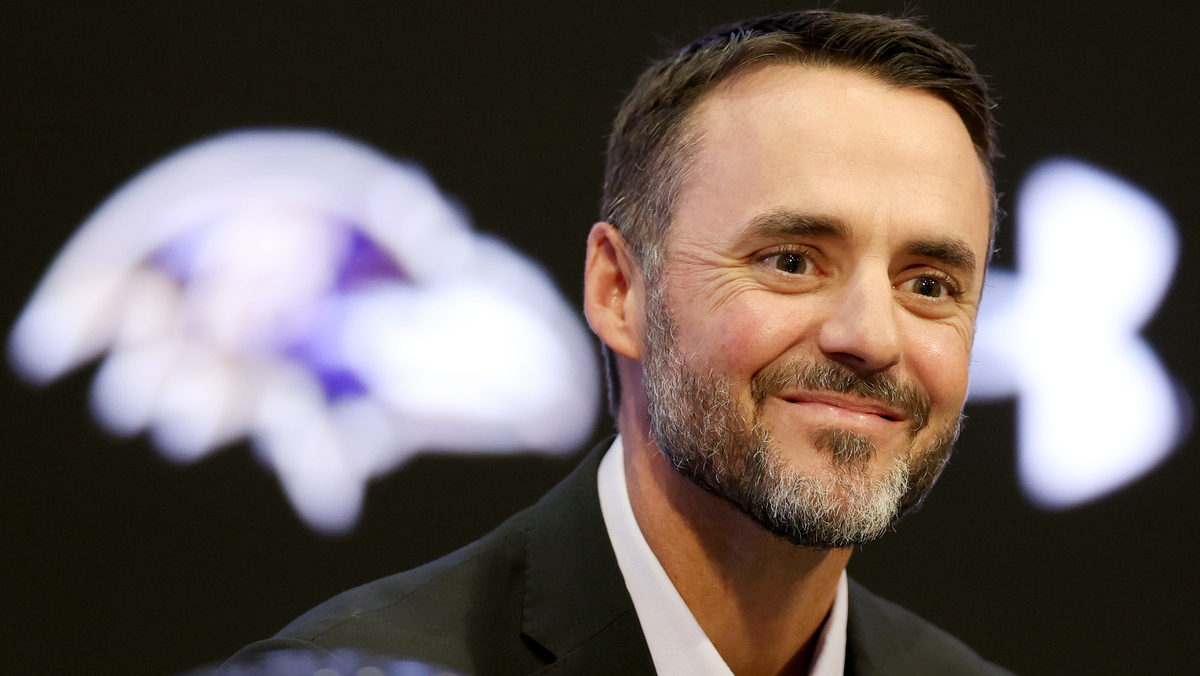
Maybe the players won’t feel it, necessarily, but Bisciotti is going to want to be validated for the decision to make a change and hire Jesse Minter, the Los Angeles Chargers’ impressive defensive coordinator the last two seasons and a former Ravens assistant, as a first-time head coach.
And thus, Ravens general manager Eric DeCosta, the rest of the front office and on down is going to feel that same pressure.
Jackson probably feels his own extra motivation as a two-time NFL MVP who bristled at the frustration that rumbled within the fan base as his persistent injuries limited and sidelined him last season.
So, yes, these Ravens are all-in.
They showed that in initiating the short-lived trade to send two first-round draft picks to the Las Vegas Raiders for star edge rusher Maxx Crosby, before backing out of the deal over concerns raised about Crosby’s surgically-repaired knee during their physical evaluation.
(Although some found the move highly curious especially when the Ravens immediately pivoted to sign star free agent edge rusher Trey Hendrickson while addressing the same need yet retaining those first-round picks).
So now the Ravens get to further add to their offseason upgrades with that No. 14 overall pick in the upcoming draft — along with 10 other picks.
Here are the Ravens’ 11 total selections in the draft next week: 1st round (14th overall), 2nd (45th), 3rd (80th), 4th (115th), 5th (154th), 5th (162nd), 5th (173rd), 5th (174th), 6th (211th), 7th (250th) and 7th (253rd).
For our purposes here, though, we’re focused on that first-round selection.
What Are Ravens’ Biggest Needs In 2026 NFL Draft?
On the offensive side, what the Ravens need more than anything is for Jackson to stay healthy after being limited to 11 full games and parts of two others last season. Leaning on a healthy Jackson and running back Derrick Henry for 17 games is the ideal identity of this team.
As for the draft, though, three positional needs stand out most on offense for Baltimore.
1. Wide Receiver: Zay Flowers is good WR1 and coming off a big season (86 catches for 1,211 yards and 5 TDs), but two of the Ravens’ top four pass-catchers last season were tight ends. One of them, Isaiah Likely, departed in free agency to follow Harbaugh to the Giants. And the team’s second leading wide receiver, well-past-his-prime veteran DeAndre Hopkins (22-330-2) remains a free agent and wasn’t the answer anyway. That leaves Rashod Bateman (19-224-2 in 13 games) and Devontez Walker (6-136-3 in 12 games) next on the depth chart. That will absolutely have to be addressed in this draft (or with a late free agent signing).
2. Interior Offensive Line: Offensive tackles Ronnie Stanley and Roger Rosengarten are both well-regarded and under contract through 2027, but the interior of the line could use some attention. Three-time Pro Bowl center Tyler Linderbaum left in free agency for a record-setting deal with the Raiders. The Ravens signed former Colts reserve Danny Pinter (just 3 starts the last two seasons) and former Falcons reserve Jovaughn Gwyn (0 starts in three seasons), but that can’t be the full replacement plan for Linderbaum. The team also lost starting right guard Daniel Faalele to the Giants.
Baltimore did splurge in free agency on guard John Simpson, a starter for the Ravens in 2023 who returns after two seasons as the Jets’ left guard, with a 3-year, $30-million deal. Meanwhile, fellow guard Andrew Vorhees returns after starting at left guard last season but with a low PFF grade of 54.6 that ranked 60th out of 81 qualifying OGs.
3. Tight End: With Likely (1,568 yards and 15 TDs in four seasons with the Ravens) gone and three-time Pro Bowl TE Mark Andrews turning 31 years old this season and coming off a career-low 422 receiving yards in 17 games, Baltimore will likely want to draft some reinforcement and potential for the future from what is a rather deep and intriguing tight end class.
Ravens’ biggest defensive needs
As for the defensive side, besides depth needs at a few spots, there’s really one key position to upgrade early in the draft.
1. Edge Rusher: Signing Hendrickson, who led the NFL with 35 sacks over the 2023-24 seasons in Cincinnati before being limited by injury last year, was a big first step here. If he returns to his past form at 31 years old (32 in December) and coming off core muscle surgery, that’s a transformative addition to a defense that ranked tied for 28th in the NFL with just 30 sacks last season. But the depth chart — led by Tavius Robinson (4.5 sacks in 10 games last season) and Mike Green (3.5 sacks as a rookie) — still needs more work.
Who Should Ravens Select In First Round Of 2026 NFL Draft?
So that brings us to our recommendation for what Baltimore should do with that No. 14 overall pick.
And that, of course, depends on who is available.
First, there isn’t a true center projected to go until the late second round of this draft with Iowa’s Logan Jones considered by many the top prospect at the position. So while Baltimore may well want to prioritize that position on Day 2, there’s not a fit on Day 1.
(In his new mock draft released this week, ESPN’s Mel Kiper Jr. projects the Ravens to take Utah offensive lineman Spencer Fano — considered a swing tackle/guard with the potential of maybe also developing him into a center. That’s all well and good, and he could be an immediate upgrade over Vorhees at one of the guard spots, but that’s not solving Baltimore’s immediate need for a center. If there wasn’t so much riding on this season, as laid out up top, Fano would make more sense to us as an immediate option at guard with center a potential project for the future. But the Ravens can and should draft a true center on Day 2 and aren’t going to want to double up early on interior offensive linemen with other needs to address. There are more logical picks for Baltimore here.)
Moving on, we don’t think any of the top three wide receivers — Ohio State’s Carnell Tate, USC’s Makai Lemon or Arizona State’s Jordyn Tyson — will still be available at No. 14 with so many WR-needy teams picking ahead of Baltimore. (Especially with the Rams at No. 13 almost surely taking a WR if possible).
If one of those three is on the board, that should be an easy decision — getting Jackson another top-end playmaker to target in the passing game. Baltimore could also trade back a few picks and target the next tier of WRs (or just reach at No. 14).
In their latest mock drafts released this week, both Kiper and The Ringer’s Todd McShay vaulted Indiana WR Omar Cooper Jr. to No. 16. He was previously considered a fringe late-first/second-round pick but has surged through the pre-draft process. Cooper had 69 catches for 637 yards and 13 TDs on Indiana’s run to the national championship.
Cooper’s potential is certainly compelling and he ran a 4.42 40-yard dash at the NFL Scouting Combine, but this feels too early for him. He’s not a physical mismatch at 6-foot, 199 pounds, and he often wasn’t even the No. 1 WR on his own Hoosiers team. He had under 60 receiving yards in nine of his 15 games last season and 3 or fewer receptions in eight games.
There’s going to be high-upside wide receivers available in the second round, and the Ravens could still just opt to bring in an unsigned veteran like Stefon Diggs or Keenan Allen as a temporary upgrade at the position for 2026.
This is getting into the range where Oregon’s Kenyon Sadiq, the top tight end prospect in the draft, will start meriting consideration — and several notable mock drafts indeed have Baltimore taking him here. But we like the depth of tight end talent in this draft and that’s not an urgent enough priority for the Ravens on which to use the No. 14 pick, as they just gave Andrews a three-year, $39.3-million extension through 2028 with $26 million guaranteed.
That leaves edge rusher, and here the Ravens will find themselves with plenty of options.
McShay now projects the Ravens to draft Miami EDGE Rueben Bain Jr. here. Given that it seems NFL teams already knew about the 2024 car accident Bain was in that left one of his passengers in a coma before she later died, it seems less likely that the public revelation of that matter this week will dramatically impact his draft outcome. (Especially since charges were dropped and the victim’s family has publicly wished Bain well in his future and career.)
With that said, we’ll still be surprised if he’s available at No. 14. If he is, then again that would be an easy decision for Baltimore (assuming it has vetted the car accident and is comfortable with Bain’s character regarding the matter).
If not, Baltimore could also tap into the next tier of edge rushers, who will start coming off the board in the middle of the first round — including Bain’s Miami teammate Akheem Mesidor.
So to summarize, here’s what the Ravens should do at No. 14:
1. Hope that indeed Bain or Tyson/Lemon somehow fall to them — there’s almost no chance both scenarios unfold — and consider it a fortunate win to address one of their biggest needs with one of the top top-tier prospects at those positions.
2. Honestly, if that doesn’t materialize (and we don’t expect it to), the Ravens should try to trade down — one of the offensive tackle-needy teams may be eager to move up — and target Texas A&M wide receiver KC Concepcion. A dynamic field-stretcher out of the slot and elite return specialist, Concepcion had 61 receptions for 919 yards and 9 TDs last season and returned two punts for TDs. Or Cooper or Washington’s Denzel Boston, etc. Sure, the Ravens could sign one of the remaining veteran free agents, but none offer top-end upside anymore (or elite speed, unless Tyreek Hill returns to form after his gruesome knee injury), and honestly, Baltimore needs to add two WRs behind Flowers atop the depth chart. Get the best they can in the draft and then sign a veteran.
3. If unable to trade down and not wanting to reach at WR, take Mesidor. He may not have the untapped potential or ceiling of some of the other EDGE prospects, but at 25 years old and fresh off helping Miami to the national championship game with 63 tackles, 17.5 tackles for loss, 12.5 sacks and 55 total pressures (with the third-highest PFF grade — 92.5 — of any college EDGE) he’s the most ready to make an impact on Day 1, which is what Baltimore needs. And this is not a position they’re going to find great value in with that second-round pick.
While our assignment here is just to map out the first-round picks, we’ll put in some overtime quickly and say that the Ravens should take a true center on Day 2 of the draft. There’s a few options between Iowa’s Jones, Florida’s Jake Slaughter and others. Getting one of the top ones will likely require at least a third-round pick.
That’s the only reason we didn’t endorse taking Fano, the versatile Utah offensive lineman in the first round, even if he’s a decent value at that slot. The Ravens need a true center able to compete for the starting job in 2026 (Fano has never played the position), and taking two interior OL in the first three rounds leaves other key needs unaddressed.
Baltimore can find nice value at offensive guard in the second round if it wants to have an insurance plan/upgrade for Vorhees — Georgia Tech’s Keylan Rutledge, Texas A&M’s Chase Bisontis and Oregon’s Emmanuel Pregnon to name a few. Or the Ravens could trade up from No. 45 into the back of that second tier of edge rushers (Clemson’s T.J. Parker if they’re lucky, more likely Texas A&M’s Cashius Howell or Oklahoma’s R Mason Thomas).
And then they can look for a tight end in rounds 4-5 — there’s a bunch of value to be had there as we broke down earlier this week.