

Aaron Rodgers can be a polarizing personality for football fans, but there’s no denying he’s one of the all-time greats, and it’s time to fully evaluate his place in NFL history.
Aaron Rodgers took most of the offseason before finally letting the Pittsburgh Steelers know he would return for another year. But he in turn quickly eliminated further suspense about his future by announcing last week that this would be his final NFL season.
If so, it’s unlikely he does anything this year to substantially affect his place in NFL history.
More to point, nor does he need to …
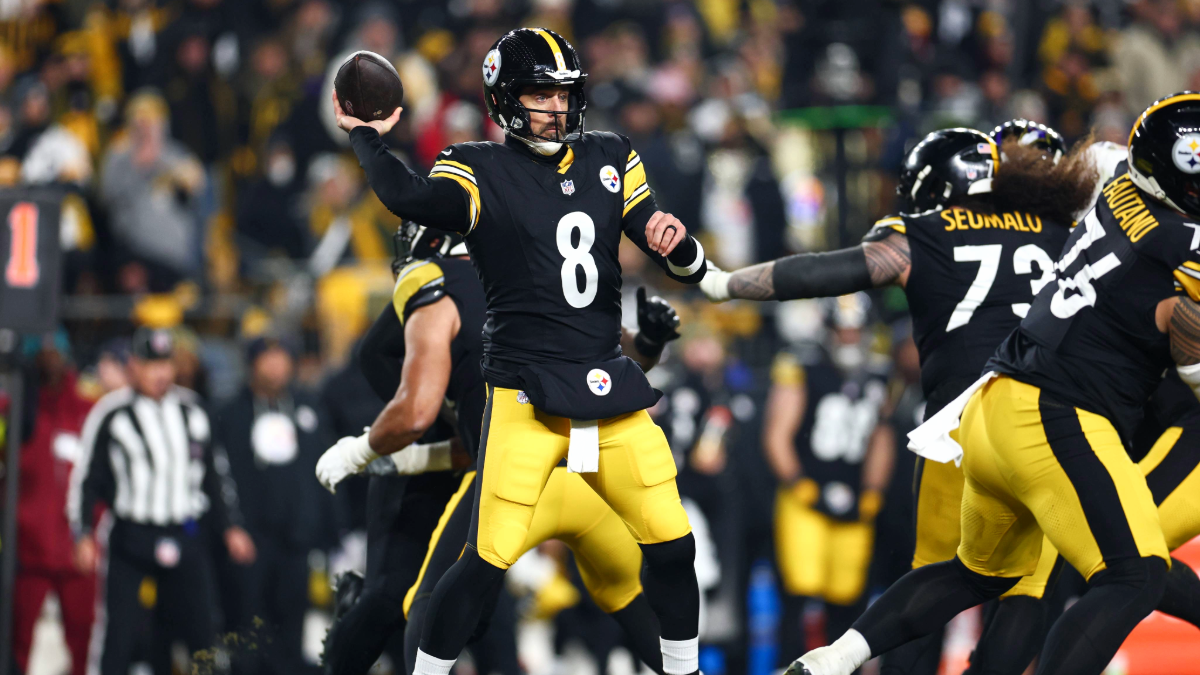
The Steelers backed into the playoffs last year before yet another first-round exit, and while they may be a little better this season, there’s no amount of squinting that can make them look like Super Bowl contenders.
Rodgers was solid enough, though, passing for 3,322 yards, 24 touchdowns and 7 interceptions in 16 games in his first season with the team.
Those numbers could even spike this year now that he’s free from the constraints of an Arthur Smith offense. New head coach Mike McCarthy, with whom Rodgers won a Super Bowl in Green Bay, and new offensive coordinator Brian Angelichio, formerly the Vikings passing game coordinator, are expected to deploy a more aggressive aerial attack in Pittsburgh.
With that, the addition of Michael Pittman Jr. gives Rodgers the true No. 2 WR alongside DK Metcalf that was so glaringly lacking last season.
The offensive line has some major questions, but nonetheless Rodgers is plenty capable of delivering a fitting farewell tour to his 22-year NFL career.
Again, though, Rodgers’ legacy is unlikely to change much in 2026, so we can go ahead and evaluate it now.
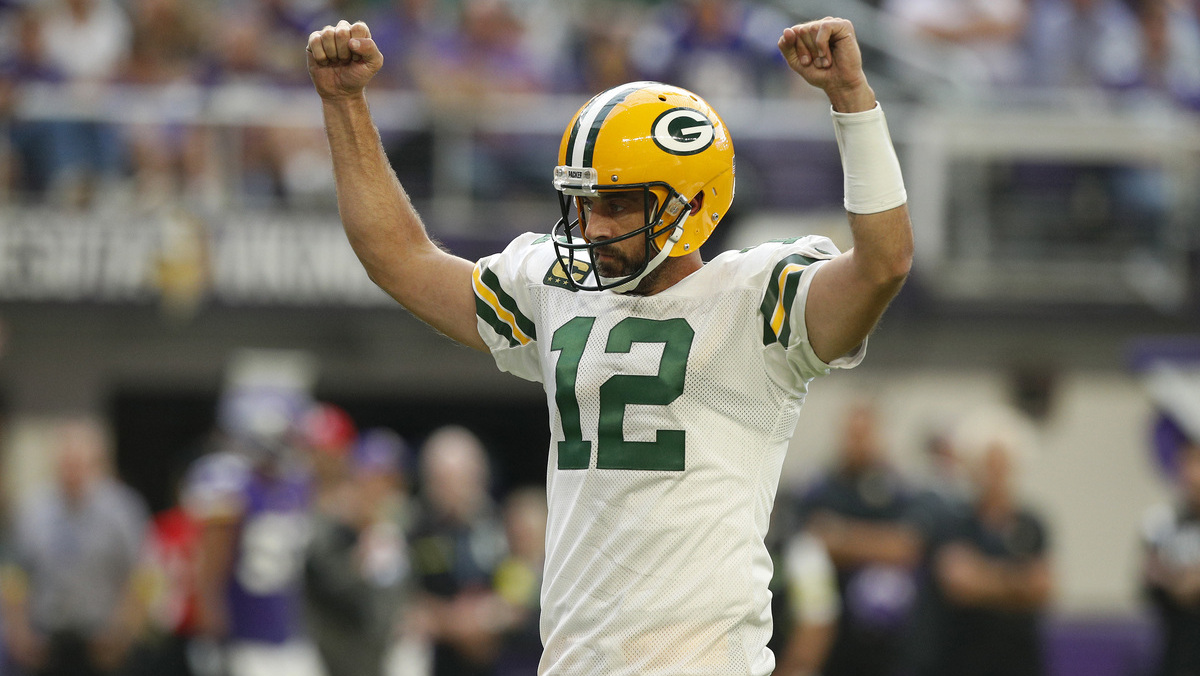
Sizing Up Aaron Rodgers’ NFL Legacy
– He ranks fifth in NFL history with 66,274 career passing yards and is unlikely to move up, sitting 5,564 yards behind his old Packers teammate Brett Favre and 5,666 yards behind Peyton Manning for the next rungs on that elite list. More notably, he’s only 1,758 yards ahead of Rams QB Matthew Stafford, who just signed a contract extension through the 2027 season. So Rodgers will almost assuredly end up 6th on the all-time yardage list with no one else presently in range of passing him after Stafford.
| NFL All-Time Passing Leaders | Total Passing Yards | Years |
|---|---|---|
| 1. Tom Brady | 89,214 | 2000-22 |
| 2. Drew Brees | 80,358 | 2001-20 |
| 3. Peyton Manning | 71,940 | 1998-2015 |
| 4. Brett Favre | 71,838 | 1991-2010 |
| 5. Aaron Rodgers | 66,274 | 2005- |
| 6. Matthew Stafford | 64,516 | 2009-25 |
– He ranks fourth with 527 career touchdown passes and should move up to third as he enters the season 12 behind Manning and a comfortable 104 ahead of Stafford (unless the Rams QB plays beyond 2027).
| NFL All-Time Passing Leaders | Total Passing TDs | Years |
|---|---|---|
| 1. Tom Brady | 649 | 2000-22 |
| 2. Drew Brees | 571 | 2001-20 |
| 3. Peyton Manning | 539 | 1998-2015 |
| 4. Aaron Rodgers | 527 | 2005- |
| 5. Brett Favre | 508 | 1991-2010 |
– Had Rodgers not lost the entire 2023 season (his first of two with the New York Jets) to a torn Achilles, or had to sit behind Favre his first three seasons, he’d be even higher on both lists — at least second in TDs and likely third in yards without the injury (or second without the lost years). But most every NFL career comes with such caveats.
– Rodgers is 163-93-1 in games he started, which ranks sixth all-time for regular-season wins by a QB. He’s two behind Ben Roethlisberger and nine behind Drew Brees, with a realistic chance to challenge for fourth on the list behind Brady (251), Favre (186) and Manning (186). Stafford is 43 behind him and the only active starting quarterback in the league with more than 100.
| NFL All-Time Winningest QBs | Career Regular-Season Record | Years |
|---|---|---|
| 1. Tom Brady | 251-82 (.754) | 2000-22 |
| T2. Peyton Manning | 186-79 (.702) | 1998-2015 |
| T2. Brett Favre | 186-112 (.624) | 1991-2010 |
| 4. Drew Brees | 172-114 (.601) | 2001-20 |
| 5. Ben Roethlisberger | 165-81-1 (.670) | 2004-21 |
| 6. Aaron Rodgers | 163-93-1 (.636) | 2005- |
– Rodgers has four regular-season MVPs — alone in second place all-time behind only Manning’s 5.
| NFL Multi-Time MVPs | Total MVP Awards | Years |
|---|---|---|
| 1. Peyton Manning | 5 | 1998-2015 |
| 2. Aaron Rodgers | 4 | 2005- |
| T3. Tom Brady | 3 | 2000-22 |
| T3. Brett Favre | 3 | 1991-2010 |
| T3. Johnny Unitas | 3 | 1956-73 |
– Rodgers played in five NFC championship games but just won Super Bowl, after the 2010 season, leading the Packers to a 31-25 win over the Steelers while taking MVP honors with 304 yards, 3 TDs and 0 INTs.
So where does he rank all-time, beyond purely the statistical lists?
The numbers are undeniable. Even if the game has changed so much that it’s impossible to compare quarterbacks from different eras based purely on numbers, Rodgers’ company is clearly elite and exclusive as a top 3 quarterback from his “era” along with Brady and Manning.
Super Bowl “rings” will always be a part of the argument about all-time greats — but how much so is very subjective.
Certainly, Brady winning seven Super Bowls deservedly puts him in a class of his own. Dan Marino never winning one fairly affects his legacy. But nitpicking between winning one vs. winning two, etc., seems unnecessary. Eli Manning isn’t a better quarterback than Rodgers, for instance.
Rodgers had some rough moments in some of the NFC championship game losses (and other playoff exits), but he also gave those Packers teams every chance to make a couple more Super Bowls. He threw for 287 yards, 3 TDs and 1 INT as Green Bay gave up 44 points to Atlanta in a blowout loss after the 2016 season, and he passed for 346 yards, 3 TDs and 1 INT in a 31-26 loss to Tampa Bay after the 2020 season. He wasn’t the reason the Packers fell short in those games is the point.
In 23 career postseason games, Rodgers averaged 262.6 passing yards per game with 45 TDs, 14 INTs and 4 rushing TDs. That’s pretty damn good.
Lastly, to get even more subjective, there is simply the indelible impression a player leaves that endures years beyond his career.
Rodgers was one of the most aesthetically pleasing passers the game has ever seen. The zip and accuracy with which he zinged perfect passes into tight spaces or dropped in dimes with deft touch were as good if not the very best of any quarterback in his era.
In his late prime, from 2018-21, he reeled off four straight seasons with at least 4,000 passing yards and 25 TDs while throwing 5 or fewer interceptions. In his final two MVP seasons, during which he turned 37 and 38 years old, he had passing lines of 4,299-48-5 and 4,115-37-4.
Simply incredible.
Tom Brady only had one full season in his illustrious career with fewer than 5 interceptions (and another with 2 picks in 12 games played). Peyton Manning never threw fewer than 9 interceptions in any season.
Rodgers also has the two best single-season quarterback ratings in NFL history — 122.5 in 2011 and 121.5 in 2020.
We could go on and on — like the fact that Rodgers holds what is believed to be the NFL record for most “Hail Mary” touchdown passes with four. The most iconic of those was the 61-yard game-winner to Richard Rodgers as time expired to beat the Lions in October of 2015.
It’s now time to stir the debate and actually break down Rodgers’ ranking among the all-time great quarterbacks, but what is not debatable is that he has authored one of the most legendary careers in NFL history.
Ranking The Greatest NFL Quarterbacks All-Time
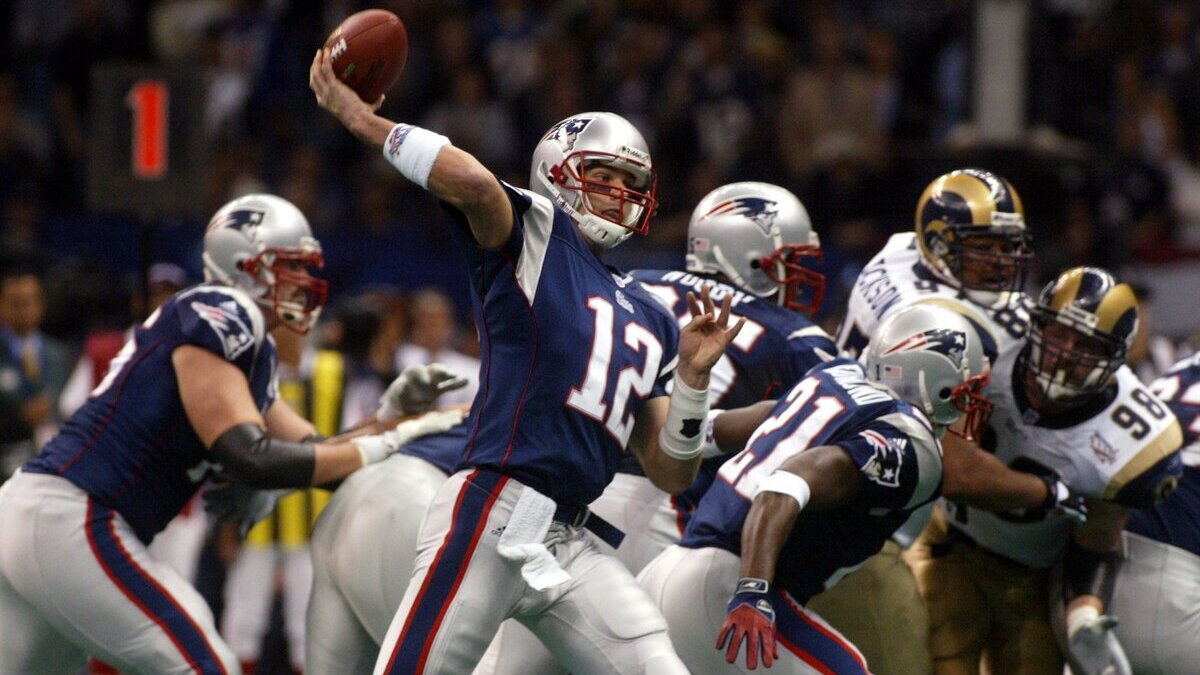
1. Tom Brady
This is inarguable.
As displayed above, Brady is the NFL’s all-time leader in passing yards (89,214), touchdowns (649) and wins by a wide margin, has the best winning percentage (.749) of any QB with at least 150 starts, his 35 postseason wins is more than double that of any other quarterback in history, his seven Super Bowl rings are three more than any other QB and his five Super Bowl MVPs also stand alone.
His 10 Super Bowl appearances, 14 conference championship games and 15 Pro Bowl selections are also records while he’s the only quarterback to win a Super Bowl in three different decades.
That’s more than enough to make the point.
But we’ll keep going anyway.
Brady won three regular-season MVPs, becoming the oldest to win the award at age 40 and was later the oldest Super Bowl MVP at 43. He was somehow still one of the best quarterbacks in the NFL in his final season at age 45, throwing for 4,694 yards, 25 touchdowns and 9 interceptions in 2022.
Not only is he the greatest QB of all-time, he’s one of the most legendary stories in sports history period after turning himself from a sixth-round draft pick (No. 199 overall) into all of this.
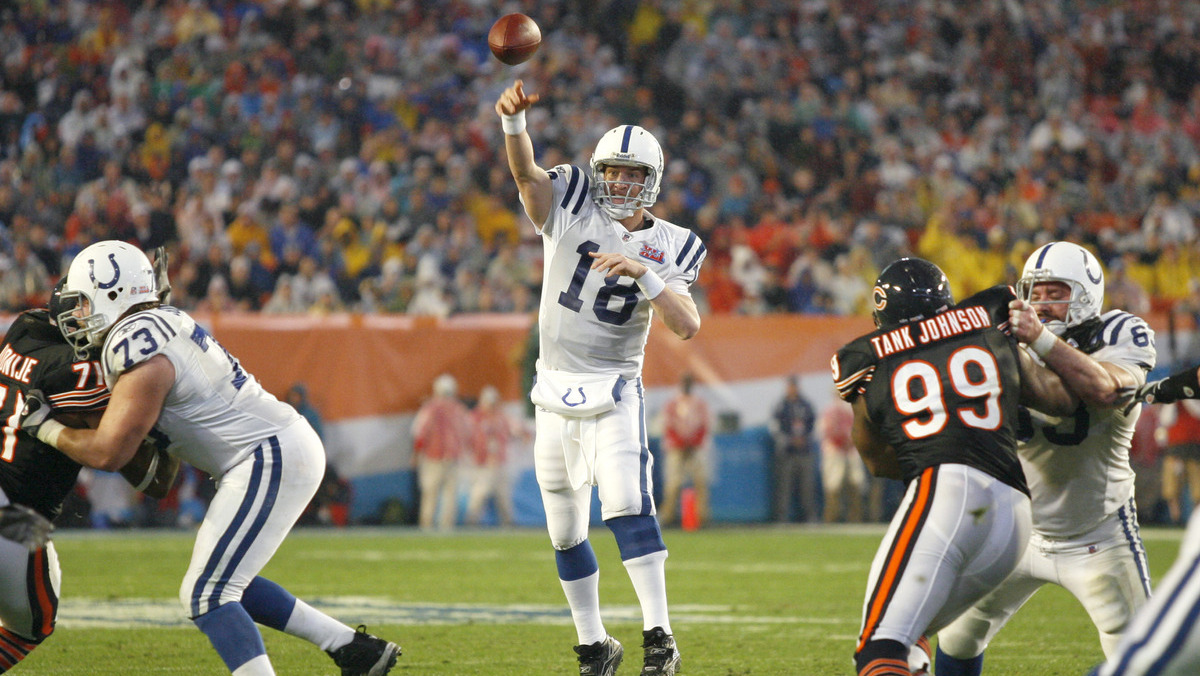
2. Peyton Manning
Manning’s Colts and Brady’s Patriots were the NFL’s preeminent national rivalry for more than a decade, and while Brady ended up with more rings, Manning piled up the hardware with an NFL-record five MVP awards.
Manning ranks third all-time in passing yards (71,940) and touchdowns (539), having held the top spot in both before Brady and Drew Brees passed him. He’s tied for second all-time with 186 regular-season wins.
Manning still holds the NFL’s single-season records for passing yards (5,477) and touchdowns (55), among other marks.
And he and Brady are the only two quarterbacks to lead two different franchises to Super Bowl championships. Manning played in four Super Bowls, winning Super Bowl XLI with the Colts while taking MVP honors and then Super Bowl 50 with the Broncos in his final season.
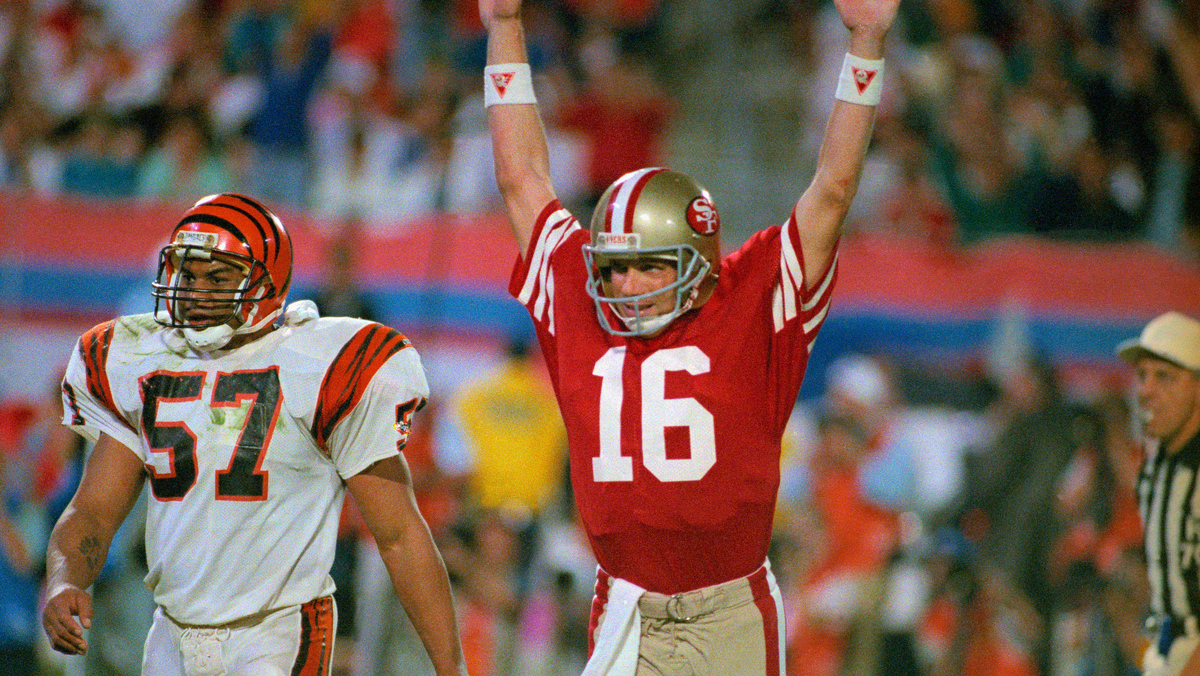
3. Joe Montana
Montana won’t win any statistical comparisons with the top quarterbacks of the last 25 years because of how much the game has changed from his era, but in the biggest moments all he did was win.
Montana helped launch one of the great “dynasties” in NFL history with the 49ers, winning four Super Bowls in the 1980s (after the 1981, 1984, 1988 and 1989 seasons), going 4-0 in the Big Game while becoming the first player to win three Super Bowl MVPs. His game-winning 92-yard drive to beat the Bengals in Super Bowl XXIII cemented his status as one of the most clutch performers in NFL lore.
After missing the entire 1991 season and most of 1992 season recovering from an elbow injury, Montana was traded to Kansas City. In his first season there, at age 37, led the Chiefs to their first AFC championship game appearance (though the team had played in Super Bowls I and IV before the playoff format expanded). The Chiefs’ two playoff wins that year were more than the franchise had in the previous 23 years combined.
When Montana retired after the 1994 seasons, he ranked fourth all-time with 40,551 career passing yards and 273 touchdowns (with 139 interceptions). He was a two-time regular-season MVP.
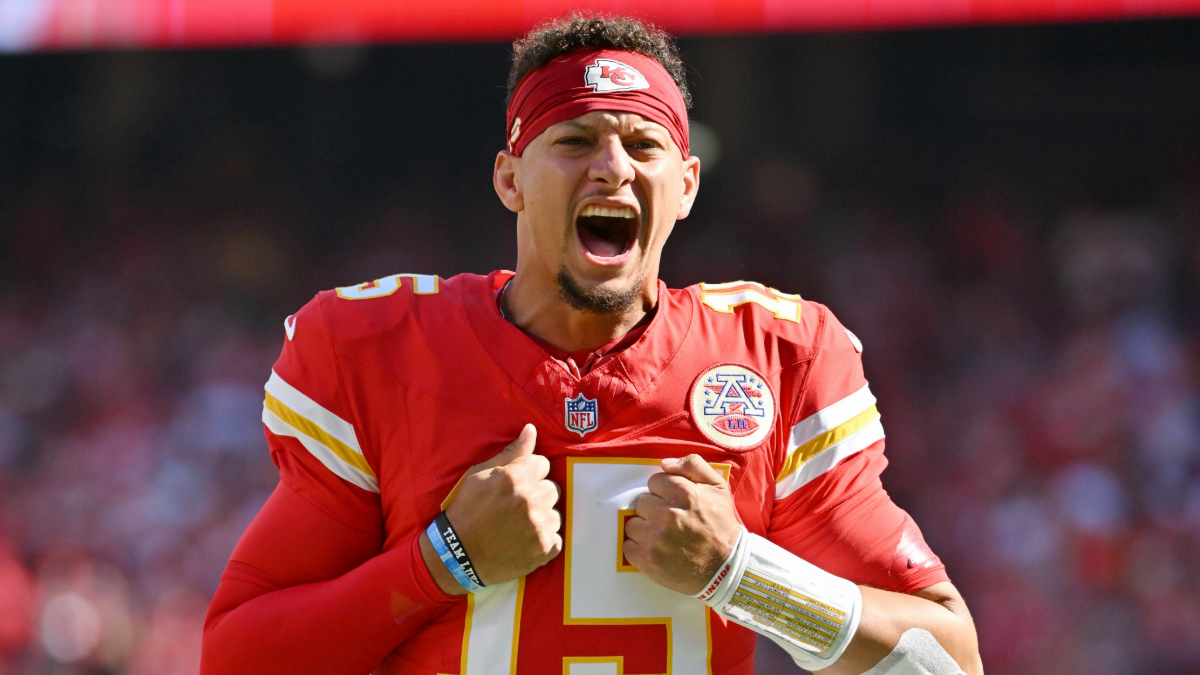
4. Patrick Mahomes
The only other active player and youngest in our top 10, Mahomes is just 30 years old.
But his status as a future Hall of Famer and all-time great is already secured, and it’s likely he ends up even higher on this list by the time he’s done.
In his first seven seasons as a starter — before Kansas City’s anomaly 2025 season — Mahomes led the Chiefs to seven straight AFC West titles, seven straight AFC championship game appearances, five Super Bowls and 3 Super Bowl wins.
He’s already won two MVPs and three Super Bowl MVPs — tied with Montana for second-most all-time behind Brady.
Mahomes already has 35,939 passing yards and 267 passing touchdowns (with 85 interceptions) and was the fastest player in league history to reach the 10,000, 20,000 and 30,000-yard milestones as well as 100, 200 and 250 touchdowns.
He and Manning are the only quarterbacks to ever throw for at least 5,000 yards and 50 touchdowns in a season.
Mahomes could retire tomorrow and merit remaining this high on the list, which makes it wild to consider what he could potentially achieve over the next 10 years.
He’s returning from season-ending knee surgery and the first true setback of his career, so 2026 will be a telling year for his trajectory moving forward, but it’s hard to imagine there aren’t plenty more feats and accolades to come.
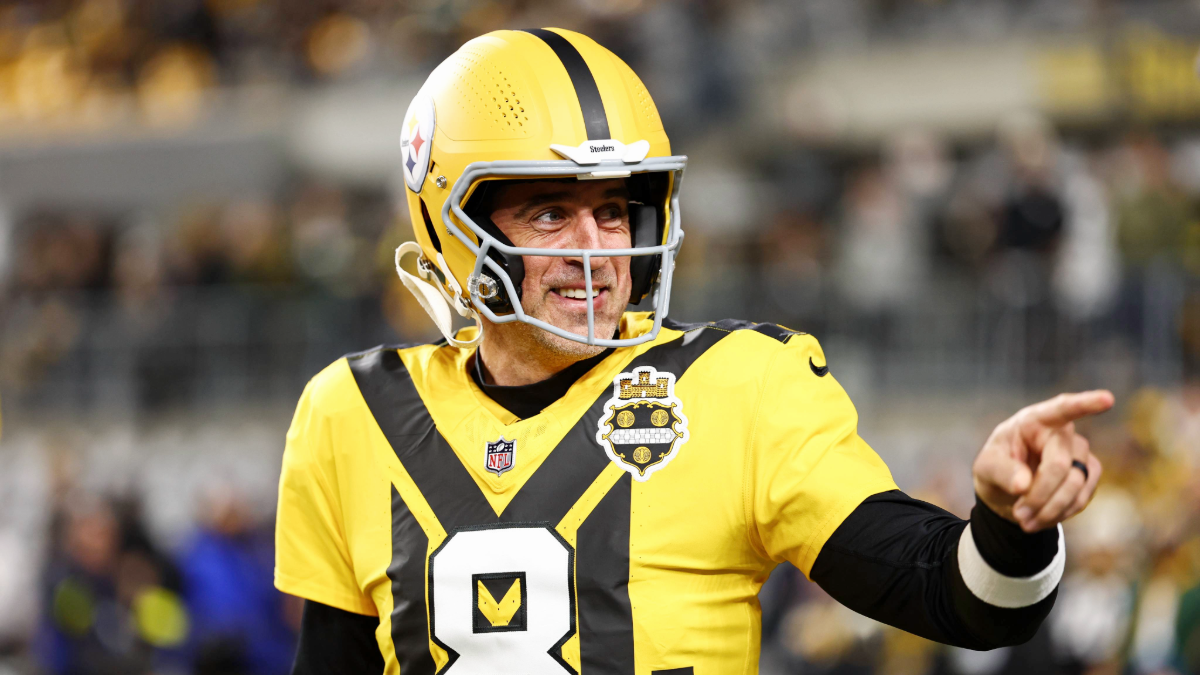
5. Aaron Rodgers
As to the question of whether Rodgers is a top-5 quarterback in NFL history, the answer is yes.
The historical stats are there. The MVPs. A Super Bowl MVP and championship. The aura that he carried through his extended prime. The 99.9th percentile arm talent.
All of it make the case pretty clear that he belongs in the most elite and exclusive company when it comes to his legacy in the game.
6. Brett Favre
Rodgers lands right ahead of his Hall of Fame predecessor in Green Bay.
When Favre retired in 2010 after 20 NFL seasons with the Falcons (barely), Packers, Jets and Vikings, he held the records for most career passing yards (71,838) and touchdowns (508) and quarterback wins (186), along with passing attempts and completions.
He still holds the record for most consecutive starts — 297 regular-season games, 321 including postseason.
Favre is the only player in league history to win three consecutive MVP awards, he played in two Super Bowls and won one championship with Green Bay.
He also holds the record for most career interceptions with 336 while being the ultimate “gunslinger” QB archetype.
7. Dan Marino
In the conversation for being one of the most talented passers the league has ever seen, Marino put up 2000s-era passing stats in the 1980s.
He led the NFL in passing yards five times between 1984-92 and retired after the 1999 season with most of the league’s passing records at the time, including career yards (61,361 — nearly 10,000 more than anyone else) and touchdowns (420 — 78 more than anyone). He also held the single-season marks as well with 5,084 yards and 48 TDs, achieved his second year in the league in 1984 when he won his lone MVP award.
He led the Dolphins to the Super Bowl that season — a 38-16 loss to Montana’s 49ers — but it would be the only one he’d play in while never winning that elusive championship.
Marino ultimately finished with an 8-10 postseason record, averaging 250.6 passing yards in those games with 32 TDs and 24 INTs.
8. John Elway
Elway was Marino’s top rival of that era, as both were selected in the same 1983 NFL Draft class. Ironically, both were also selected in the 1979 Major League Baseball draft by the Kansas City Royals.
While Marino came out on top in the statistical categories, Elway prevailed in the way of postseason success — eventually.
Elway led the Broncos to five Super Bowls, but the first three trips ended in blowout losses after the 1986, 1987 and 1989 seasons. He finally broke through at the end of his career, winning back-to-back Super Bowls after the 1997-98 seasons. He was named Super Bowl MVP in the final game of his storied career.
Elway won one regular-season MVP award and finished with 51,475 passing yards (second only to Marino at the time), 300 TDs (third at the time behind Marino and Fran Tarkenton) and 226 INTs.
9. Drew Brees
Brees overcame a slow start to with the Chargers and a career-threatening injury to his throwing shoulder after his fifth season to become one of the most prolific passers in league history with the Saints.
Brees ranks second only to Brady with 80,358 career passing yards and 571 touchdowns (with 243 interceptions), having briefly held the records for both. He led the NFL in passing yards seven times, touchdowns four times and completion percentage six times.
His 5,476 passing yards in 2011 was the NFL single-season record before Manning later passed it, and Brees’ 74.4% completion rate in 2018 remains a single-season record.
His 67.7% career completion rate is the best of any retired quarterback and presently third behind Joe Burrow and Tua Tagovailoa.
Brees led the Saints to their only Super Bowl appearance and championship after the 2009 season, being named the game’s MVP after completing 32 of 39 passes for 288 yards, 2 TDs and 0 INTs in a 31-17 win over Manning’s Colts.
10. Johnny Unitas
Again, it’s challenging to compare quarterbacks of different eras — especially when trying to put the early-era QBs in proper context. It was simply a different game.
But Unitas is widely regarded as the greatest quarterback pre-1975.
From 1956-73, playing all but one of his 18 NFL seasons with the Baltimore Colts, Unitas passed for 40,239 yards, 290 touchdowns and 253 interceptions.
Tarkenton (47,003 yards from 1961-78 with the Vikings and Giants) is the only QB of that era with more passing yards and the only other one to that point to reach 35,000 yards.
Nicknamed “The Golden Arm,” Unitas is regarded as the prototype of the modern NFL quarterback. He was a three-time MVP and led the Colts to three NFL championships before the Super Bowl era and then one Super Bowl title.
Editor's Pick
 Complete 2026-27 NFL Schedule