Leading up to kickoff of the 2026 NFL season, TeamFB7 will dive into every team with analysis, critiques, breakout player picks and overall predictions. We’re working backward from our early preseason power rankings with a couple of updates/tweaks based on subsequent developments. The Tennessee Titans now sit at No. 27.
On the surface, the Tennessee Titans did everything to inspire fresh optimism for both the overall trajectory of the franchise and also this 2026 season.
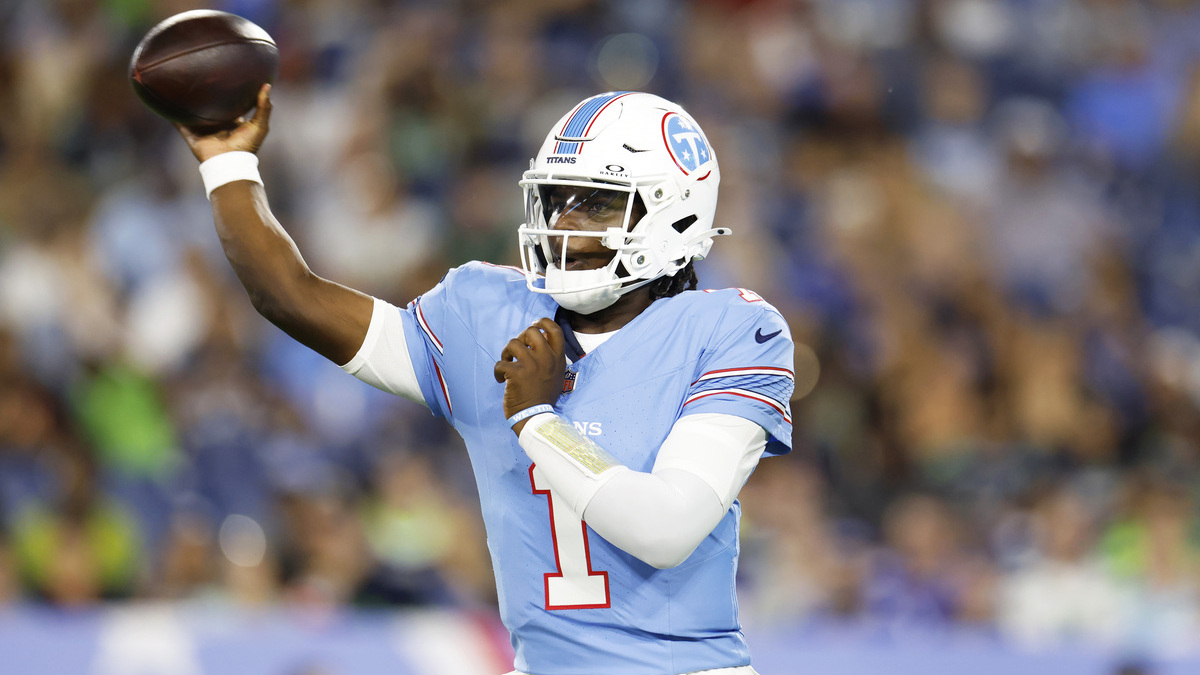
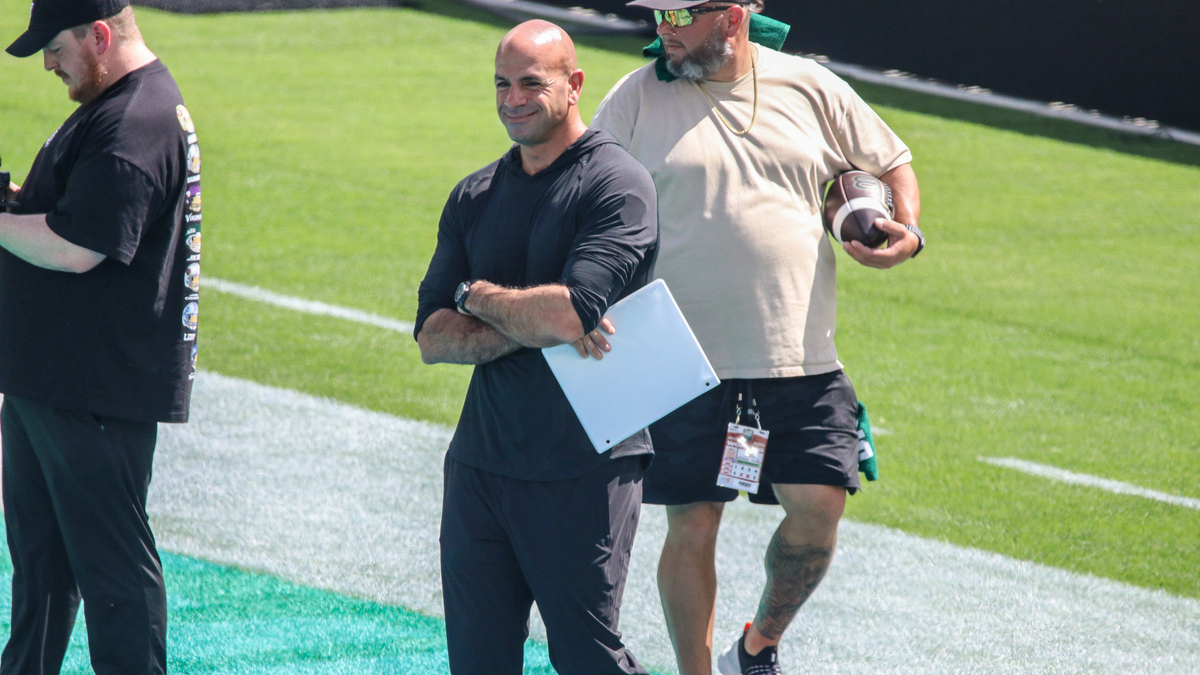
They hired one of the better defensive coordinators in the league over the last decade, Robert Saleh, as head coach (in his second opportunity leading a team after a prior stint with the New York Jets).
They hired one of the most experienced offensive coordinators possible in former New York Giants head coach Brian Daboll, who previously served as OC for the Cleveland Browns, Miami Dolphins, Kansas City Chiefs, Alabama Crimson Tide and Buffalo Bills.
The Titans invested substantially in free agency to upgrade the defense, signing big-ticket additions in defensive lineman John Franklin-Myers (3 years, $63 million) and cornerbacks Alontae Taylor (3 years, $58 million) and Cor’Dale Flott (3 years, $45 million).
They invested substantially in both free agency and the draft to upgrade the offense, signing wide receiver Wan’Dale Robinson (4 years, $70 million) among others and drafting wide receiver Carnell Tate with the 4th overall pick.
On the surface, this should be a better team on both sides of the ball.
On the surface.
But, ultimately, the Titans’ outlook — both for 2026 and the bigger picture — hinges most significantly on what is still a mostly unknown variable.
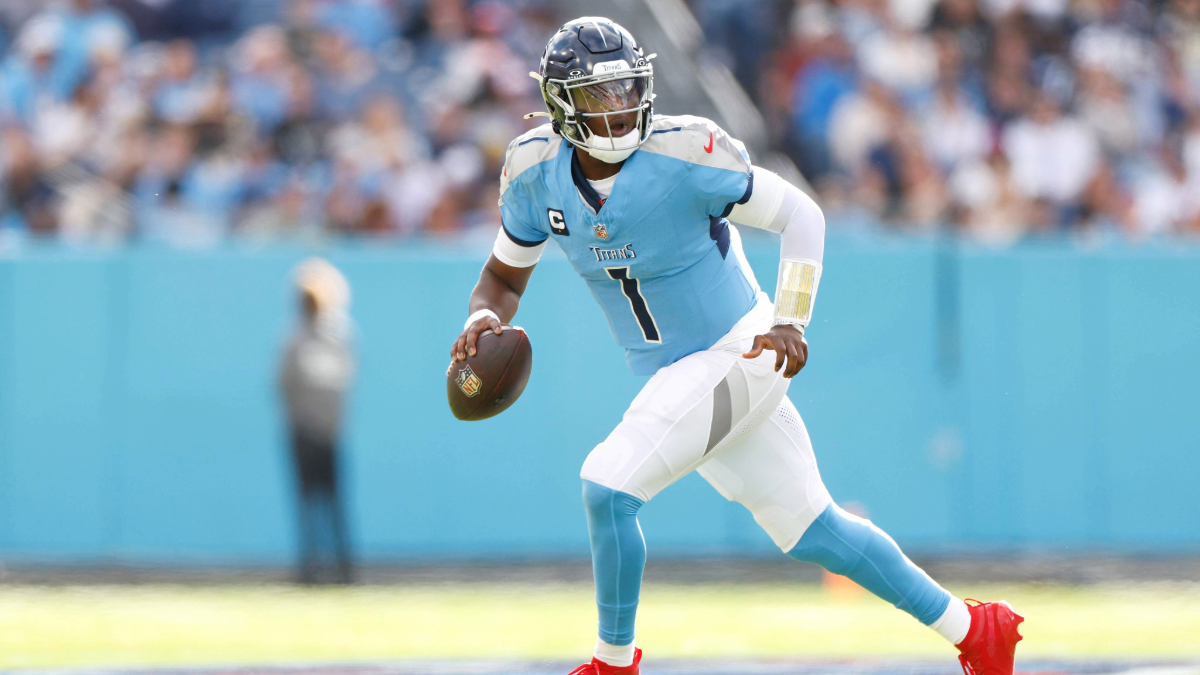
Second-year quarterback Cam Ward.
QB Cam Ward’s Development Under The Spotlight In 2026
The No. 1 overall pick a year ago, Ward got a pass on his lackluster rookie season after playing behind a line that allowed the sixth-most sacks in the league, while head coach Brian Callahan was fired after a 1-5 start and top receiver Calvin Ridley played only seven games.
Through those unideal circumstances, Ward completed 59.8% of his passes for 3,169 yards, 15 touchdowns and 7 interceptions with 2 rushing TDs.
When compared to the rookie passing production of a few other recent top QB draft picks like Caleb Williams (62.5%, 3,541 yards, 20 TDs, 6 INTs), Bo Nix (66.3%, 3,775 yards, 29 TDs, 12 INTs) and Jayden Daniels (69%, 3,568 yards, 25 TDs and 9 INTs), well frankly, it doesn’t.
The corollary Titans fans are hoping proves to be most relevant is Drake Maye, the No. 3 overall pick in 2024.
Maye didn’t stand out much in his first season with the New England Patriots — 2,276 passing yards, 15 TDs and 10 INTs in 13 games — playing for an overmatched one-and-done coaching staff with a bad offensive line and middling cast of WRs. With each of those areas upgraded entering his second season, Maye broke out for 4,394 passing yards, 31 TDs and 8 INTs while reaching the Super Bowl and coming a whisker short of the MVP award.
Certainly, even landing anywhere in the middle of that kind of leap in Year 2 would be encouraging for Ward.
Unfortunately, the preseason hasn’t provided many harbingers of such hope.
In the Titans’ first exhibition game, Ward completed 5 of 12 passes for 57 yards, 0 TDs and 0 INTs. In the second game, he was moderately sharper, completing 8 of 12 passes for 69 yards, 0 TDs and 0 INTs.
But the underlying advanced metrics are more concerning, as broken down by analyst Warren Sharp below:
In six preseason drives with Ward at QB, the Titans have scored one touchdown and one field goal, punted three times and turned it over on downs after just four plays. Outside of the opening TD drive, the Tennessee offense has mustered five first downs total across the other five series with Ward.
Quiet Preseason For Carnell Tate As Well
The lack of any downfield passing success is a bit alarming considering the high draft investment in Tate, whose elite skill is creating separation for big plays.
So far this preseason, Tate has 0 receptions on 5 targets. That’s not all on Ward — the protection has struggled and Tate hasn’t gotten open with the same ease he did at Ohio State, but it’s notable nonetheless.
All of that said, it’s an especially small sample size and it is the preseason.
The verdict is far from levied, but the scrutiny will mount by the week and the rest of the expensive additions to the roster will be marginalized if Ward doesn’t eventually live up to the expectations of a No. 1 overall draft pick.
(All free agent contract values taken from Spotrac.com)
Tennessee Titans Reset
2025 Finish: 3-14
Head Coach: Robert Saleh, first season (20-36 in three-plus seasons with the Jets)
Hot Seat Meter (0-10): 0
Offensive Coordinator: Brian Daboll, first season (former Giants HC, former OC for Browns, Dolphins, Chiefs, Alabama and Bills)
Defensive Coordinator: Gus Bradley, first season (former Jaguars HC, former DC for Seahawks, Chargers, Raiders and Colts)
Best Offseason Move: Signing John Franklin-Myers
Versatile defensive lineman John Franklin-Myers was a key cog on one of the best defenses in the NFL last season with the Broncos, posting 7.5 sacks and 39 total pressures working mostly on the interior.
He now pairs next to star defensive tackle Jeffery Simmons, a four-time Pro Bowl selection who earned first-team All-Pro honors last season with a career-high 11 sacks and 17 tackles for loss.
Franklin-Myers previously played for Saleh with the Jets and fits his defensive scheme ideally.
Worst Offseason Move: Being stingy on the offensive line
As noted, the Titans’ offensive line wasn’t great in 2025, but right guard Kevin Zeitler had the ninth-best PFF pass-blocking grade (75.4) of any guard in the league. The Titans let him become a free agent.
Zeitler remains unsigned, which perhaps says something of the 36-year-old, but our criticism is less about retaining or not retaining Zeitler and more what the Titans did to replace him.
Cordell Volson was a three-year starter for the Cincinnati Bengals before missing last season due to shoulder surgery. The Titans picked him up on a one-year, $3.215-million deal, but there’s growing buzz that fifth-round rookie Fernando Carmona (out of Arkansas) might overtake him for the job.
That’s either a good sign or bad sign, considering Volson was one of two notable free agents brought in to remake that O-line.
The other was center Austin Schlotttmann (2 years, $7 million), who has been mostly a reserve over his seven-year NFL career (never starting more than 4 games in a season) and now becomes a full-time starter for the first time as he’s set to turn 31 years old. (Like a number of the Titans’ big signings, he played for Daboll with the Giants.)
For a team that spent aggressively (and wildly in a few cases) in free agency, it’s hard to understand why the Titans only tightened the purse strings when it came to the offensive line, shopping in the bargain bin for a unit that struggled to protect its young QB and that is as important as any facet to Ward’s development.
Was it really more important to give a three-year, $24-million contract to a blocking-first tight end (Daniel Bellinger, another of Daboll’s former Giants) who had 33 receptions combined the last two seasons? Or to grossly overpay for a slot receiver in fellow former Giant Wan’Dale Robinson (four years, $70 million), whose breakout season last year (92 catches for 1,014 yards and 4 TDs) was largely a product of New York having one of the thinnest WR corps in the league after Malik Nabers’ injury?
It seems like the Titans could have applied the budget to those two spots more effectively and invested bigger on the interior of the offensive line.
Tennessee Titans Roster Breakdown
Biggest Strength: The middle of the defense
The pairing of Simmons and Franklin-Myers on the interior of the defensive line is as good as it gets in the league and a strong foundation for the rest of the defense.
Behind them, linebacker Cedric Gray broke out in his second season (first as a starter) with 164 tackles, 7 tackles for loss and 4 passes defended while PFF graded him the 8th best inside linebacker in the league. Next to him, Cody Barton had 81 tackles, 3 interceptions and 11 PDs, though he didn’t grade out so well overall.
On offense, it should be the wide receivers if Carnell Tate lives up to his draft slot (or even close), Robinson approximates his 2025 production (despite a lot more competition for targets), Calvin Ridley returns to form after missing most of last season with a broken leg after back-to-back 1,000-yard seasons in the years prior, and second-year WRs Elic Ayomanor (41-515-4 as a rookie) and Chimere Dike (48-423-4) continue to develop even in lesser roles.
That’s at the least one of the deeper wideout groups in the league while the top-end upside will hinge largely on Tate.
Biggest Weakness: Offensive line
PFF ranked the Titans’ offensive line 23rd overall last season, and for those that don’t put great stock in PFF’s grading system (which has its flaws, for sure), the eye test of simply watching the unit would arrive at a similar conclusion.
As noted, Tennessee skimped on the unit in free agency and the draft, choosing to remake the interior of the line by signing a new starting center who has never been a full-time starter and replacing a well-regarded 14-year veteran right guard with a low-investment flier on a lineman coming off a season lost to injury who may now get beaten out by a Day 3 draft pick.
On defense, the edge rusher group leaves a lot to be desired with Jermaine Johnson II (3 sacks last season with the Jets, acquired via trade), free agent addition Jacob Martin (career-high 5.5 sacks in his eighth NFL season last year, for the Commanders), Oluwafemi Oladejo (0 sacks in six games as a rookie) and relatively raw rookie Keldric Faulk (the No. 31 overall pick). (Johnson did have a career-high 7.5 sacks playing for Saleh in New York in 2023.)
But the pressure up the middle from Simmons and Franklin-Myers will do a lot to offset the concerns on the edge.
Also, Saleh built this defense in his vision, and given his track record as a defensive coordinator that deserves plenty of benefit of the doubt. Simply put, if he felt the Titans needed to invest more heavily on the edges, they certainly would have done so.
Most Intriguing Rookie: WR Carnell Tate
In our humble opinion, Tate was taken way too high in this draft, but that doesn’t mean he isn’t a talented player and major upgrade to what the Titans were working with at wide receiver last year.
He had 51 receptions for 875 yards and 9 TDs, averaging a robust 17.2 yards per catch, in only 11 games last season for Ohio State, while playing across from one of the top receivers in college football in Jeremiah Smith.
It would have been nice to see him flash in the preseason, but ultimately we’ll take the quiet start in a small sample size for nothing more than that.
Breakout Player: Tight end Gunnar Helm
Helm, a late fourth-round pick out of Texas last year, had some nice moments as a rookie while totaling 44 catches for 357 yards and 2 TDs as the Titans’ No. 2 TE behind veteran Chig Okonkwo.
The Titans smartly let Okonkwo leave in free agency (signing with the Commanders) to give Helm a bigger role. As noted, free agent signing Bellinger has been mostly a blocking-first tight end in his career to this point.
Helm will have to compete with that deep receiving corps for targets, but he should have plenty of opportunity to assert himself in his second season.
MVP Pick: Defensive tackle Jeffery Simmons
Simmons is the biggest established star on the team, coming off the best season of his career, and it’s more likely the defense leads the way for this team in Saleh’s first season.
In addition to his career-high 11 sacks and 17 tackles for loss (in just 15 games), PFF credited Simmons with 64 total pressures (second-most among interior defensive linemen) and graded him (88.3) third out of 134 interior D-linemen last season.
He’s a wrecking ball in the peak of his prime and will be the tone-setter for what could be one of the most improved defenses in the league after the Titans finished 21st in total defense (345.1 YPG) and 28th in scoring defense (28.1 PPG) in 2025.
Tennessee Titans Schedule
| Date | Opponent | Time (ET) |
| Week 1, Sept. 13 | vs. New York Jets | 1 p.m. |
| Week 2, Sept. 20 | vs. Philadelphia Eagles | 1 p.m. |
| Week 3, Sept. 27 | at New York Giants | 1 p.m. |
| Week 4, Oct. 4 | at Baltimore Ravens | 1 p.m. |
| Week 5, Oct. 11 | vs. Houston Texans | 1 p.m. |
| Week 6, Oct. 18 | at Indianapolis Colts | 1 p.m. |
| Week 7, Oct. 25 | vs. Cleveland Browns | 1 p.m. |
| Week 8, Nov. 1 | at Cincinnati Bengals | 1 p.m. |
| Week 9 | BYE WEEK | |
| Week 10, Nov. 15 | vs. Jacksonville Jaguars | 1 p.m. |
| Week 11, Nov. 22 | at Dallas Cowboys | 1 p.m. |
| Week 12, Nov. 29 | at Jacksonville Jaguars | 4:05 p.m. |
| Week 13, Dec. 6 | vs. Washington Commanders | 1 p.m. |
| Week 14, Dec. 13 | at Detroit Lions | 1 p.m. |
| Week 15, Dec. 20 | vs. Indianapolis Colts | 1 p.m. |
| Week 16, Dec. 27 | at Las Vegas Raiders | 4:05 p.m. |
| Week 17, Jan. 3 | vs. Pittsburgh Steelers | 1 p.m. |
| Week 18, TBD (Flex Game) | at Houston Texans | TBD |
Tennessee Titans Season Prediction And Parting Thoughts
Season Prediction: 5-12
This is the high end of potential we can see for the Titans in 2026.
The only games on the schedule they should be favored in are home vs. the Jets and Browns, maybe at the Raiders, and potentially home vs. the Jaguars, Commanders or Colts depending on how their respective seasons unfold.
The defense should be among the most improved in the league under Saleh with the reinforcements at cornerback and defensive line, and that might lead to an unexpected upset or two along the way.
The offense should certainly be better too after ranking 31st in yards (259.6/game) and 30th in points (16.7/game) last season, but again, how much better comes down to Ward.
And that’s just too hard to project with great confidence at this point.