From 99-0, TeamFB7 is looking back on the greatest players in NFL history to don each jersey number. No ties allowed, tough decisions will be made — next is No. 83 and Ted Hendricks.
When looking at the greatest linebackers of all-time, most wore jersey numbers in the 50s — some of the most memorable and iconic numbers in NFL history, for that matter.
Like Ray Lewis (52), Junior Seau (55), Dick Butkus (51), Jack Lambert (58), Jack Ham (59), Brian Urlacher (54) and so on.
(We didn’t forget No. 56 Lawrence Taylor, but regardless of positional label at the time, the Giants legend was an edge rusher by modern definition).
So how did Ted Hendricks end up with No. 83?
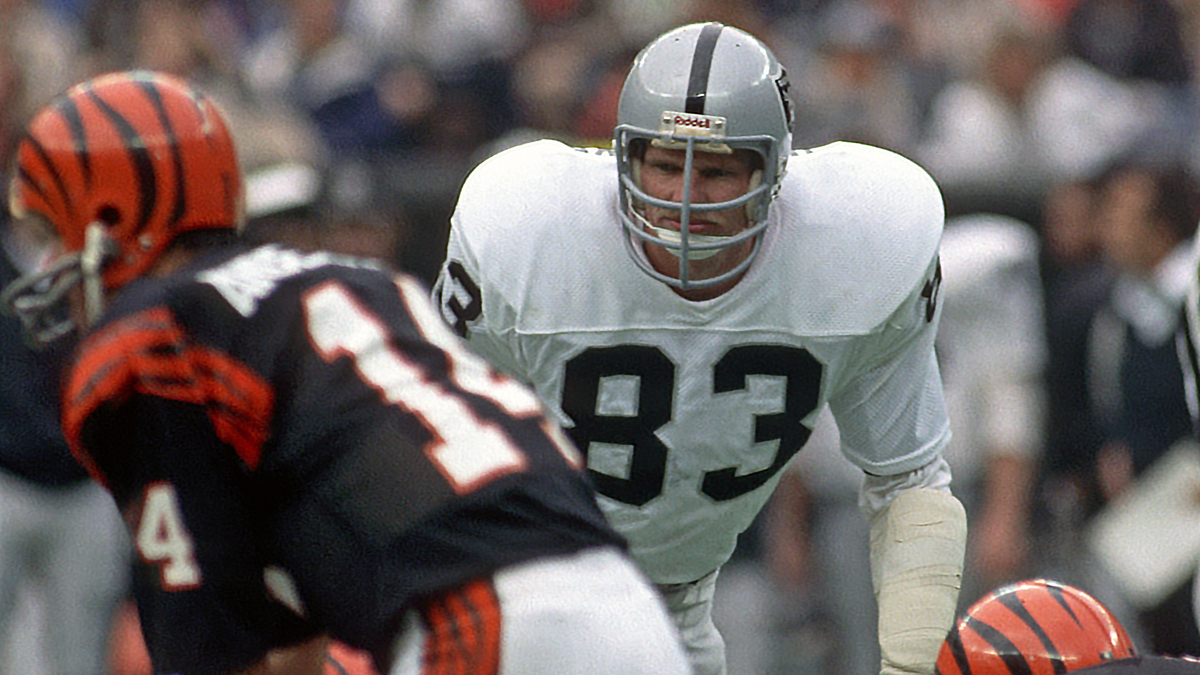
First and foremost, Hendricks is absolutely one of the game’s most accomplished linebackers.
He played a central role on four Super Bowl championships teams (one with the Baltimore Colts and three with the Oakland Raiders), made eight Pro Bowls, earned four first-team All-Pro and two second-team All-Pro honors.
Hendricks secured a spot on both the NFL’s 1970s and 1980s All-Decade Teams, took his place in the Pro Football Hall of Fame, landed on NFL Network’s “The Top 100: NFL’s Greatest Players” list in 2010 and was one of six outside linebackers named to the NFL’s 100th Anniversary Team in 2019.
But he was issued the No. 83 as a second-round pick of the Colts in the 1969 NFL/AFL Draft because he was a two-time consensus All-American defensive end at Miami and was initially expected to play that position in the NFL as well.
Ted Hendricks Broke The Mold At Linebacker
Standing 6-foot-7 and generally listed at 220 pounds, Hendricks was nicknamed “The Mad Stork” for his tall, relatively slender frame. Scouts questioned if he’d hold up at defensive end in the NFL, which is why he fell to the second round of the draft despite being one of the most impactful players in college football with the Hurricanes.
Baltimore Colts coach Don Shula seemingly shared those doubts because he moved Hendricks to linebacker and into the starting lineup midway through his rookie season, trying to shake up a struggling defense.
That didn’t seem a natural fit either for someone so tall and lean, but it turned out to be a fortuitous move.
“One of the problems in the National Football League is that coaches are too programmed,” Hendricks once said, as recounted by the Chicago Tribune ahead of his Hall of Fame induction in 1990. “They didn’t think I could play linebacker at 214 pounds because nobody else was playing the position at 214. That’s really quite silly. If you’re good, you’re good.”
Hendricks proved that.
In his second NFL season, he helped the Colts win Super Bowl V. Baltimore had one of the league’s top defenses — particularly rush defenses (102.8 yards per game allowed, ranking 6th) — that season with Hendricks and fellow linebackers Mike Curtis and Ray May leading the way.
Hendricks made the first of his eight Pro Bowls and earned first-team All-Pro the next season, on his way to career that exceeded expectations from start to finish.
All-Around Impact Set Ted Hendricks Apart
Tackles and pass breakups (one of his specialties) weren’t tracked as stats back then, which makes it hard to truly show the incredible all-around impact the 6-foot-7 outside linebacker made on games.
Of the numbers that do exist in some form, Hendricks had 26 career interceptions, 61 sacks (unofficially), 23.5 blocked punts/field goals/extra points (thanks to diligent research by Pro Football Journal, while his total is often cited as 25) to rank among the all-time leaders and 4 safeties (tied for the most in NFL history).
It’s a shame there isn’t a reliable record of all the pass deflections he totaled over those years, but to give a snapshot of his impact in that way, NFL.com has him credited with 11 in 1981 in his age-34 season after that stat started getting unofficially tracked around that time.
Hendricks also played in 215 straight games.
Still, he felt underappreciated at times on his path to Canton.
Moving On From The Colts
Hendricks became unhappy with the direction of the Colts franchise and his relationship with the front office and in the summer of 1974 signed a contract with the Jacksonville Sharks of the upstart World Football League for their 1975 season.
The Colts responded by trading Hendricks’ rights to the then-struggling/rebuilding Green Bay Packers along with a second-round pick for linebacker Tom MacLeod and an eighth-round pick. As the story goes, Colts general manager Joe Thomas told Hendricks, “I’m putting you in cold storage.”
The World Football League would soon fold, and Hendricks made the most of his time in Green Bay with 75 tackles (unofficially), 5 interceptions, 7 blocked kicks and a safety in 1974. Despite that production, the Packers balked at Hendricks’ salary demands and let him sign with the Oakland Raiders, with the Packers receiving two compensatory first-round draft picks from the Raiders for his rights as a “limited free agent”.
Despite being a high-profile acquisition, Hendricks was relegated to a limited role for much of his first season in Oakland before finishing out that 1975 season as a starter and returning to All-Pro and Pro Bowl status later in his tenure there.
He won three more Super Bowl rings with the Raiders, including his final game — Super Bowl XVIII — after the 1983 season.
The Greatest No. 83 In NFL History
Aside from his one season with the Packers, in which he wore a more traditional No. 56, Hendricks donned the unusual 83, which was perhaps fitting given his unusual fit as a 6-foot-7 outside linebacker who did a little bit of everything at a time when that was very much outside the mold.
Officially the first Guatemalan-born player in the NFL — because his American father and Guatemalan-born mother of Italian descent met there working for Pan American Airlines — he was an original through and through, including being one of the bigger personalities in the league.
Which perhaps belied the football IQ that played a big role in his Hall of Fame career.
Fellow Raiders Hall of Famer Howie Long once told NFL Films: “Ted would come in Monday morning hungover from the night before or maybe kind of a continuation of the night before, and we would put up film of the next week’s opponent and Ted would sit there half awake and call out the play they were going to run before they ran it. As a young player, you’re sitting there saying to yourself, ‘How does he know all the answers?’ … Ted Hendricks was one of the smartest guys I’ve ever been around — in business, in television, in football.”
Honorable mention among the best to ever wear the No. 83 goes to longtime Buffalo Bills Hall of Fame wide receiver Andre Reed, who piled up 951 receptions for 13,198 yards 87 touchdowns from 1985-2000 (with his final season spent in Washington). A key cog in the Bills’ four straight Super Bowl appearances in the 1990s, Reed made seven straight Pro Bowls and earned two second-team All-Pro honors.
Greatest NFL Players By Number
99 | 98 | 97 | 96 | 95 | 94 | 93 | 92 | 91 | 90 | 89 | 88 | 87 | 86 | 85 | 84