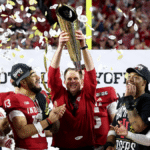
Leading up to the national championship game last month, Indiana football coach Curt Cignetti was asked if he could go back to the start of his career what advice he’d give himself.
“I mean, I think I had to walk every path to become who I am today. I don’t have any regrets,” he said.
And Cignetti’s path is now being studied by every aspiring football coach young and old-er — perhaps especially the latter.
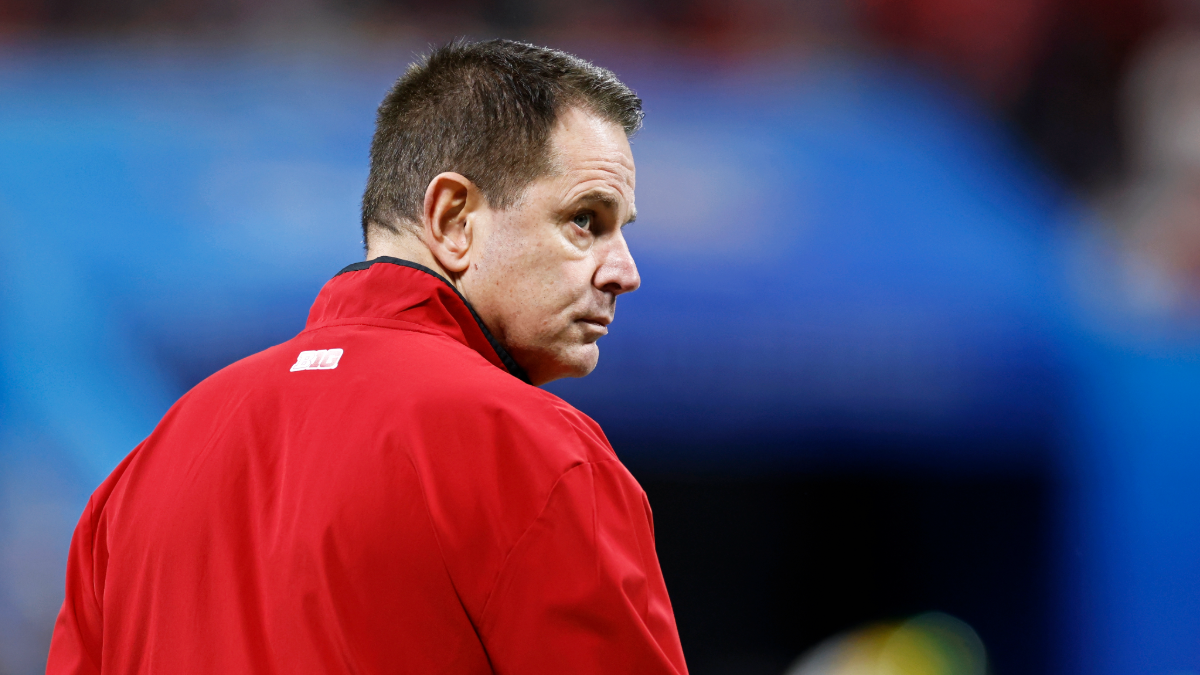
A career assistant until he chose to bet on himself at 49 years old, leaving the most successful program in college football at the time at Alabama to become the head coach at Division II IUP, Cignetti has now scaled the sport’s mountaintop.
He did the previously unthinkable in leading Indiana to its first national championship and last week took his rightful place as one of the highest-paid coaches in college football.
Cignetti’s latest pay bump to $13.2 million annually makes him one of three coaches making $13 million along with Georgia’s Kirby Smart and new LSU coach Lane Kiffin, per ESPN.
So what is the applicable takeaway from Cignetti’s unusual path to the peak of the profession? Or is his climb more one-of-a-kind than teachable case study?
With the copy-cat nature of college football, schools with floundering programs like the Hoosiers had long been will surely be scouring for the next Cignetti. But it’s hard to imagine there are truly a bunch of other future legends coaching wide receivers into the twilight of their careers just waiting for their overdue shot to rewrite record books. Or any.
Just like there may never be a story quite as stirring and sensational as Indiana’s most unlikely ascension to the pinnacle of college football the last two years, there may simply never be another Cignetti.
That being said, with his latest raise underscoring his now-undeniable stature in the sport, it’s still worth understanding how this all happened.
How Cignetti went from 26 years as an under-the-radar position coach to the “It’s pretty simple, I win — Google me” guy.
‘I Took A Chance On Me’
It started, first and foremost, with his belief in himself — that he was meant to do more and, most importantly, that it wasn’t too late to make it happen.
“I always wanted to be a head coach. I wasn’t a coordinator. I didn’t want to be a 55-59-year-old assistant moving every two to three years,” Cignetti told ESPN last year. “… I took a chance on me.”
He elaborated on that further last month in his national championship game press conferences, as college football’s biggest stage put Cignetti’s unique story in the brightest spotlight yet.
“At the end of the day, I was hitting the big 5-0, I had a couple of daughters in high school that wanted to be doctors … and I didn’t want to be a 60-year-old career assistant. I grew up in the business. I had tracked assistant coaches and families and careers, and I didn’t want to do that. So I bet on myself,” he said again. “But I didn’t wake up every day at IUP like, I’ve got to be a [Power 4] head coach. I was trying to make the most out of life, and it brought me here.”
Ultimately, the parts of Cignetti’s story that are universally applicable are those tried-but-true cliche coach-speak lessons — control what you can control, be where your feet are, win the day, etc.
Gamble Pays Off For Cignetti
And the what-if’s.
What if he hadn’t taken that sizable pay cut to leave Nick Saban’s SEC power program for Indiana University of Pennsylvania, a Division II college football map dot 55 miles northeast of Pittsburgh?
Even if Cignetti knew he wanted more from his career, it still wasn’t an easy and obvious decision in the moment — for he or his family.
“I just looked at him and said, ‘You can’t take that job. I go forward — I’m not going backwards,'” his wife Manette Cignetti recalled of that time, in an ESPN interview last year. “A week or two later he had told me, ‘You know, that job’s still open, and I just really want to be a head coach.”
And from that gamble would ultimately come the jackpot.
A first-time head coach heading into his 50th birthday, finally grabbing the first rung of that ladder two decades past any traditional timeline for such success, Cignetti went 53-17 in six seasons at IUP — where his father Frank Cignetti had been the head coach from 1986-2005.
Coaching on a field that bears his father’s name, Cignetti took over a 6-5 program and led it to a 12-2 mark in his second season, earning Pennsylvania State Athletic Conference Coach of the Year honors.
Cignetti then moved up to the FCS level, taking over at Elon in 2017. He inherited a 2-9 program and went 8-4 in his first season, winning Colonial Athletic Association Coach of the Year honors. (Notice a trend?)
After two seasons, he moved on to James Madison. There, he led the Dukes to 14 wins and the FCS national championship game in his first season. His teams reached the FCS semifinals the next two years before transitioning to the FBS level, and in 2023 James Madison went 11-1 with a No. 25 final ranking in the AP poll. Cignetti was named Sun Belt Coach of the Year. Overall, he posted a 52-9 record in five seasons there.
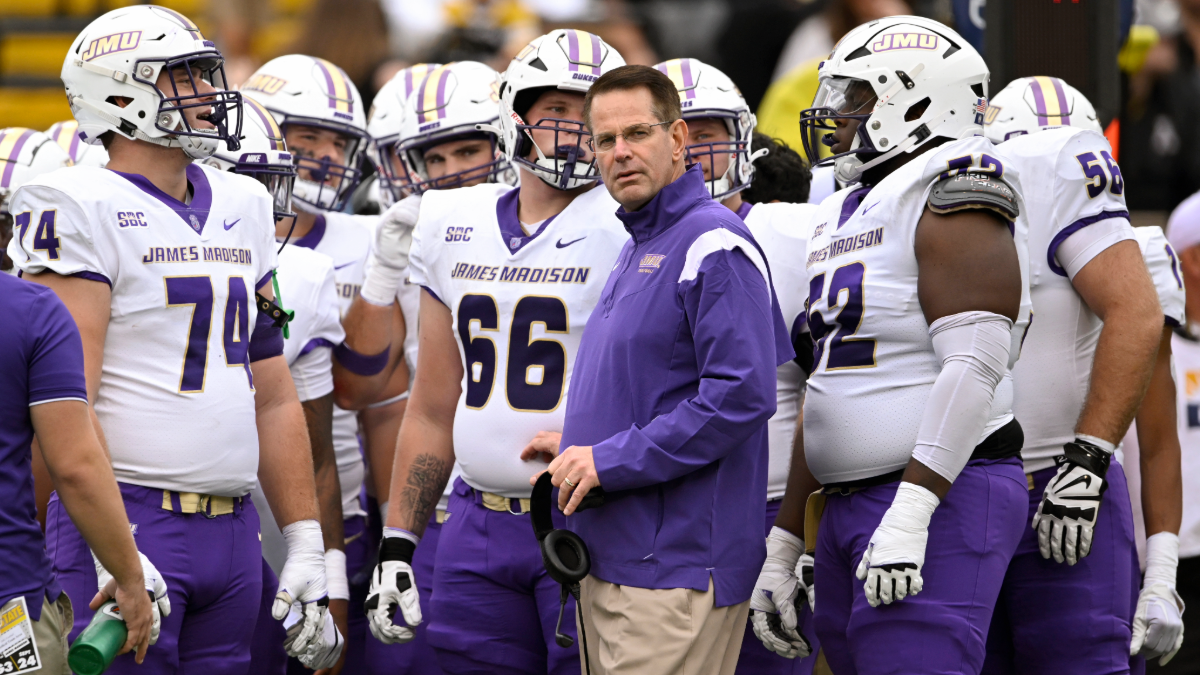
That’s when the other Indiana came calling — Indiana University of … Indiana.
And the next big “what if?” moment.
“It was Wednesday night, I had just got back from Indy talking to [Hoosiers athletic director] Scott [Dolson] and the president, and I had a pretty good idea they were going to offer me the job,” Cignetti recalled. “And I’m laying in bed with my wife about 8:00 at night, and I said, ‘I think I’m just going to stay. I like this place.’ Scott didn’t give me a chance. He called me up and said, ‘Congratulations, you’re the new head coach at Indiana, and we’re going to kick some butt.’ I said something, about five or six words I can’t say here, hung up the phone, and that was it. He didn’t give me a chance to say no. He told me I’m the new head coach. My wife said, ‘You should have seen that look in your eye,’ like what did I do?”
Accepting a Big Ten head coaching job isn’t quite the same leap of faith as leaving Alabama for Division II, but nonetheless, what if Cignetti didn’t truly believe he could have success at a program that held the dubious distinction of having the most losses in college football history at the time?
Well, for starters, we wouldn’t have one of the greatest soundbites of the social media age.
“Like two universes colliding. We had pretty much won championships year in and year out, and doom and gloom on the Indiana side, and that’s kind of why I got out there a little bit the way I did. I knew I was out on a limb. I had to find out if the fan base was dead or on life support,” Cignetti said. “The basketball game was the first thing, and then ‘Google me’ was our signing day press conference when I was asked the same question for about the 14th time. I had a lot of confidence in myself and the staff because we had had success. That’s why I took the job.”
And the rest is, quite literally, history.
A 27-2 record in two seasons at Indiana, two College Football Playoff appearances, a slew of national coach of the year awards, the Hoosiers’ first Big Ten championship since 1967, the national title, arguably the greatest story in American team sports history, and on and on.
Cignetti’s Belated Breakout Worth The Wait
The “how” of Cignetti’s story is at least easy to frame and contextualize, even if it may never quite be replicated. He believed in his potential, bet on himself, maximized his opportunities and leveraged each success into greater success.
But the biggest question when it comes to his belated career breakthrough is the “why.”
Why did he not get the opportunity sooner? Why did it take 28 years?
Cignetti was a graduate assistant at Pittsburgh in 1983-84, the QBs/WRs coach at Davidson in 1985, the QBs coach at Rice from 1986-88, the QBs coach at Temple from 1989-92, the QBs/TEs coach back at Pitt from 1993-99, then at NC State from 2000-06 and finally the WRs coach and recruiting coordinator at Alabama from 2007-10.
And at no point along that way did anyone realize the next great head coach in the sport was hiding in plain sight …
“There have been a number of guys coach at the D-II or III level for that matter, get to P4 and been highly successful, and there’s four or five of them still coaching. It took me longer,” Cignetti said. “I got a great break when I was young, 23, at probably the second-best conference in the country, the old Southwest Conference. But for the first half of my career I was with teams that did not win. People don’t hire assistants from schools that don’t win. When I was retained by Walt Harris [at Pitt], I learned a lot about quarterback play … and when I went to NC State we had Philip Rivers and we had a nice ride there, seven years. And the one year with Nick [Saban] felt like I was ready to rock and roll and took a big chance on myself.
“I think my trajectory [has a lot to do with] being with teams that weren’t mega successful early on, but my journey led me to here, which is a great thing.”
A Departure from Alabama Paves A Championship Path
Cignetti has said plenty of times that not even he fully saw it playing out like this when he left Alabama to bet on himself. How could he?
“Yeah, I can’t say I woke up every day thinking about it, but even when I made the move I made
from Alabama, I didn’t make that move with this in mind. It was going to be a different kind of lifestyle, and I was going to get to be the head coach. I was going to take it as it came and make the most of it,” he said. “Then as we got more successful and I got more confidence … things just sort of happened.”
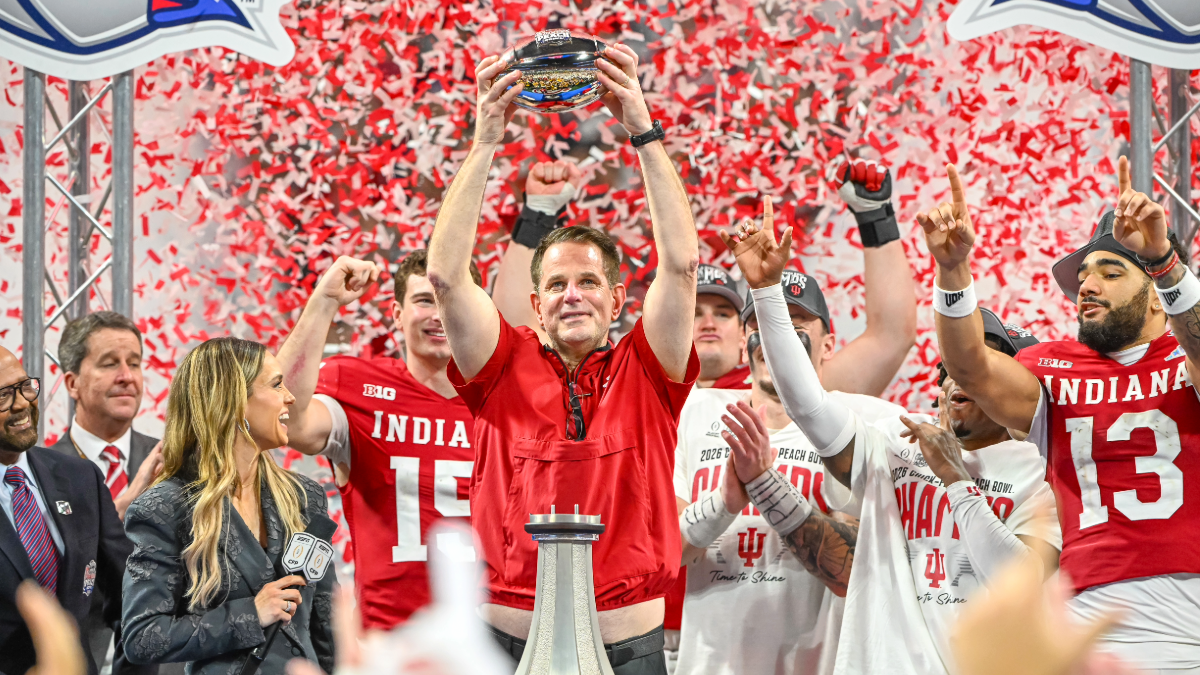
The other question Cignetti gets a lot these days, of course, is the “what?”
What is he actually doing that no other football coach in the previous 100-plus years at Indiana was able to figure out?
What is the secret to how he cracked the code and flipped college football on its head by toppling the traditional powers and becoming the most unlikely national champion in the sport’s history?
That one has a less specific or clear answer.
“There’s no magic wand,” Cignetti said. “It’s the fundamentals, and you’ve got to have the right people, number one. If you don’t have the right people, it doesn’t matter — on your staff or in the locker room. Then you have to have a plan for development, recruiting and retention. Then obviously how to practice, how to play the game. So it helps that we’ve had coaches that have been together for a while.
“Every day you get better, you get worse, you never stay the same, and that includes me, every day. If you’re not striving, someone else is, so you’re getting worse. I’m a film junkie. I mean, we’re not way out there like, wow, what a scheme. But we’re fundamentally sound and we find the right matchups up to this point.
“No, there’s no magic wand. I’m no wizard, that’s for sure.”
That raises just one final question — are we in fact sure?