The Miami Dolphins kept busy in their rebuild while the New York Jets made big gains at the 2026 NFL Draft.
The picks are in and the last bit of draft Heinz has been squeezed out of Pittsburgh. In other words, the 2026 NFL Draft is officially in the books.
With its completion, 257 men (and more, if one counts undrafted free agents) will officially begin their professional gridiron dreams in preparation for an anticipated September kickoff. The transactional dust has settled, so TeamFB7 is ready to analyze each and every team’s rookie loot bag, doing so on a division-by-division basis in the coming day.
We start with the AFC East …
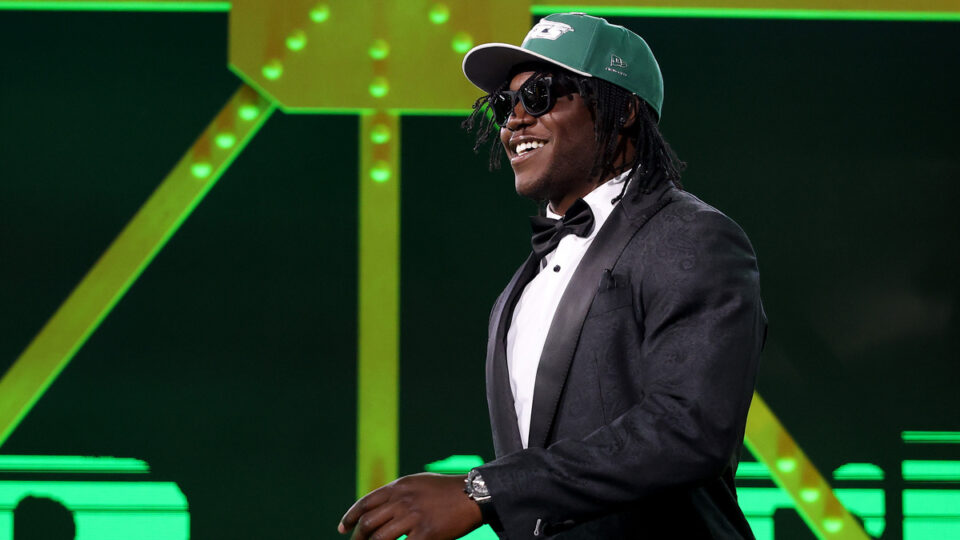
AFC East NFL Draft Breakdown & Grades
JUMP TO: Buffalo Bills | Miami Dolphins | New England Patriots | New York Jets
Buffalo Bills: C+
- 2nd Round (35th overall): LB T.J. Parker, Clemson
- 2nd Round (62nd overall): CB Davison Igbinosun, Ohio State
- 4th Round (102nd overall): OT Jude Bowry, Boston College
- 4th Round (125th overall): WR Skyler Bell, UConn
- 4th Round (126th overall): LB Kaleb Elarms-Orr, TCU
- 5th Round (167th overall): CB Jalon Kilgore, South Carolina
- 5th Round (181st overall): DT Zane Durant, Penn State
- 7th Round (220th overall): CB Toriano Pride, Jr., Missouri
- 7th Round (239th overall): P Tommy Doman, Florida
- 7th Round (241st overall): OG Ar’maj Reed-Adams
The Bills perhaps rivaled Franco Harris and Jerome Bettis for the amount of ground they covered in Pittsburgh over the weekend, channeling their inner Ferris Bueller by trading nine times in the three days.
Having lost several defensive stars amid the additions of Dee Alford, Bradley Chubb, and CJ Gardner-Johnson, the Bills picked up several lumps of clay for new defensive coordinator Jim Leonhard, headlined by the day two addition of the backfield invader Parker, who amassed over 41 tackles for a loss in three seasons as a Tiger.
For all its wheeling and dealing, Buffalo seemed content to primarily work with projects: Parker should slide in smoothly behind Chubb while Igbinosun figures to be an insurance policy if Leonhard can’t fully bring the potential of Christian Benford and/or Maxwell Hairston out.
Potential immediate contributors include Bell, considering the way Buffalo often finds aerial contributions all over the receiving depth chart and Elarms-Orr, who slightly outweighs incumbent inside man Dorian Williams and could create a very interesting competition come camp (his special teams prowess should also help his opening day case).
They Said It: “Just an infusion of some youth on the defensive side of the ball was something that, after we got through free agency, we kind of turned our direction to what the draft looks like, what we’ve already attained in free agency or re-signed on our team. We felt like there was more opportunities to compete at either starting roles or key backups on the defensive side of the ball and we also felt like there was enough depth in some of those positions in the draft.” — Bills general manager Brandon Beane (h/t Sal Cappacio, WGR550)
And that’s a wrap on the 2026 NFL Draft. 👏 pic.twitter.com/rJ5ZXLWXyc
— Buffalo Bills (@BuffaloBills) April 25, 2026
Best Case: Buffalo finds several future starters, prolonging its stay in the AFC penthouse. Parker raises the the Bills into the upper half of the league’s pressure rates and backfield visits and learns well from Chubb. Igbinosun justifies his relatively early selection by bringing stability to the Buffalo secondary (one that tried to rely on a Tre’Davious White return last time around) and develops faster than Hairston, making him trade bait before Buffalo has to make a decision on his fifth-year option. Elarms-Orr proves to be worth the wait in the fourth round and fulfills Buffalo’s needs in the middle. Elsewhere on day three, the athletic Durant defies notions that the Bills didn’t land a nose tackle while Doman helps Buffalo rise from the third-to-last spot in the punting rankings (if he beats out veteran Mitchell Wishnowsky, that is).
Worst Case: The Bills get burned drafting for depth. It was perhaps an understandable approach considering their expensive splurge on defensive veterans and the fact they’re maintaining most of the talent that has guided its recent run of prosperity. But Buffalo ignored some relatively staunch needs (i.e. waiting until Saturday to draft a receiver and one who is rather Khalil Shakir-esque, no less) in the early going to engage in nurturing. The Bills have invested a lot into an elusive leap over the conference title game hump. Putting all their eggs in the veteran basket was certainly one way to do it but there may have been rookies that could’ve helped with that cause more immediately. Not only is there pressure to finally to return to the Super Bowl, but there’s also a larger onus to prove that Beane’s frequent shifting, including a move out of the first round entirely, was worth it.
Miami Dolphins: B+
- 1st Round (12th overall): OT Kadyn Proctor, Alabama
- 1st Round (27th overall): CB Chris Johnson, San Diego State
- 2nd Round (43rd overall): LB Jacob Rodriguez, Texas Tech
- 3rd Round (75th overall): WR Caleb Douglas, Texas Tech
- 3rd Round (87th overall): TE Will Kacmarek, Ohio State
- 3rd Round (94th overall): WR Chris Bell, Louisville
- 4th Round (130th overall): DE Trey Moore, Texas
- 4th Round (138th overall), LB Kyle Louis, Pittsburgh
- 5th Round (158th overall): S Michael Taaffe, Texas
- 5th Round (177th overall): WR Kevin Coleman, Missouri
- 5th Round (180th overall): TE Seydou Traore, Mississippi State
- 6th Round (200th overall): OG DJ Campbell, Texas
- 7th Round (238th overall): DE Max Llewellyn, Iowa
Fully committed to a rebuild, the Dolphins secured themselves plenty of brick and mortar in the first draft for general manager Jon-Eric Sullivan: no one in Pittsburgh filled out more draft cards than Miami, which made a league-high 13 selections over the weekend. Things started with a pick swap with the Dallas Cowboys. In addition to Dallas’ compensatory picks, Miami began a quest to surround Malik Willis some strong offensive help, starting with the massive presence of Proctor.
The Jacobs Blocking Trophy winner may feel like a redundant selection because of Patrick Paul‘s breakout but Miami values his size, athleticism, and on-field smarts, all of which will allow him to slide into any spot the Dolphins desire on the line. The evening continued with the selection of Johnson, who addresses one of the few spots the Dolphins haven’t addressed in recent springs, at least not in any major capacity.
As the draft continued, Miami continued to add instant contributors: following the trade of Jaylen Waddle, the Dolphins brought in a plethora of journeymen catchers that give Douglas (who probably could’ve been a day three choice) and Bell (a potential day one pick before a torn ACL ended his season) a chance to contribute immediately.
Their arrivals sandwiched that of Kacmarek, who might have also been a reach if not for the data that labeled him one of the top blocking tight ends on the board. Day two opened with the selection of Rodriguez, one of the most intriguing defensive prospects in recent memory thanks to his past as a quarterback and his feast-or-famine physicality that takes no downs off.
The culture that we’re trying to build 🧱 pic.twitter.com/KNT9vlI7Zr
— Miami Dolphins (@MiamiDolphins) April 26, 2026
They Said It: “I just believe this is a physical game and you need tough guys to play this game and guys who want to be physical. I think if you look at this list and you watch how hard these guys play, I think it’s impressive … You can find out if a guy loves football based on how hard he plays. You can find out how much a guy loves his teammates based on how hard he plays. Wen you look at this, I think we’ve got the right type of guys and I’m excited to work with them.”—Dolphins head coach Jeff Hafley (h/t Hal Habib, Palm Beach Post)
Best Case: The Dolphins find themselves some offensive cornerstones that take them into the future. Willis-to-Bell becomes a potent passing combo while Douglas’ reach (a wingspan just under 80 inches) justifies the reach. Proctor lives up to his shape and hardnose, high-IQ identity, forming a formidable front with Paul that both protects Willis and forms new space for De’Von Achane. Johnson showcases his ballhawk reputation while the versatility of Louis and Taaffe (both of whom can play both linebacker and safety) stands as a steal on day three. Miami has committed to the rebuild bit after years of meandering in the trap of mediocre purgatory. The hard part is going to come eventually but if this group can help Miami at least land in the 2027 darkhorse category, they’ll be in very good shape for the road ahead.
Worst Case: Miami gets in trouble with reaching and fails to generate the momentum it sought with the hiring of Sullivan. Proctor could struggle to adjust to a new position Bell never regains his pre-injury form and the decision to leave the pass rush relatively untouched before the closing pick of Llewellyn comes back to bite them (Jaishawn Barham, for example, went to the Cowboys just three picks after the curious selection of Kacmarek). It could force them to place a greater reliance on the development of 2025 first-rounder Chop Robinson after the struggles of his freshman campaign. The Dolphins could also come to regret their frequent visits to the transaction ledger: such moving allowed them to use the Pittsburgh board like an elevator and secure some of the more name-brand talents available but they failed to land any capital for the 2027 selections said to contain better talents the next time around. It’ll take a while to fully assess Sullivan’s work, but getting his first draft class off to a good start would work wonders in South Beach.
New England Patriots: B
- 1st Round (28th overall): OT Caleb Lomu, Utah
- 2nd Round (55th overall): LB Gabe Jacas, Illinois
- 3rd Round (95th overall): TE Eli Raridon, Notre Dame
- 5th Round (171st overall): CB Karon Prunty, Wake Forest
- 6th Round (196th overall): OT Dametrious Crownover, Texas A&M
- 6th Round (212nd overall): LB Namdi Obiazor, TCU
- 7th Round: (234th overall): QB Behren Morton, Texas Tech
- 7th Round: (245th overall): RB Jam Miller, Alabama
- 7th Round (247th overall): LB Quintayvious Hutchins, Boston College
New England’s draft week was overshadowed by some other … affairs … but the show had to go on for the defending Super Bowl finalists.
For what it’s worth, New England appears to have learned from its defeat in February’s Super Bowl and is seeking to atone, using its first two picks to improve what Seattle exposed in Santa Clara. Lomu could be a two-pronged threat for the Patriots after they traded with division rival Buffalo to secure his services. His presence will be able to raise pressure on incumbent Will Campbell while standing as an heir apparent to Morgan Moses, who turned 35 in March and will save New England $9 million next offseason upon his release.
Elsewhere, New England opted to bolster a pass rush that mostly finished in the bottom half of the pressure numbers (including 28th in quarterback knockdown rate). Primarily relying on a 260-pound. frame, Jacas introduced himself to opposing backfields often, picking up 27 sacks and seven forced fumbles in four years with the Illini. The Patriots didn’t forget about bolstering the breakout offense, picking Raridon in round three before getting Crownover during day three action (which also featured them add another pass rusher with their closing pick Hutchins) and days before the reveal that fellow day two tight end pick Rob Gronkowski would be enshrined into the team’s Hall of Fame.
The most shocking snub on the New England draft board was probably not a rookie but rather a veteran: the Patriots reportedly continue to linger in the hunt for Eagles receiver AJ Brown, whose Philadelphia fate seems sealed with Makai Lemon on his way to the City of Brotherly Love. Brown might’ve been worth some draft capital but it’s more likely that the Eagles are waiting until the financial calendar flips on June 1 to take advantage of the cap savings.
#Patriots rookie Caleb Lomu says he is willing to play RT or guard.
— Carlos A. Lopez (@LosTalksPats) April 24, 2026
“Whatever position is open, I just wanna get out on the field, and get out and play… I’ll play wherever. I’m coming in to play some football — the game I love. I’m able to play any position.”
(🎥 @Patriots) pic.twitter.com/00POZgy5rD
They Said It: “Obviously [he has to come in and earn a role somewhere, but he has the athletic ability, talent, strength and upside to kind of play anywhere on the line. Big athletes like this are hard to come by, especially later in the in the first round like this. I don’t want to set him up for any wild comparisons or anything like that, but just really, really happy that we were able to acquire him.”—Patriots executive vice president on player personnel Eliot Wolf on Caleb Lomu (h/t Andrew Gould, NESN)
Best Case: Lomu not only works with Drake Maye but raises the heat on Campbell well enough for the latter to return to his own first-round potential or successfully succeeds Moses whether its through retirement or a cap release. Jacas raises the Patriots’ pass rush to give them a presence while Raridon and Crownover become solid blocking options that continue to open holes for TreVeyon Henderson and Rhamondre Stevenson. The Patriots eventually bide by the Eagles’ timeline and land Brown, justifying the lack of box score playmaker (which could wind up being the 5-10, 220-pound. Miller, though it’s unwise to expect him making any sort of immediate contribution) that partly makes up for the departure of Stefon Diggs. Raridon could wind up being a multi-pronged steal: with his collegiate starting experience relatively limited, he could fester as a buried project if the Patriots wind up losing Hunter Henry after his contract year.
Worst Case: The Patriots fail to land Brown having not done much to bolster their fantasy football potential for Maye beyond getting Romeo Doubs in the slot. Lomu fails to up his strength and becomes another tepid case on the offensive line, one that keeps New England out of the championship realm it worked to get back to. Jacas fails to bolster the Patriot pass rush, forcing them to rely on the continued contributions of veterans from elsewhere and watching Bell goes to the Dolphins at No. 94, just before Raridon, winds up stinging more than anticipated. In an effort to keep the Maye era rolling as he nears second contract territory, the Pats are forced to rely on defenders in their 30s rather than homegrown talents. New England has survived more ridiculous situations than the one head coach Mike Vrabel is currently working with. But that job will become infinitely harder if the follow-up to a surprisingly instantaneous (relatively speaking) return to the Super Bowl goes awry.
New York Jets: B
- 1st Round (2nd overall): LB David Bailey, Texas Tech
- 1st Round (16th overall): TE Kenyon Sadiq, Oregon
- 1st Round (30th overall): WR Omar Cooper Jr., Indiana
- 2nd Round (50th overall): CB D’Angelo Ponds, Indiana
- 4th Round (103rd overall): DT Darrell Jackson Jr., Florida State
- 4th Round (110th overall): QB Cade Klubnik, Clemson
- 6th Round (188th overall): OG Anez Cooper, Miami (FL)
- 7th Round (228th overall) S VJ Payne, Kansas State
The NFL Draft is often fool’s gold to Jets fans but general manager Darren Mougey‘s second rookie tour hints that there’s (another) plan to make things right.
Unlike their peers, New York got on the phones long before their counterparts: once it became clear that it’d be denied the postseason for the 15th consecutive year, the Jets began acquiring assets in a flurry that would make those on Wall Street blush. The first yields for the parting of ways with heroes of drafts past like Sauce Gardner and Quinnen Williams are Sadiq and Cooper, with Bailey sliding into their regularly scheduled second selection.
This being the Jets, of course there were questions to be asked: such as delaying Lemon’s path to a green team and selecting Sadiq when they already used a 2025 second-rounder on Mason Taylor. Not only is Sadiq a solid playmaker that the Jets have sorely lacked (beyond Garrett Wilson and last year’s brief flash from Adonai Mitchell, who ironically came over in the deal that acquired Sadiq’s pick) but he’s also a goal-line option that should ease the road ahead for the Jets’ future franchise quarterback.
Kenyon Sadiq says that fellow Jets draft pick D’Angelo Ponds was “the best corner I played against all year” last season at Oregon pic.twitter.com/1f3x48u0At
— Jets Videos (@snyjets) April 25, 2026
Besides, they readily rectified the supposed lack of receiver by trading back into the first round and getting Cooper, known for his dazzling catches in the Hoosiers’ national championship run, where he’ll easily slide into the slot spot on day one. New York would later add his teammate Ponds, who made up for his small stature with tenacious coverage, on day two. More questionable is the trade-up to get the maddening Klubnik: picking Bailey was a clear sign that the Jets are going to embrace 2026 as yet another gap year and they acknowledged the wide gap between Fernando Mendoza and the rest of the class. It was perhaps prudent to wait until 2027 to find the franchise man (and stick with the returning Geno Smith this time around) but it feels like that pick could’ve been better used elsewhere.
They Said It: “I think it’s something that I’ve talked about before is, when you have targets, you identify guys you like, you love, you go get them. That’s exactly what we did. Man, to get three first-round picks and the caliber [of] guys that we got, the personality, the mentality, the football character, all those things are huge, bringing those guys on our team.”—Jets head coach Aaron Glenn on the three men from day one (h/t Jack Bell, NewYorkJets.com)
Best Case: Bailey continues to flourish as one of top pass rushing prospects the draft has seen in quite some time. He complements the Jets’ veteran additions in the department, such as Joseph Ossai, well and helps New York get out of the territory where it prefers trading its draft heroes over picking up a fifth-year option. Sadiq and Taylor give Smith, or whoever rises at quarterback, a reliable target in the red zone and short situations while providing enough protection to justify retaining Breece Hall. Cooper continues his highlight plays in the slot that allow the Jets to not rely on Mitchell’s continued breakout as much as they were before the draft. If Ponds even gets one interception, it’ll be an improvement on last year’s campaign free of aerial turnovers. It’s going to be hard to truly justify the Klubnik gambit but one can charitably view it as a quarterback-hungry team taking a waiver in a relatively consequence-free situation.
Worst Case: Already the Jets’ prospects are behind an eight-ball of some sort in which one can’t truly judge them until they reach some form of clarity with next year’s elite class. The Jets once again make no progress and we’re back reposting this write up in 2030, albeit with new names and analyzing the trade of Bailey to a contender. New York’s social media channels get tagged in every Lemon highlight while Sadiq battles for snaps with Taylor. The decision to delay the selection of a franchise quarterback stifles the progress of both Sadiq and Cooper. Some fourth-round pick in Klubnik’s vicinity inevitably rises up while he struggles for snaps … if he isn’t been called upon to lead more irrelevant final hours. Hours after the draft, the Jets were reportedly inviting Russell Wilson in to interview for a spot, already adding more curiosity to the trade for Clemson’s Klubnik.
Geoff Magliocchetti is on X @GeoffJMags