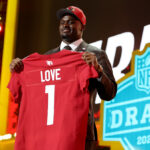
Having a large trove of draft picks is one thing — knowing what to do with them is another.
The Cleveland Browns, New York Jets and Las Vegas Raiders, all plenty familiar with picking high in the draft, faced a pivotal week for their respective rebuilds — and incredibly, the NFL’s three most bumbling franchises all absolutely nailed their drafts.
They weren’t alone, though. We actually had a tough time settling on a top 5 following the 2026 NFL Draft.
5 Teams That Best Maximized The 2026 NFL Draft
1. Cleveland Browns
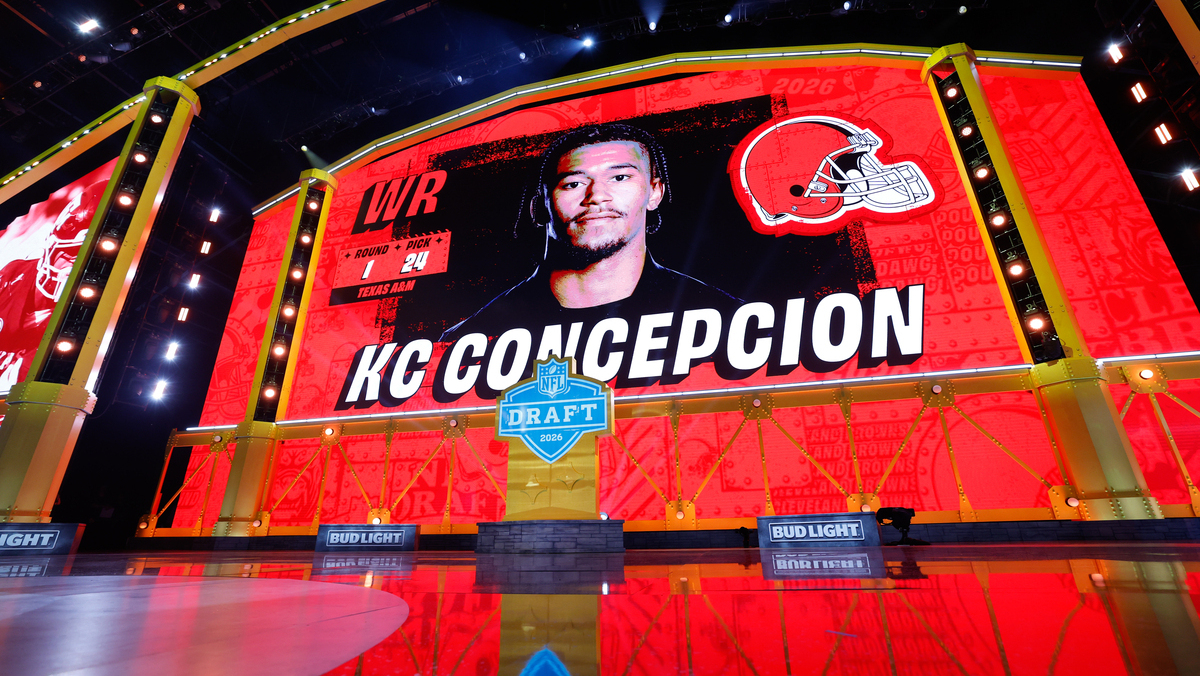
Draft picks: Utah OT Spencer Fano (Round 1-9th overall), Texas A&M WR KC Concepcion (1-24), Washington WR Denzel Boston (2-39), Toledo S Emmanuel McNeil-Warren (2-58), Florida OT Austin Barber (3-86), Alabama C Parker Brailsford (5-146), Alabama LB Justin Jefferson (5-149), Cincinnati TE Joe Royer (5-170), Arkansas QB Taylen Green (6-182), BYU TE Carsen Ryan (7-248).
The Browns spent the offseason rebuilding their offensive line, signing former Chargers LG Zion Johnson and former Packers C Elgton Jenkins while trading for Texans RT Tytus Howard, and they finished the job this week by drafting Utah OT Spencer Fano 9th overall. Fano is an immediate upgrade at left tackle over Dawand Jones, who has managed to play in just 24 games in three seasons.
Later in the draft, Cleveland picked up reinforcements in Florida OT Austin Barker in the third round and Alabama C Parker Brailsford in the fifth. PFF graded Barber as the 15th best offensive tackle in college football out of 632 evaluated last year.
But wide receiver was just as pressing a need for the Browns with Jerry Jeudy, Cedric Tillman and Isaiah Bond atop the depth chart entering the week.
Cleveland got excellent value in nabbing Texas A&M WR KC Concepcion (who brings added impact as a weapon on kick returns) with its other first-round pick, No. 24 overall, and Washington WR Denzel Boston in the second round. Many thought Boston would sneak into the back of the first round.
Concepcion had 61 receptions for 919 yards and 9 touchdowns for the Aggies and projects as a high-upside slot weapon, which works perfectly with Jeudy and Boston on the outside. The nearly 6-foot-4, 212-pound Boston put up near-identical receiving lines the last two years for the Huskies of 63-834-9 and 62-881-11.
With the revamped line, which now features four new starters and one deserved holdover in re-signed right guard Teven Jenkins (ranked 8th out 81 OGs by PFF last season), and that massively upgraded wide receiver corps along with impressive young tight end Harold Fannin Jr. (team-leading 72-731-6 as a rookie) and second-year running back Quinshon Judkins (827 rushing yard and 7 TDs in 14 games as a rookie), this is suddenly a very intriguing offense.
If the Browns can get solid play from the quarterback position, that is. But that’s a question for another day.
Cleveland wasn’t done in the draft, though.
The Browns got another incredible value late in the second round in Toledo safety Emmanuel McNeil-Warren, who fell all the way to pick No. 58 after being projected as a potential first-round pick. Cleveland traded up 12 picks (with the 49ers) to pounce on the chance to add the 6-foot-3, 201-pound safety who totaled 207 tackles, 5 interceptions and 8 forced fumbles over the last three seasons. He’ll rotate in with returning starters Grant Delpit and Ronnie Hickman, who are both free agents after this season.
To wrap up the draft, it picked up a pair of Day 3 tight ends with some upside in Cincinnati’s Joe Royer and BYU’s Carsen Ryan, but the most intriguing late-round pick was Arkansas quarterback Taylen Green.
Green was arguably the biggest wild card in the entire draft. He was the seventh QB drafted and will either fizzle out in the NFL (like many of the others on that list) or be the steal of the draft. The 6-foot-6, 227-pound Green passed for 9,662 yards, 59 TDs and 35 INTs and rushed for 2,405 yards and 35 TDs as a four-year starter for the Razorbacks.
His upside is tantalizing if he can further refine as a passer. It’s a great gamble for a team that really doesn’t know what it has at QB with Shedeur Sanders battling Deshaun Watson for the starting job.
2. Las Vegas Raiders
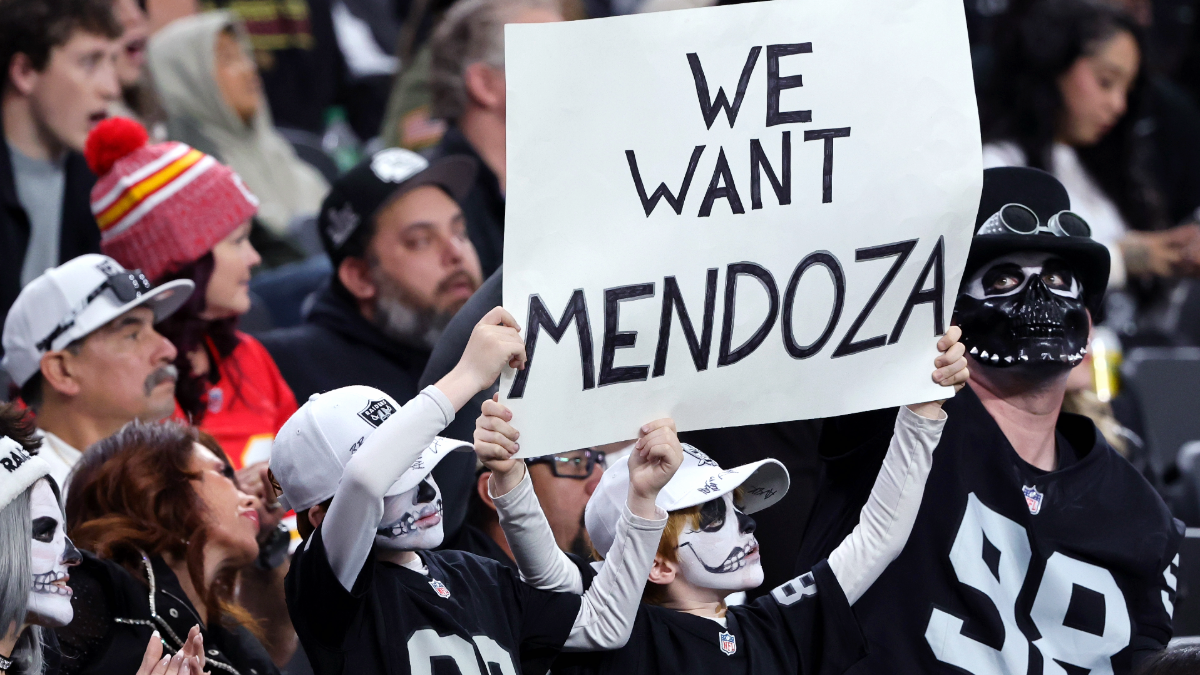
Draft Picks: Indiana QB Fernando Mendoza (1-1), Arizona S Treydan Stukes (2-38), Auburn EDGE Keyron Crawford (3-67), Texas A&M OL Trey Zuhn (3-91), Tennessee CB Jermod McCoy (4-101), Arkansas RB Mike Washington Jr. (4-122), Arizona S Dalton Johnson (5-150), Cal CB Hezekiah Masses (5-175), Oregon WR Malik Benson (6-195), NC State DT Brandon Crawford (7-229)
Landing the No. 1 pick and getting a potential franchise quarterback in Heisman Trophy winner Fernando Mendoza is a great way to start, of course.
But it’s the depth of the Raiders’ draft and especially the Day 3 values that put them on this list.
Arizona safety Treydan Stukes shot up draft boards over the last few months. He’s an interesting prospect who spent six years in college and really peaked in his final season with 52 tackles and 4 INTs. PFF gave him a 90.1 grade for the season, which ranked 6th among 897 qualifying college safeties.
We’re not quite so high on Auburn EDGE Keyron Crawford (10.5 TFLs, 5 sacks in two seasons for the Tigers after transferring up from Arkansas State), nor did the Raiders particularly need to prioritize EDGE there, so we don’t understand that pick.
But then they really found some momentum in this draft.
Trey Zuhn is a nice addition to the offensive line. He was a four-year starter for Texas A&M at left tackle but also made two starts at center, showing his versatility. He was the co-winner of the Jacobs Blocking Trophy, which goes to the top OL in the SEC.
The Raiders may not need to start him right away, but he’s great depth for now and can take over a starting spot in the future.
Las Vegas started Day 3 of the draft with a potential steal in Tennessee cornerback Jermod McCoy, who was a projected first-round pick before teams got spooked about the medical report on his surgically repaired knee (torn ACL that cost him the 2025 season).
If McCoy is indeed never the same after the injury, it’s not a costly miss for the Raiders in the fourth round. But if he does return to form, it’s possible the steal of the draft. A great gamble regardless as the Raiders traded up one spot (with the Bills) to make that selection.
Then later in that round, the Raiders traded again (with the Falcons) to move up 12 picks and take Arkansas running back Mike Washington Jr. We thought for sure Washington would be gone by the middle of the third round, so this is incredible value.
What more does the guy have to show after rushing for 1,070 yards and 8 TDs on a 6.4 yards per carry in the SEC and then running the fastest 40-yard dash of any RB at the NFL Scouting Combine at 4.33 seconds? An incredible pick to pair Washington with 2025 first-rounder Ashton Jeanty in the backfield.
Fifth-round safety Dalton Johnson and cornerback Hezekiah Masses are intriguing. Johnson was a tackle-machine at Arizona with 277 and 7 forced fumbles over the last three seasons while posting a career-high 4 INTS in 2025. Masses had 5 INTs and 13 passes defended in his lone season at Cal, after starting out at Florida Atlantic.
Our only gripe with the Raiders draft approach was that their wide receiver depth chart is rather underwhelming with Tre Tucker, Jalen Nailor and Jack Bech at the top. There was great WR value still where they took Crawford, and that would have been a much better move.
They did take a wide receiver late, selecting Oregon’s Malik Benson (43-719-6) in the sixth round. It’s a good pick, but doesn’t make up for the team not getting one of the better WR prospects on Day 2.
3. New York Jets
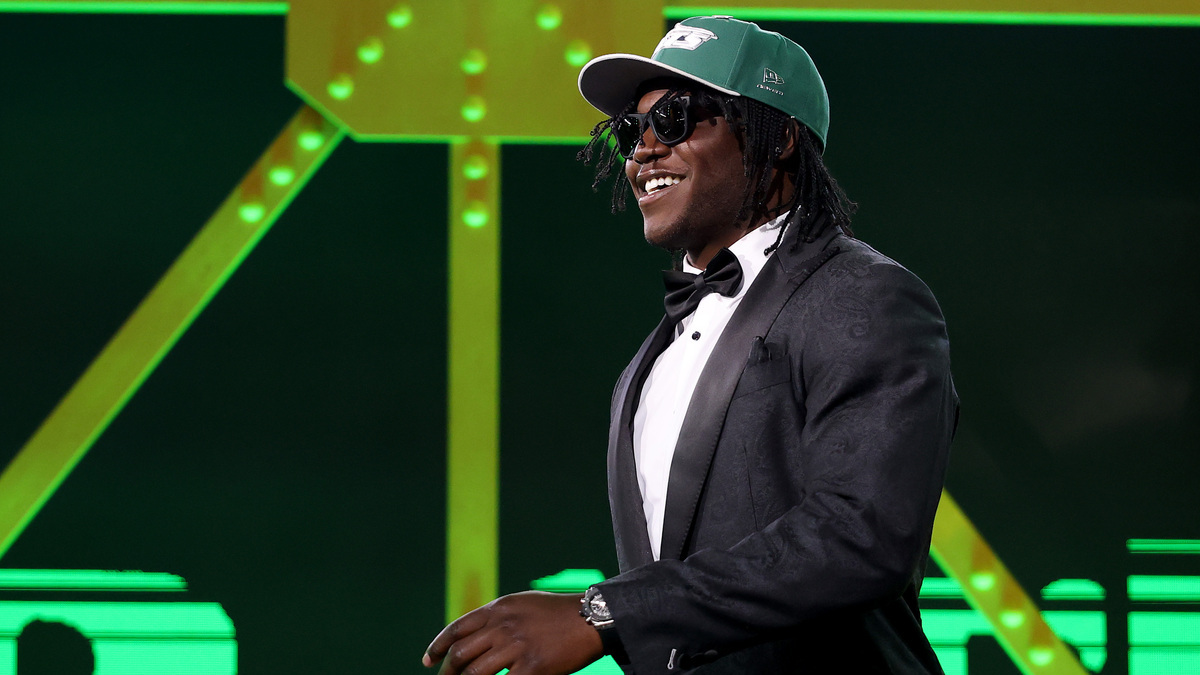
Draft Picks: Texas Tech EDGE David Bailey (1-2), Oregon TE Kenyon Sadiq (1-16), Indiana WR Omar Cooper Jr. (1-30), Indiana CB D’Angelo Ponds (2-50), Florida State DT Darrell Jackson Jr. (3-103), Clemson QB Cade Klubnik (3-110), Miami OG Anez Cooper (6-188), Kansas State S VJ Payne (7-228).
The Jets make this list mostly because they won Day 1 of the draft, and ultimately, that’s as important and impactful as anything.
They badly needed an edge rusher and got Texas Tech All-American David Bailey (52 tackles, 19.5 TFLs, 14.5 sacks, 3 FF) at No. 2 overall and then went best player available with their second first-round pick, taking Oregon tight end Kenyon Sadiq.
That wasn’t a pressing need with Mason Taylor coming off a decent rookie season, but the Jets wisely decided they couldn’t pass on a talent with the upside of Sadiq, who had one of the best combine performances of any tight end since Vernon Davis 20 years ago. A 6-foot-3, 241-pound tight end who runs a 4.39 40-yard dash with a 43.5 vertical jump who led a College Football Playoff team with 51 catches (for 560 yards) and 8 receiving TDs? Yes, please.
But what the Jets really needed was a wide receiver to pair with Garrett Wilson. No problem — they traded back into the end of the first round and grabbed Indiana’s Omar Cooper Jr. (69-937-13).
New York also had a solid Day 2 of the draft, taking Indiana cornerback D’Angelo Ponds in the middle of the second round. If Ponds wasn’t 5-foot-8, he’d have been a surefire first-round pick. Even at that height, though, it’s impossible to ignore his college film. PFF graded him the 8th-best CB out of 897 last season, as he had 61 tackles, 2 INTs (1 returned for TD), 11 PDs and even 4 TFLs while giving up just 18 receptions all season (per PFF). He’s a bit of a risk but a worthwhile one.
And Darrell Jackson Jr. was a solid space-clogging defensive tackle the last two seasons at Florida State while also chipping in 4.5 sacks and 77 tackles over that span.
The Cade Klubnik pick is interesting. It’s confounding why his Clemson career didn’t go better. We wouldn’t bet on him putting it together in the NFL after that, but he has better upside than fellow QB Drew Allar, who went a round earlier. It’s an interesting flier, at least.
And 6-foot-5, 334-pound offensive guard Anez Cooper was a starter for three and a half seasons for Miami, earning second-team All-ACC honors in 2025. For a sixth-round pick, that’s intriguing.
4. Baltimore Ravens
Draft Picks: Penn State OG Olaivavega Ioane (1-14), Missouri EDGE Zion Young (2-45), USC WR Ja’Kobi Lane (3-80), Indiana WR Elijah Sarratt (4-115), SMU TE Matthew Hibner (4-133), Duke CB Chandler Rivers (5-162), Alabama TE Josh Cuevas (5-173), Clemson RB Adam Randall (5-174), Michigan State P Ryan Eckley (6-211), Michigan DT Rayshaun Benny (7-250), Northwestern OG Evan Beerntsen.
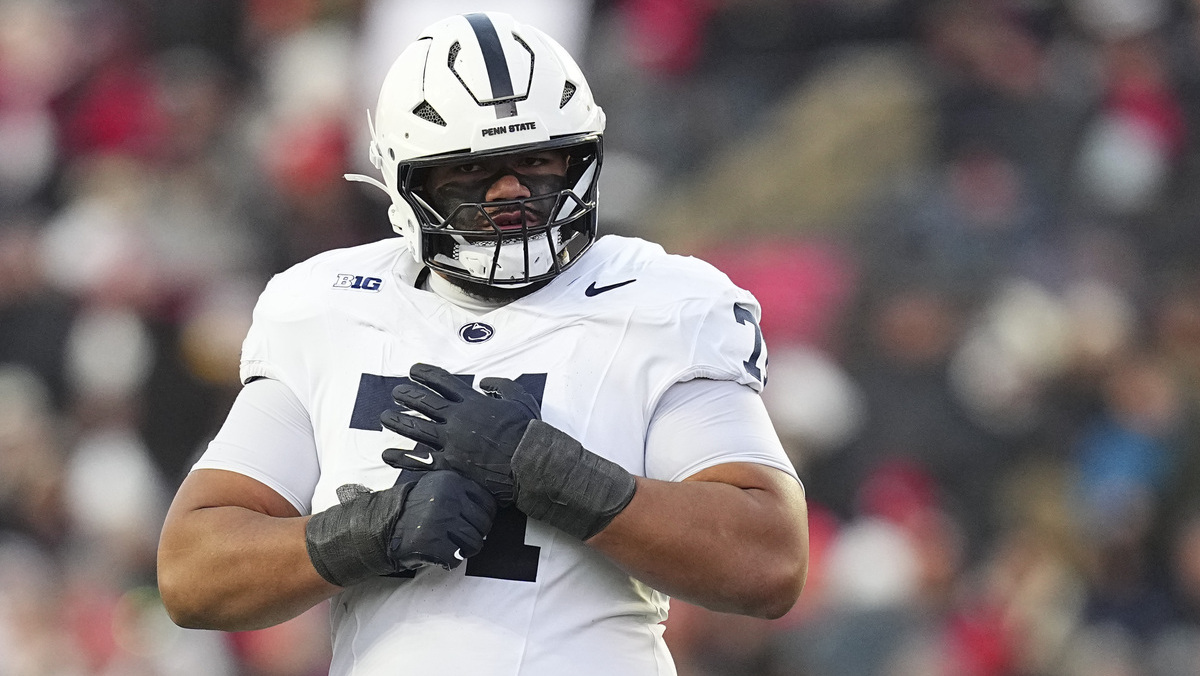
The Ravens took perhaps the safest pick of the first round in Penn State’s Olaivavega Ioane, who will plug in as an immediate upgrade at left guard for what is now one of the best offensive lines in the NFL with entrenched offensive tackles Ronnie Stanley and Roger Rosengarten and free agent right guard John Simpson (from the Jets). Assuming, that is, they figure out a solution at center.
Baltimore did downgrade substantially at center from Pro Bowl fixture Tyler Linderbaum (now the highest-paid C in the league with the Raiders).
Ravens general manager Eric DeCosta admitted it was “unfortunate” that the team missed out on its top targets when centers Logan Jones (Bears) and Jake Slaughter (Chargers) were taken late in the second round — earlier than the team was expecting. The team wasn’t high on the remaining options in the draft, though it did take Northwestern guard Evan Beerntsen, who could get worked out as a center.
That leaves Danny Pinter (a former reserve for the Colts), former Falcons reserve Jovaughn Gwyn and second-year lineman Corey Bullock competing for the job, unless the Ravens can swing a trade or find another option.
That is no doubt a miss in this draft for Baltimore, but in just evaluating the picks the Ravens did make, they earn their spot on this list.
The Ravens needed an edge rusher to pair with free agent splash Trey Hendrickson and they got Missouri’s Zion Young, considered a potential first-round pick, in the middle of the second round.
They also needed to upgrade the wide receiver depth chart behind Zay Flowers, and they hit on two very intriguing WR prospects in third-rounder Ja’Kobi Lane and fourth-rounder Elijah Sarratt — two of the most underrated WRs in this draft, in our opinion.
The 6-foot-4, 200-pound Lane is a rangy receiver with a massive catch radius and excellent hands who had 49 catches for 745 yards and 4 TDs as a junior at USC after posting 12 TDs as a sophomore.
And Sarratt was as reliable as any receiver in college football for the national champion Hoosiers with 65 catches for 830 yards and 15 TDs — capping a college career that included 242 catches for 3,678 yards from FCS-level St. Francis to James Madison and then Indiana.
We’d confidently bet both those receivers outplay their draft slot.
Those four picks alone put the Ravens on this list.
But they also got …
– The No. 2 tight end they needed in SMU’s Matthew Hibner (31-436-4), trading back into the fourth round to get their guy, plus later adding a blocking tight end in Alabama’s Josh Cuevas.
– An intriguing nickel cornerback in Duke’s Chandler Rivers, who makes up for being 5-foot-9 by running a 4.4 40-yard dash. Since 2022, he’s the only FBS cornerback with at least 20 pressures and 20 pass breakups, per ESPN.
– A potential RB2 in Clemson’s Adam Randall (814 yards and 10 TDs on 4.8 YPC in 2025).
– The first punter taken in the draft, Michigan State’s Ryan Eckley, who led all FBS punters with a 48.5-yard average and now replaces All-Pro Jordan Stout, who signed with the Giants.
5. Kansas City Chiefs
Draft Picks: LSU CB Mansoor Delane (1-6), Clemson DT Peter Woods (1-29), Oklahoma EDGE R Mason Thomas (2-40), Oregon CB Jadon Canady (4-109), Nebraska RB Emmett Johnson (5-161), Cincinnati WR Cyrus Allen (5-176), LSU QB Garrett Nussmeier (7-249).
The Chiefs went into this draft knowing they had to replace their top two cornerbacks after trading Trent McDuffie to the Rams and then seeing free agent Jaylen Watson sign with the Rams as well. So Kansas City took no chances on missing out on the draft’s top cornerback, trading up from No. 9 to the No. 6 (with the Browns) to snag LSU All-American Mansoor Delane.
They later added a potential starting nickel in Oregon’s Jadon Canady.
The Chiefs also badly needed a edge rusher with one of the thinner depth charts in the league, led by George Karlaftis. They took Oklahoma’s R Mason Thomas, who had 15.5 sacks and 22 TFLs the last two seasons. PFF graded him 36th out of 852 edge rushers in college football last season, including an elite 90.4 isolated pass-rushing grade, with 28 pressures in 10 games. He is undersized, however, at 6-foot-2, 241 pounds, but his speed made up for the difference in college.
It’s a fine pick at a position that needed to be prioritized in the first two rounds, but it’s not why the Chiefs are on this list necessarily.
The Chiefs not only addressed their needs — exceptionally well in the case of Delane — but they found great value at two other spots, taking Clemson DT Peter Woods at No. 29 overall. Woods had a case as the top defensive tackle in this draft but goes 11 picks after the Vikings took Florida’s Caleb Banks.
Woods, star Chris Jones and free agent nose tackle Khyiris Tonga make for a strong rotation on the interior of the defensive line.
They also found exceptional value in the fifth round with Nebraska running back Emmett Johnson, who rushed for 1,451 yards and 12 TDs on 5.8 YPC plus 46 catches for 370 yards and 3 TDs. He was the Huskers’ offense in 2025. Johnson being available in the fifth round is why teams don’t draft first-round running backs.
Pairing Johnson behind free agent addition Kenneth Walker III gives the Chiefs an infinitely better backfield than they had last year.
Fifth-round wide receiver Cyrus Allen (51-674-13 at Cincinnati last season) is a fine flier who may or may not make an impact.
The Chiefs closed the draft by taking LSU QB Garrett Nussmeier in the seventh round. Sure, why not?