

Each day leading up to the 2026 NFL Draft — April 23-25 — TeamFB7 will break down a different team’s biggest draft need and the best selection to address it. Granted, teams will most often use their first-round pick on the best available player/value and not necessarily always their biggest need, so this isn’t going to compile together into a mock draft in the end. It’s more a breakdown of how each team could best address its most paramount priority if it chooses.
Heading into free agency, the New York Jets needed … well, everything except a running back.
Some needs are more glaring than others, of course, but the Jets began a total rebuild on the way to their 3-14 finish last season, trading off star cornerback Sauce Gardner and defensive tackle Quinnen Williams mid-season while eventually admitting (predictable) failure on the Justin Fields experiment at quarterback.
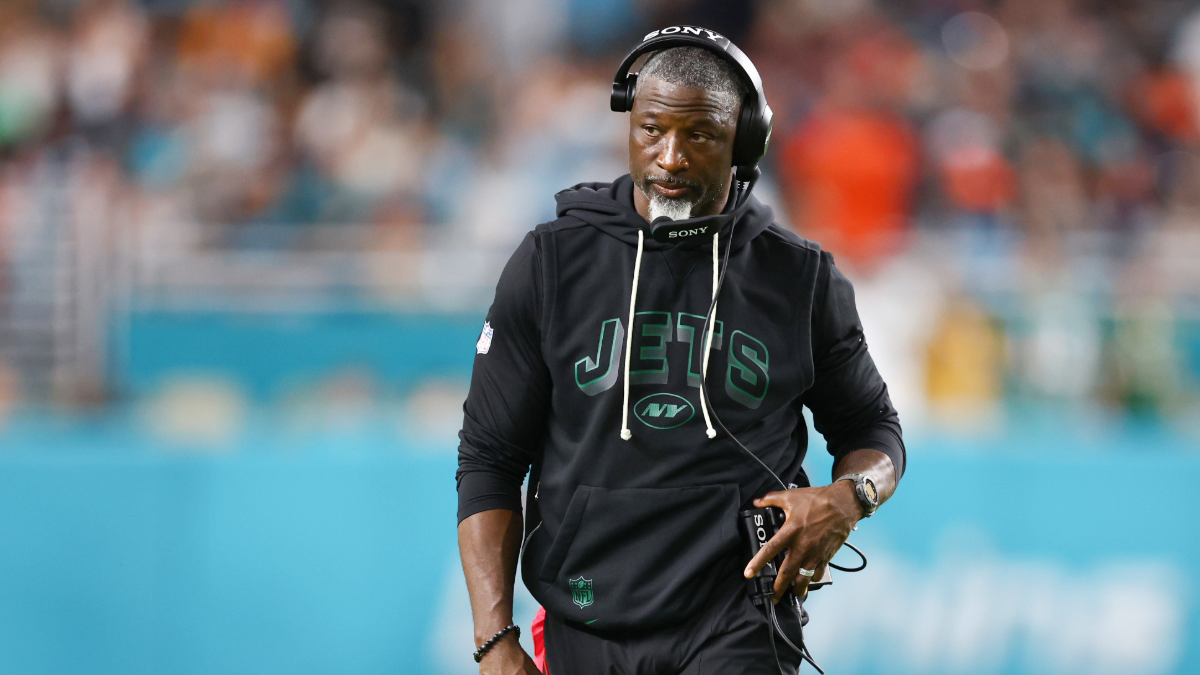
(Fields got benched in both Chicago and Pittsburgh, but sure, all he needed to unlock his potential was to play for the Jets … )
The Jets were a complete disaster on both sides of the ball in coach Aaron Glenn’s first season, ranking 29th out of 32 teams in both total offense and scoring, 25th in total defense and 31st in scoring defense. To punctuate it, they added the dubious distinction of being the first team in NFL history to go a whole season without a defensive interception. (No team had ever recorded fewer than 2 in a season.)
One could say Glenn faces a steep rebuild, but that would be presuming he’ll even still be a part of it by the time (or, rather, if) it finishes.
(As we’ve suggested before here, maybe hiring the defensive coordinator from a Detroit Lions team that based its success largely on winning offensive shootouts in spite of its defense wasn’t the inspired move so many in NFL media hailed it to be.)
That said, the Jets have already put some major work into that rebuild this offseason.
How The Jets Have Already Built Towards 2026
They acquired veteran safety Minkah Fitzpatrick from the Dolphins for a seventh-round draft pick and spent big on former Bengals edge rusher Joseph Ossai (3 years, $34.5 million) and veteran linebacker Demario Davis (2 years, $22 million).
Davis managed a career-high 143 tackles last season for the Saints in his 14th year in the league and returns to the team he started out with as a third-round pick of the Jets in 2012. Ossai had 5 sacks each of the last two seasons in Cincinnati and is turning just 26 years old next month, so there’s perhaps more untapped upside in his game. And Fitzpatrick may no longer be the star that earned three AP First-Team All-Pro honors, but he is still an experienced stabilizer in the secondary coming off a season in which he had 82 tackles and an interception in 14 games for Miami.
Other notable free agent signings included former Packers edge Kingsley Enagbare (1 year, $9 million), former Giants safety Dane Belton (1 year, $4 million) and former Bears cornerback Nahshon Wright (1 year, $3.5 million). They also picked up nose tackle T’Vondre Sweat, a two-year starter for the Titans, via trade.
Wright set career-highs with 80 tackles, 5 interceptions and 11 passes defended last season. Belton had 120 tackles, 2 sacks, an interception and 3 forced fumbles. Sweat didn’t rack up a lot of counting stats (34 tackles and 2 sacks), but he earned the fifth-highest PFF grade out of 134 qualifying interior defensive linemen at 83.4. PFF also credited him with 18 pressures.
Enagbare was a rotational pass rusher for Green Bay, generating 24 pressures last season, per PFF.
The focus so far has clearly been on rebuilding defensively as the foremost priority, and that’s a nice handful of moves to upgrade the unit.
As a result, New York has a decently intriguing secondary now with Wright and Brandon Stephens (ranked 38th among 114 qualifying cornerbacks by PFF) at cornerback, and Fitzpatrick, Malachi Moore (101 tackles, 3 TFL) and Belton at safety.
Ditto at interior linebacker with Davis and Jamien Sherwood (154 tackles, 8 TFL, 8 PD).
Returning defensive tackle Harrison Phillips ranked 24th among 134 qualified interior defensive linemen, per PFF, while totaling 60 tackles and 11 pressures, while Jowon Briggs ranked 17th by PFF after posting 4 sacks and 38 pressures. Those two and Sweat project as a solid group on the interior up front.
The Jets might still be light on the edges, though.
Emerging young pass rusher Will McDonald IV has 18.5 sacks over the last two seasons, but counting on career years from Ossai and Enagbare is probably asking a lot.
As for the offense …
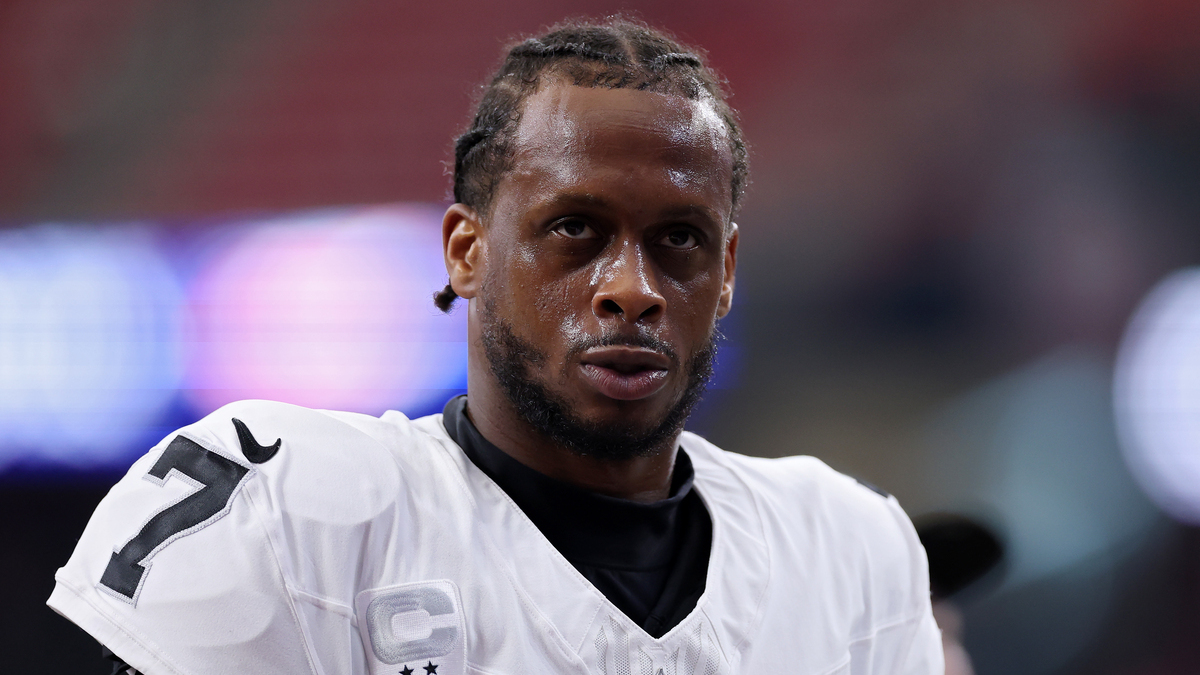
The New York Jets put the franchise tag on running back Breece Hall, fresh off a 1,000-yard season, and traded a sixth-round pick to the Raiders for QB Geno Smith and a seventh-round pick. Smith, who was a second-round pick of the Jets in 2013, returns to his original team as likely nothing more than a one-year stopgap.
As the roster stands now, New York would again be one of the absolute worst offenses in the NFL, so that’s where we’d put the focus in the draft.
The Jets holds the following draft picks next month — round (overall pick): 1 (2), 1 (16), 2 (33), 2 (44), 4 (103), 4 (140), 5 (179), 7 (228) and 7 (242).
So what are truly the team’s most pressing needs with those two first-round picks?
Biggest Need For The New York Jets In 2026 NFL Draft
Yes, quarterback is atop the list, ultimately. If the Jets ever want to be true contenders in the league, they need to find a franchise quarterback — and obviously soon-to-be 36-year-old Geno Smith isn’t it.
But with so many needs and so few quarterbacks available in this draft, it won’t be the first need they address. (We’ll get back to that in a minute.)
Meanwhile, take a look at the Jets’ wide receiver depth chart and try to argue that any need is more pressing.
New York has a star No. 1 WR in Garrett Wilson and then …
The only other WR of note on the roster is Adonai Mitchell, who came over midseason from the Colts and finished with 33 catches for 453 yards and 2 TDs between the two teams.
John Metchie III (48 catches for 274 yards and 2 TDs) would have been next on the list, but he left for the Panthers as a free agent. Tyler Johnon (197 yards, 1 TD) is also a free agent. That leaves Isaiah Williams (26-193-0) as the next option, which obviously can’t be the case entering the season.
So wide receiver is top of the list along with quarterback.
Edge rusher is probably next.
Followed by offensive line, as the Jets lost two starters to free agency with guard Alijah Vera-Tucker signing a big contract with the Patriots and guard John Simpson signing with the Ravens. They did sign left guard Dylan Parham from the Raiders, but he was part of the league’s worst offensive line last year and Las Vegas seemed fine to see him depart. Also, PFF ranked Josh Myers ranked 39th out of 40 qualifying centers
Who Should New York Jets Draft To Address Biggest Need?
As badly as the Jets need to get a stud wide receiver out of this draft, there simply isn’t one that would warrant going No. 2 overall. Ditto for quarterback, as Indiana’s Fernando Mendoza will be off the board at No. 1 to the Raiders, and it’s debatable (and divisively so!) if Alabama’s Ty Simpson is even a true first-round-caliber QB prospect.
Also holding the No. 16 pick and plenty of draft capital to trade up from there, it makes sense as the draft board projects to defer the wide receiver pick to that selection and use the No. 2 pick on an edge rusher.
That’s why many draft gurus — like ESPN’s Mel Kiper Jr. and Field Yates along with NFL.com’s Bucky Brooks — have projected Texas Tech’s David Bailey to the Jets at that spot. The Ringer’s Todd McShay has Ohio State star LB/EDGE Arvell Reese going to the Jets there.
I’m not 100 percent sold on the 6-foot-4, 251-pound Bailey as a sure thing like some other top edge rushers who have gone so high in recent drafts — like Will Anderson Jr. to the Texans at No. 3 in 2024, Aidan Hutchinson to the Lions at No. 2 in 2022 or Chase Young to the Commanders at No. 2 in 2020. Even Abdul Carter to the Giants last year at No. 3 — while he hasn’t yet delivered on that draft slot, there was zero question that he earned that stature coming out of Penn State.
But heck, Bailey had 19.5 tackles for loss and 14.5 sacks in an All-American season for Texas Tech last year. There are questions about his bend, but he flashes in plenty of other ways.
Meanwhile, there are still questions whether Reese is an off-ball linebacker or outside linebacker/edge rusher, though it’s hard to imagine he isn’t an impact player in the NFL regardless.
The answer is …
This pick would be a lot easier to advise if there was a clear Ja’Marr Chase or Jaxon Smith-Njigba in this draft, but that’s not the case, so we’ll agree with the draft “experts” and say the Jets should further boost their weakest defensive position and take Bailey unless they can find an ideal option to trade down in the first round and add even more draft assets.
Now, for the No. 16 pick …
There is a lot of buzz linking Simpson to the Jets at No. 16, and only the team’s decision-makers know what their evaluation is of the quarterback. (But really, what in the history of the Jets’ drafting and handling of QBs would make you trust that evaluation regardless.)
Don’t tell ESPN talking head Dan Orlovsky — who has planted his flag on the hill that Simpson (who shares the same representation as Orlovsky) is actually a better prospect than Mendoza — but this is weak QB draft class and that’s the main reason Simpson is even viewed as the second-best option at the position.
But 2027 is shaping up as an incredibly deep QB draft class with the likes of Arch Manning, Dante Moore, C.J. Carr, Julian Sayin, Jayden Maiava, etc.
The Jets also have no pressing need to throw a rookie QB into the fire in 2026 at the start of a multi-year rebuild with Smith on board to man the position for a year. Simply put, they should absolutely defer spending premium draft capital on the position this year — and not even gamble on an evaluation of Simpson — and instead address the need at wide receiver.
The consensus top three WRs in this draft are Ohio State’s Carnell Tate, Arizona State’s Jordyn Tyson and USC’s Makai Lemon.
Lemon seems most likely to be the third of those three left available, but there’s no guarantee he or any of them make it to No. 16. McShay and Brooks, for reference, both expect all three to be off the board by the Rams’ pick at No. 13.
So our official recommendation for the Jets is to make sure that doesn’t happen — use their advantage of having four picks in the first two rounds (six in the top four rounds) and trade up to make sure they snag one of those three receivers — likely Lemon.
Lemon won the Biletnikoff Award as college football’s top pass-catcher last season with 79 catches for 1,156 yards and 11 touchdowns for USC.
Aside from size (5-foot-11, 192 pounds), Lemon checks all the desired boxes. He’s an excellent route runner with elite hands and he’s as tough as they come at the position — think Amon-Ra St. Brown or Puka Nacua.
There should be no way the Jets let Lemon get off the board to another team as the likely third WR drafted.
Oddly enough, he’s more of a sure-thing impact NFL player than Bailey at No. 2, but you play the draft the way it demands.
Editor's Pick
 Way Too Early Predictions For 2026 NFL Awards