For most of the final weeks of the regular season, it had become a two-quarterback race for the Heisman Trophy between Indiana’s Fernando Mendoza and Ohio State’s Julian Sayin as the two headed down a collision course to a much-anticipated Big Ten championship game showdown last weekend.
But the fact that neither quarterback was stuffing the stat sheet in recent weeks opened the door for Vanderbilt’s Diego Pavia to slide into the race as the three entered last weekend with even odds.
With the final votes cast and the four finalists formally announced Monday night, though, the oddsmakers consider the Heisman race a wrap.
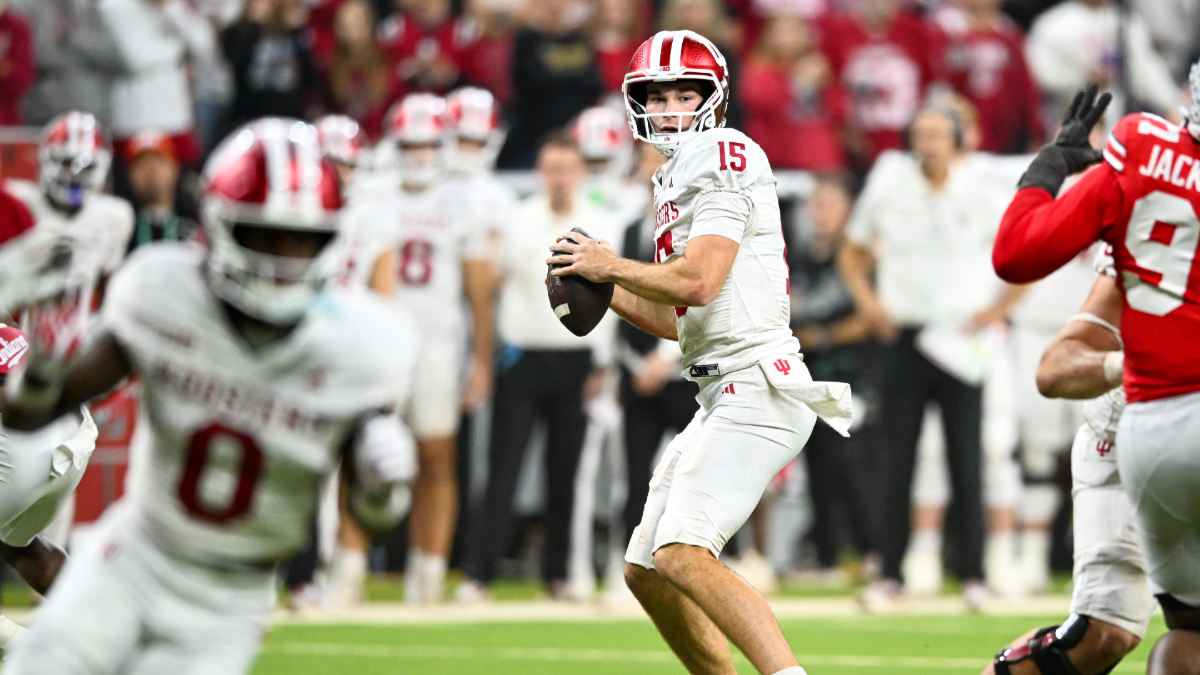
Mendoza is an overwhelming -1,000 favorite, per DraftKings Sportsbook, followed by Pavia (+600), Notre Dame running back Jeremiyah Love (+15,000) and Sayin (+70,000).
The Heisman Trophy will be announced and presented Saturday night. In the meantime, we have some thoughts.
Who SHOULD Win The Heisman?
Mendoza is a fine choice. Indiana is the greatest story in college football in (insert any large number) years, and having the Hoosiers’ season punctuated by the sport’s most prestigious individual honor is fitting.
Until this season, Indiana held the dubious distinction of having the most losses all-time in college football history before getting passed by Northwestern.
Before Curt Cignetti set up shop in Bloomington, the Hoosiers had just three winning seasons since 1996, hadn’t finished top-10 in the rankings since 1967 (when they finished in a three-way tie for the Big Ten title) and hadn’t won an outright conference championship since 1945.
Cignetti took a program coming off a run of 2-10, 4-8 and 3-9 finishes, went 11-2 last year to crash the College Football Playoff and somehow topped that this season with a 13-0 mark, Big Ten championship, the first No. 1 ranking in program history and the top seed in the playoffs.
How much of that credit does Mendoza deserve? Hard to say, but definitely a notable share.
He’s been good — 2,980 passing yards on a 71.5% completion rate, 33 touchdowns, 6 interceptions and 6 rushing TDs — but that’s not all so different overall from what Kurtis Rourke did last year for Cignetti (3,042 yards on 69.4%, 29 TDs, 5 INTs, 2 rushing TDs).
Mendoza was 15 of 23 for 222 yards, 1 TD and 1 INT in the 13-10 Big Ten title game win over the previously unbeaten Buckeyes, tossing the decisive touchdown pass in the third quarter.
Interestingly, Mendoza only had one 300-yard passing game all year — not because he couldn’t have padded the stats more but because he didn’t need to with Indiana winning so many lopsided games he wasn’t even asked to finish. That’s still an unusual thing to see on a Heisman resume, though.
But absolutely he had some eye-popping performances along the way — 21/23 for 267 yards, 5 TDs, 0 INTs vs. Illinois, 24/28 for 332 yards, 4 TDs, 0 INTs vs. Michigan State, and 22/24 for 299 yards, 4 TDs and 0 INTs vs. Wisconsin.
Mendoza also helped Indiana beat then-No. 3 Oregon on the road in October, 30-20, with 215 passing yards, 1 TD and 1 INT and the then-No. 1 Buckeyes, along with other moments of brilliance like the game-winning TD drive (and 49-yard catch-and-run TD pass to Elijah Sarratt in the final minutes at Iowa) and his best throw of the season to Omar Cooper Jr. on third down in the final minute to rally to a 27-24 win over Penn State.
Mendoza delivered enough times in enough big games and big moments to be a fine Heisman choice, and Indiana deserves all the recognition it can get for what, again, is one of the best stories in college football history, honestly.
Mendoza is also a great story himself. He was rated a two-star prospect out of high school in Miami, per the 247Sports Composite, when he committed late in the recruiting cycle to Cal. He played his way into the starting role for two seasons there and then transferred to Indiana and helped the Hoosiers top their shocking 2024 season somehow as the last remaining unbeaten in college football. Special.
And he’s won over a lot of casual fans with his personality and charisma on top of it.
Would Indiana be 13-0 with a different quarterback? Or even Kurtis Rourke? Hard to say. Let’s assume the odds are that another QB would have not delivered in every single big moment like Mendoza did.
But the Hoosiers’ defense never gets enough attention or acknowledgement for its role in all this. Indiana ranks second in college football in points allowed (10.8 per game), sixth in yards allowed (257.2 per game), tied for sixth in turnovers forced (25) and tied for fourth in sacks (39). Case in point, Sayin was sacked five times Saturday by Indiana after taking only six sacks all season before that.
It’s also hard to ignore that Mendoza’s raw numbers look so starkly different than those of any other QB to win the Heisman in recent years.
– 2023, LSU QB Jayden Daniels: 3,812 passing yards, 40 TDs, 4 INTs, 1,134 rushing yards, 10 TDs in 12 games
– 2022, USC QB Caleb Williams: 4,537 passing yards, 42 TDs, 5 INTs, 382 rushing yards in 14 games
– 2021, Alabama QB Bryce Young: 4,872 passing yards, 47 TDs, 7 INTs in 15 games
– 2019, LSU QB Joe Burrow: 5,671 passing yards, 60 TDs, 6 INTs, 368 rushing yards, 5 TDs in 15 games
– 2018, Oklahoma QB Kyler Murray: 4,361 passing yards, 42 TDs, 7 INTs, 1,001 rushing yards, 12 TDs in 14 games
– 2017, Oklahoma QB Baker Mayfield: 4,627 passing yards, 43 TDs, 6 INTs, 311 rushing yards, 5 TDs, in 14 games
And on and on. Lamar Jackson, Marcus Mariota, Jameis Winston, Johnny Manziel, etc.
Those QBs were all the clear No. 1 reason their teams were elite and their numbers were undeniable when assessing the top player in college football.
Mendoza’s numbers taken at face value don’t remotely compare to any of those Heisman-winning QBs. The case for him is that he was the on-field face of this incredible 13-0 Indiana team and reliably delivered in big moments, and that’s a fine case this year when there also wasn’t a singular stat line from Power 4 QB that simply couldn’t be denied like the names listed above.
The only real alternative would be Pavia.
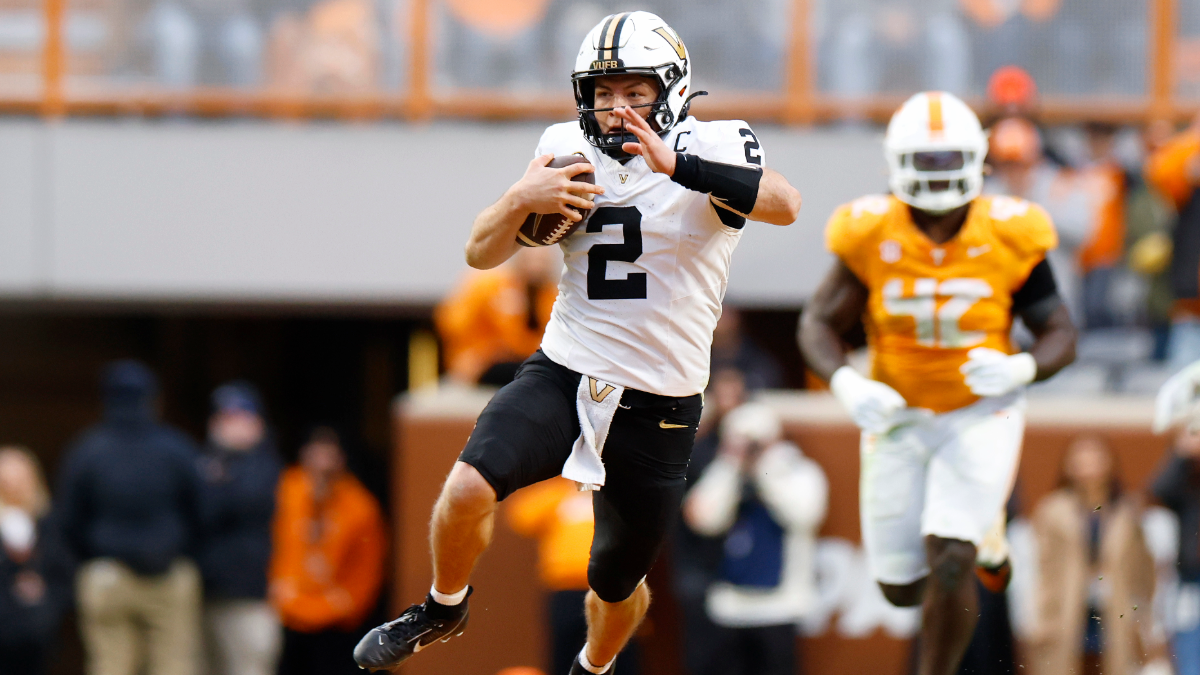
The second-best story in college football is Vanderbilt going 10-2 for the most wins in program history while breaking into the top 10 of the AP poll (No. 9) earlier this season for the first time since 1947.
And the Commodores truly rode on the back of Pavia’s dynamic dual-threat talent.
Pavia passed for 3,192 yards, 27 TDs and 8 INTs and rushed for 826 yards and 9 TDs in 12 games while really amplifying his Heisman case down the stretch of the season.
After a few ho-hum weeks in the middle of the schedule (relatively speaking, of course), he rattled off this stretch of games: 365 passing yards, 3 TDs, 0 INTs, 43 rushing yards, 1 TD in a narrow loss to Texas; 377-3-0, 112-1 in an overtime win over Auburn; 484-5-1, 48-1 vs. Kentucky; and 268-1-2, 165-1 in a dominant win at Tennessee.
If Pavia had put up those numbers all season — he was held under 200 passing yards in five of the first eight games (in lopsided wins over Virginia Tech, South Carolina, closer wins over LSU and Missouri and a loss to Alabama) but also led Vandy to a 7-1 record in that time — he might have forced the voters hands for a different outcome.
Personally, Pavia would still have gotten my vote if I had one because he ranked first among all Power 4 players in total offense with those 4,018 combined passing/rushing yards (third overall in the FBS behind North Texas QB Drew Mestemaker and South Florida QB Byrum Brown) and more than 300 yards ahead of any other P4 player, and because Vanderbilt relied so heavily on his production to win games.
Again, if Pavia had played the middle of the season at the heightened level he finished it and put his numbers in the stratosphere of the recent Heisman-winning QBs noted above, there may not be a debate at this point.
As it is, though, Mendoza is a justifiable Heisman pick as well. It’s hard to truly find fault in honoring a clutch player and great individual story who represents the only unbeaten team in the country.
Spotlighting The Other Heisman Finalists
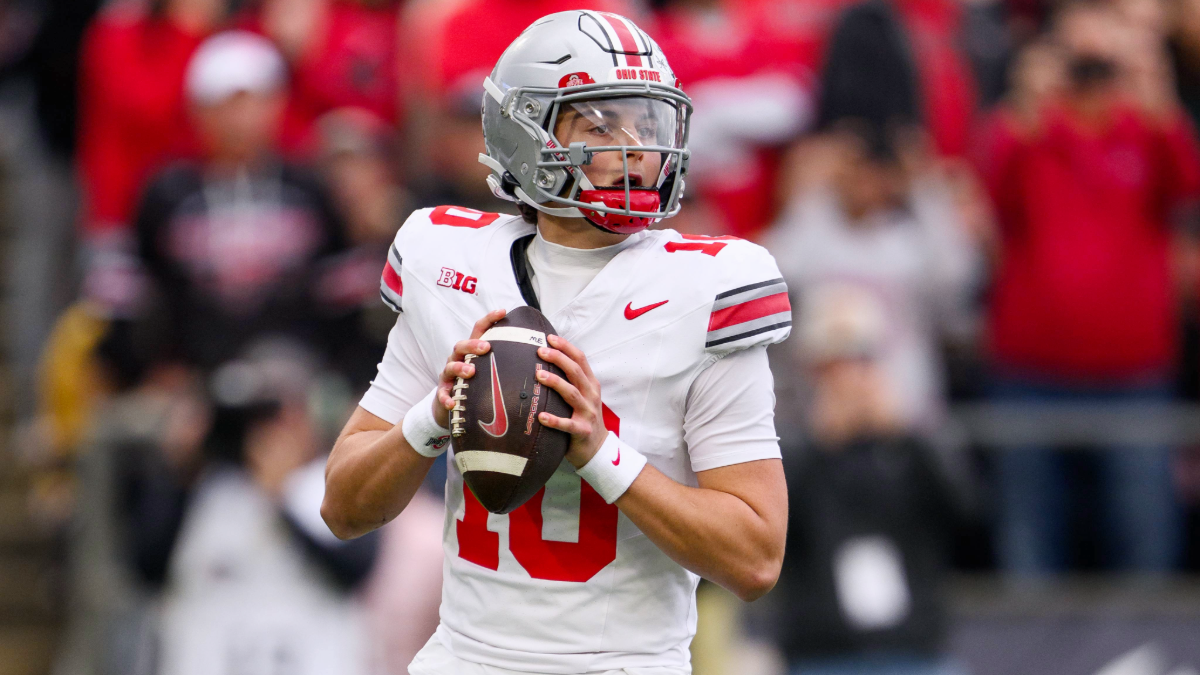
Ohio State QB Julian Sayin
Sayin, the redshirt-freshman, was the Heisman favorite for a bit and enters the CFP with 3,323 passing yards, 31 TDs and 6 INTs and an FBS-leading 78.4% completion rate. He didn’t really do anything to set himself back at the end, playing well in a big road win over rival Michigan (19/26 for 233 yards, 3 TDs, 1 INT) and the Big Ten championship game loss (21/29 for 258 yards, 1 TD, 1 INT — on Ohio State’s first series). He just lost the big game and was too comparable to Mendoza otherwise.
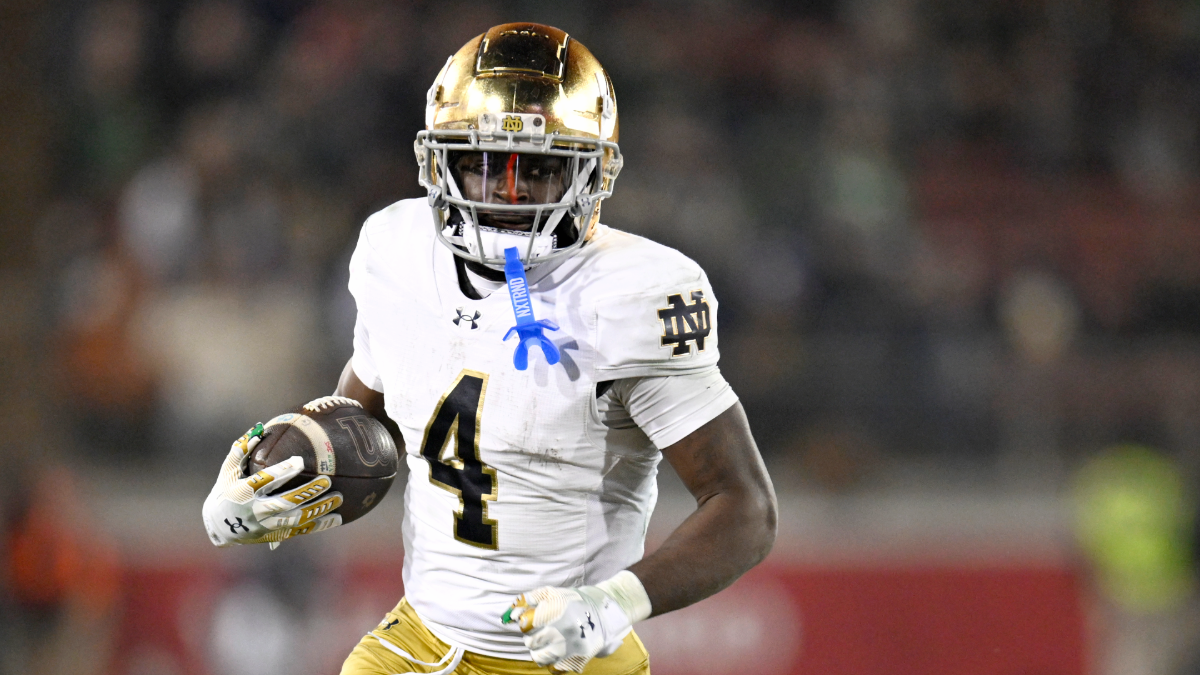
Notre Dame RB Jeremiyah Love
Love was really never much in the Heisman conversation before surging into the final four here at the end. It’s fair to wonder if that was at least partly a response to Notre Dame getting snubbed from the CFP bracket and warranting some extra recognition. Or it purely could simply be the fact that Alabama QB Ty Simpson and Texas A&M QB Marcel Reed fell off at the end, and Love was sensational all season and deserves this attention. No argument here. He rushed for 1,372 yards on 6.9 yards per carry with 18 TDs and added 280 yards and 3 TDs receiving. His 21 total TDs were the most of any FBS player and second overall to North Texas RB Caleb Hawkins’ 26. Yeah, Love deserved to be a Heisman finalist.
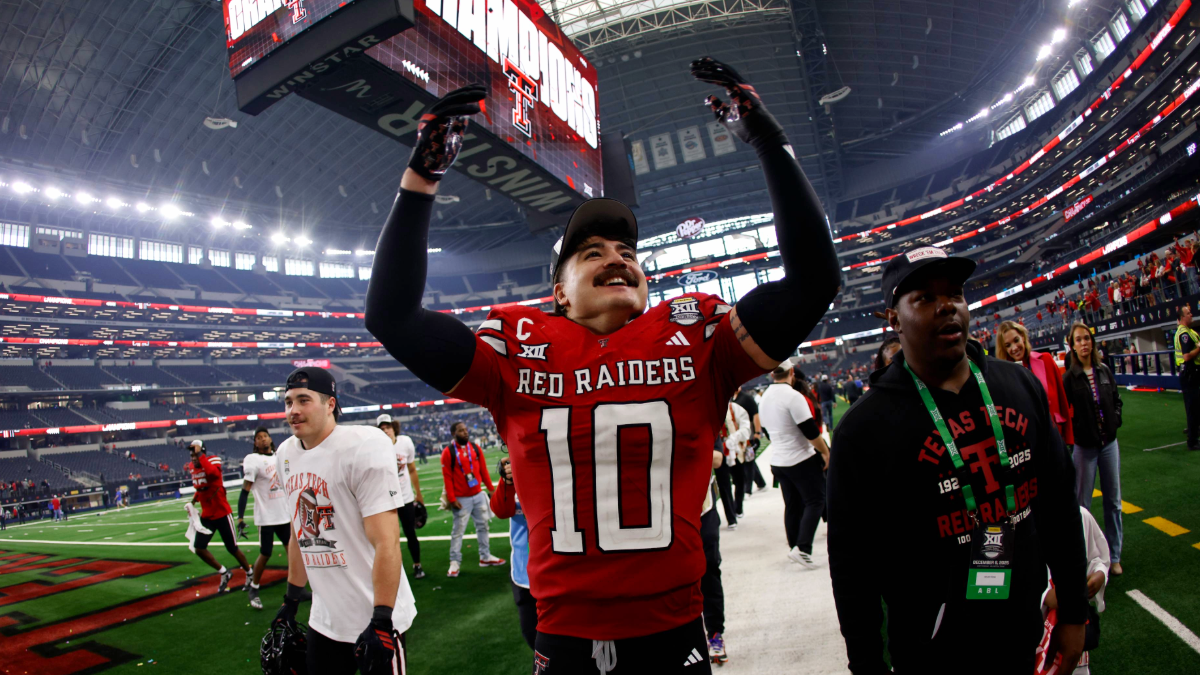
Top Heisman Snub
The most notable player not to make the group of four finalists is Texas Tech linebacker Jacob Rodriguez.
Defensive players rarely get Heisman love. Not counting two-way star Travis Hunter winning last year at Colorado as much for his work as a WR along with what he did at CB, the last defensive player to win the Heisman was Michigan CB Charles Woodson in 1997.
There have been defensive players recognized as Heisman finalists in recent years, though, with Michigan DE Aidan Hutchinson in 2021, Ohio State DE Chase Young in 2019 and Michigan S Jabrill Peppers in 2016 (one of five finalists that year).
Rodriguez certainly had a case, and had he been chosen over Love it wouldn’t have been controversial, though the aggrieved Notre Dame faithful would have surely lost their minds even further.
Rodriguez had one of the most unique seasons in recent memory with 117 tackles (61 solo), NCAA-leading 7 forced fumbles (with 2 fumble recoveries), 4 interceptions, 6 pass breakups, 11 tackles for loss, a sack and 2 rushing TDs for the No. 4 team in the country.