Tuesday was the deadline for NFL teams to apply the franchise tag — or not — on high-profile pending free agents, and the news was equally as notable both ways.
The franchise tag is a temporary “solution” to retaining a valued player, as it binds a pending free agent to stay with his current team for another year at a premium salary that is the average of the top five salaries across the league for that position over the last five years, or a 120% raise from the player’s salary from the previous year — whichever is higher.
But there’s no guarantee the player doesn’t respond with a holdout for a long-term contract or make the situation untenable regardless, so it’s a tricky proposition.
(To really get into the weeds on it, most applications of the franchise tag are of the “non-exclusive” variety, which technically allow a player to seek other offers, but the team has the right to match the offer sheet or receive two first-round draft picks for letting him sign elsewhere. That’s a bounty too high generally for other teams to even consider paying, unless in a unique circumstance for a star quarterback perhaps. The “exclusive” franchise tag sets the one-year tender at the average of the five highest salaries at the position currently, which obviously raises the price.)
There’s also the transition tag, which comes in at a slightly lower rate — the average of the top 10 salaries at the position, or the 120% raise — while allowing the player to seek other offers, with the team then having the option to match any offer sheet.
Players who are franchise-tagged have until July 15 to work out a long-term contract with the team before the one-year tender locks. Players who were not franchise-tagged can still work out extensions with their current team, but the free agency negotiating window starts Monday with free agent contracts able to officially be signed next Wednesday (March 11).
Had William Shakespeare lived four centuries later, he might be pondering the perennial spring dilemma: “To tag or not to tag?” (Especially this year had he become an Indianapolis Colts fan …)
The 10 Most Notable NFL Franchise Tag Decisions
Only four players ended up receiving any form of franchise/transition tag this year, while some notable standouts are now set to hit the open market.
Here were the top 10 most notable franchise tag decisions that now shape the free agent market.
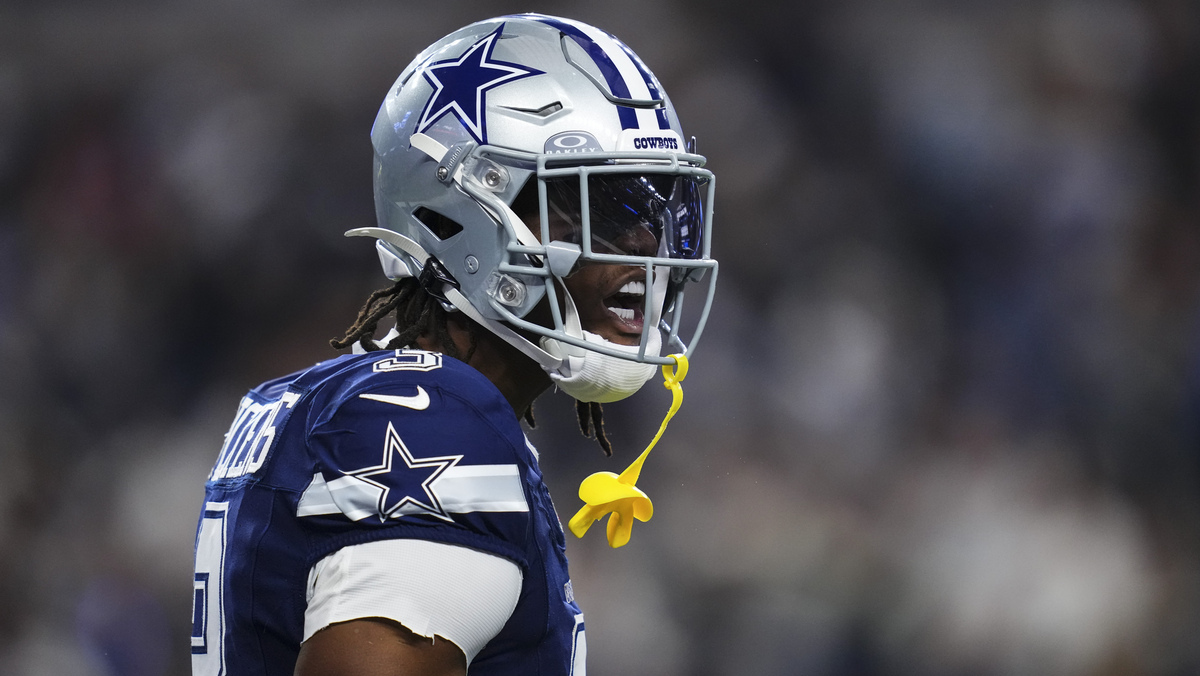
1. Dallas Cowboys place non-exclusive franchise tag on WR George Pickens
This was both an easy and a tricky decision for the Cowboys.
On one hand, if Dallas is going to be built around having an elite offense, then it absolutely needed to retain Pickens after seeing how well he and fellow star wideout CeeDee Lamb co-existed last year.
The former Pittsburgh Steeler dwarfed his previous career-best numbers in his first season in Dallas, catching 93 passes for 1,429 yards and 9 touchdowns. That trade proved to be an incredible steal for the Cowboys, who only gave up a 2026 third-round pick and a 2027 fifth-round pick (with a 2027 sixth-round pick coming back) to the Steelers last May.
With a top-10 quarterback (and arguably top 5) in Dak Prescott and Lamb in the middle of lucrative contracts through 2028, Pro Bowl tight end Jake Ferguson under contract through 2029 and after re-signing productive running back Javonte Williams last month, retaining Pickens was the final piece of the puzzle.
The Cowboys ranked second in the NFL in total offense (391.9 yards per game) and seventh in scoring (27.7 points per game) last season, and they should be able to stay elite now with all that skill talent returning.
But, on the other hand …
Pickens is now expected to make $27.3 million in 2026, Lamb’s contract carries an average annual value of $34 million, Prescott is the highest-paid player in the league with AAV of $60 million, Ferguson is at $13 million AAV and Williams at $8 million.
That’s $142.3 million for five offensive skill position players. More to the point, it’s $121.3 million for a QB and two WRs, which is 40.3% of the 2026 NFL salary cap ($301.2 million) for a team that needs major upgrades across a defense that ranked 30th in the league (377.0 YPG) and dead-last in scoring defense (30.1 PPG).
(We’re not getting into depths of the complicated nature of NFL contract structures, so for all intents and purposes, let’s just use that percentage as a rough reflection of the investment on those three players. Deal?).
The Cowboys will likely try to work out a long-term contract with Pickens, but given what Lamb is making it’s hard to imagine that will be a cost-saving move of any kind.
Meanwhile, that defense is why the Cowboys and their elite offense missed the playoffs entirely in 2025. That same formula is a major part of why the Bengals — similarly all-in on QB Joe Burrow and WRs Ja’Marr Chase and Tee Higgins but with an abjectly bad defense — have missed the playoffs three straight years.
So that’s the dilemma Dallas faced. In isolation, keeping Pickens is a no-brainer. But how are the Cowboys going to rebuild their defense sufficiently enough with so much invested in three offensive players?
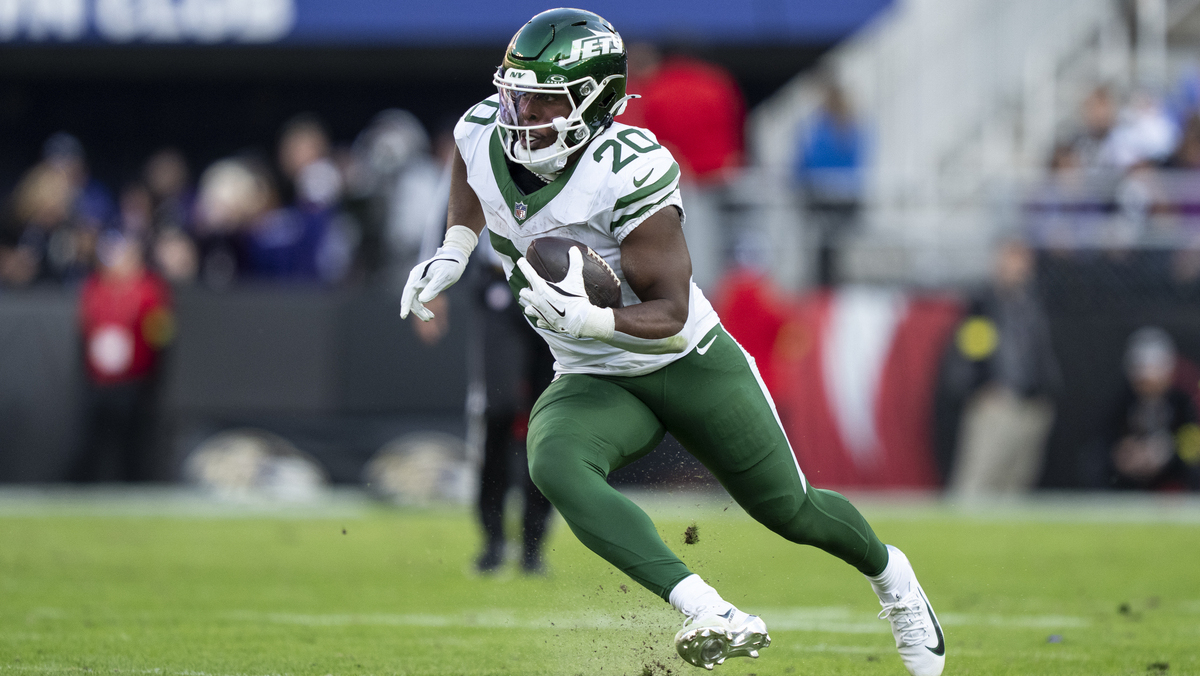
2. New York Jets place non-exclusive franchise tag on RB Breece Hall
If Hall and the Jets don’t work out a long-term deal, he would get about $14.3 million for the 2026 season.
This was a decision many around the league were monitoring as Hall would have been the top free agent running back on the market had the Jets chosen not to use the franchise tag.
Again, context and circumstances are the only reasons there is anything to dissect in this decision.
All other factors aside, retaining Hall and paying him as one of the top running backs in the league for a year is an easy call. He just delivered the first 1,000-yard rushing season by a Jets player in 10 years, going for 1,065 yards and 4 TDs on 4.4 YPC along with 36 catches for 350 yards and a TD.
Those numbers aren’t overwhelming, but then consider that the Jets didn’t just have the worst passing offense in the NFL — they were dead-last at 140.3 YPG and 24.9 passing YPG below the next-worst team, the Cleveland Browns. Let’s restate that — the Jets’ passing attack was 15.1% worse than a Browns team that relied mostly on overmatched rookie QBs Dillon Gabriel and Shedeur Sanders.
And Hall still managed to churn out a 1,000-yard season when opposing defenses could sell-out to stop him and not worry much about the likes of Justin Fields or undrafted rookie Brady Cook punishing them through the air. There are reasons the Jets hadn’t had a 1,000-yard rusher since 2015 — general dysfunction and mostly putrid quarterback play.
So Hall must be evaluated not on his raw numbers but on his talent and potential. He would have had multiple suitors ready to snatch him up on a lucrative contract had he become a free agent.
But then there’s the reality that the Jets are very clearly multiple years from contending for anything after stripping things down last year and trading two of their best defensive players (CB Sauce Gardner and DT Quinnen Williams) mid-season.
Having one of the league’s most expensive running backs seems an unnecessary luxury for a team that doesn’t even know who is going to be its quarterback in 2026, let alone for the future, and that has so, so many holes and needs to address.
It would make the most sense for the Jets to now try to trade Hall and collect more draft assets. By the time they’re actually equipped to compete again, they can go splurge on a running back then.
It would also be merciful for Hall before he spends his entire prime running into walls at the line of scrimmage for the Jets.
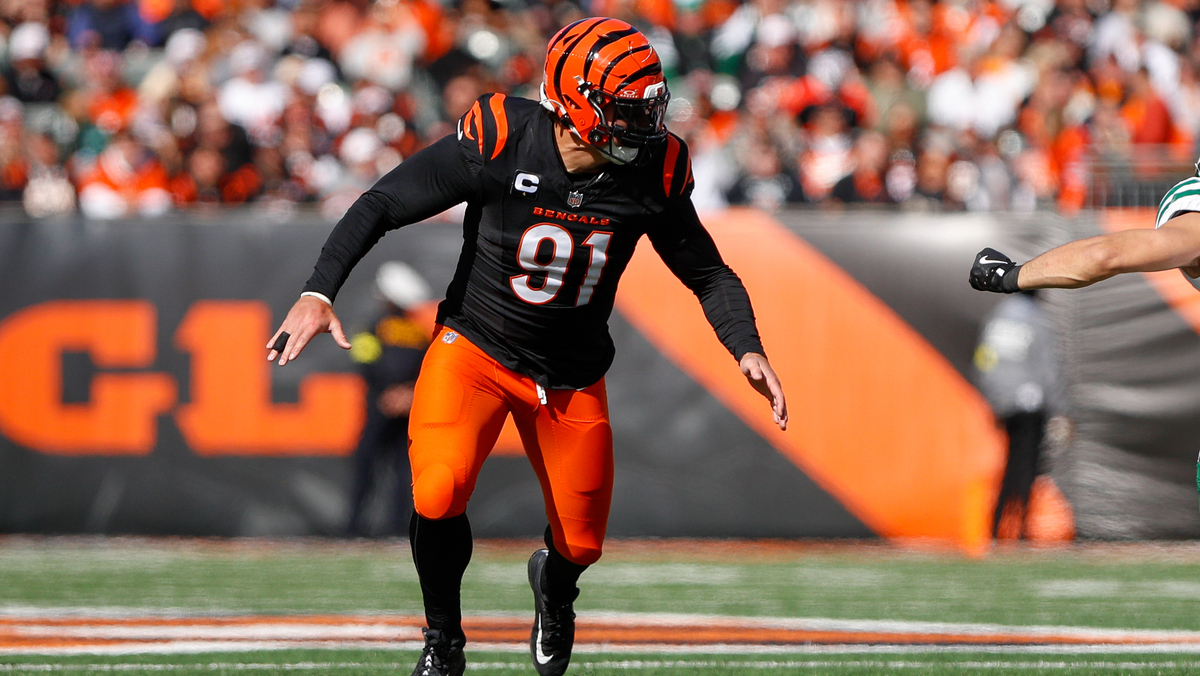
3. Cincinnati Bengals do not use franchise tag on DE Trey Hendrickson
It comes as no surprise that the Bengals are letting Hendrickson walk. They went through a prolonged contract spat with their star edge rusher last offseason, only getting him signed a little more than a week before the season opener on a one-year $30-million deal.
Hendrickson was then limited to just seven games by a significant hip/pelvis injury that required season-ending core muscle surgery. He had 16 tackles, 4 sacks and 8 QB hits in his limited action.
First, it’s doubtful that franchise-tagging Hendrickson would have gone smoothly and not just provoked another long holdout and contentious contract standoff. But also, he turns 32 this season and is coming off a major injury and the franchise tag would have paid him $24.4 million in 2026.
It remains to be seen what Hendrickson gets in free agency given those factors, but either way, it was clear both sides were ready to move in different directions.
Still, the non-move ranks third on this list because Hendrickson now becomes one of the most coveted free agents on the market. Before last season, he had posted back-to-back 17.5-sack seasons, leading the league in 2024 while finishing second in NFL Defensive Player of the Year voting. Overall, Hendrickson played at least 15 games in five straight seasons from 2020-24 (the first of those with the New Orleans Saints) while totaling 70.5 sacks, 137 QB hits and 12 forced fumbles with four Pro Bowl appearances in that span.
There is no shortage of teams who will feel an elite edge rusher can make the difference for their defense in 2026, so Hendrickson’s free agent market should be robust.
We previously broke down the most logical landing spots for Hendrickson.
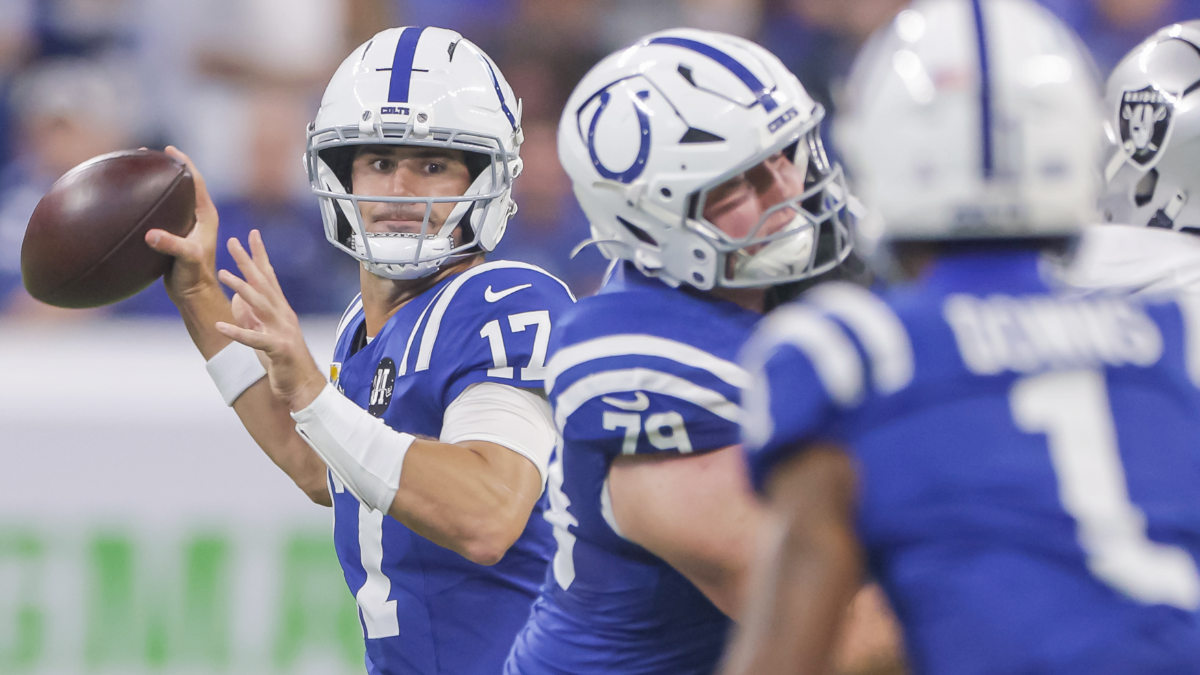
4. Indianapolis Colts place transition tag on QB Daniel Jones
Jones is the first quarterback to receive the transition tag in 30 years, since Jeff George with the Atlanta Falcons in 1996.
Again, the transition tag is cheaper than the non-exclusive or exclusive franchise tags, but it does allow Jones to seek offer sheets from other teams with the Colts having the right to match or refuse.
It also seems likely the two sides eventually work out a long-term contract, but if Jones does play on the transition tag in 2026 it will pay him $37.8 million.
The former New York Giants starter and first-round pick revived his career with the Colts in 2025, signing a one-year $14-million contract and then beating out Anthony Richardson for the starting job and passing for 3,101 yards, 19 TDs and 8 INTs plus 5 rushing TDs in 13 games.
He had the Colts off to an 8-2 start before the season started to come undone as he played through a fractured fibula in his left leg for a couple games and then sustained a torn Achilles to end his season.
The Colts were one of the better offenses in the league when Jones was healthy, so if they’re confident in his recovery from the Achilles, it makes sense to move into the future with him as their QB1.
But could a QB-desperate team make an overwhelming offer to Jones in the meantime, seizing on the opening that transition tag presents? That’ll be one of the more interesting NFL subplots until his future is resolved one way or the other.
5. Indianapolis Colts do not use franchise tag on WR Alec Pierce
With the Colts using the transition tag on Jones, they thus did not use the franchise tag to ensure they retained Pierce, the emerging star receiver coming off a career-best season.
A late second-round draft pick in 2022 out of Cincinnati, the speedy 6-foot-3 field-stretcher had his initial breakout in 2024 when he caught 37 passes for 824 yards and 7 TDs with an NFL-leading 22.3 yards per reception (jumping up from 16.1 the previous season).
It was no fluke. Pierce was even better in 2025, again leading the league in yards per catch at 21.3, which was 3.8 yards better than any other receiver with at least 35 catches. Overall, Pierce set career-highs with 47 receptions for 1,003 yards (with 6 TDs), essentially usurping Michael Pittman Jr. as the team’s top receiver over the course of the season.
There was thought that the Colts would work out a long-term deal with Jones by now and use the franchise tag on Pierce instead — or the other way around. That didn’t happen, and it seems clear Pierce is ready to truly test the market now.
He said this during an appearance on “Up & Adams” with Kay Adams on Wednesday: “At this point now, it’s like, I love Indy. I’ve loved playing there — great organization, great people in the city. Just a ton of support. I know we haven’t been as good as we could be, and I know we can be. But, yeah, at this point, I’ve kind of earned the right to explore free agency, see what’s out there. Just make a decision that’s best for my career and for my family.”
With Pickens off the market, Pierce joins the likes of Mike Evans, Tyreke Hill and Jauan Jennings as the top free agent WRs available.
6. Atlanta Falcons place non-exclusive franchise tag on TE Kyle Pitts
Next on the list is the most surprising franchise tag decision.
For most of his Falcons tenure, Pitts was considered a disappointment — or at least his production was, whether that be a product of usage or performance.
He was the No. 4 overall pick in the 2021 NFL Draft out of Florida, which immediately set expectations that he’d be one of the most prolific tight ends in the league.
Pitts came out of the gates strong with 68 catches for 1,026 yards (albeit with only 1 TD) as a rookie, but then his production went off a cliff.
He put up a 28-356-2 line in 10 games the next year, followed by 53-667-3 and 47-602-4. (Not that it matters, but any fantasy football player who drafted Pitts in that time can attest to how frustrating his usage/production were in that stretch).
Then suddenly, in a contract year, Pitts bounced back with a career-high 88 catches, totaling 928 yards and a career-best 5 TDs.
By using the franchise tag, the Falcons are committing a touch over $15 million next season to a tight end with two above-average and three fairly modest seasons in his career to this point.
Was another team truly going to break the bank with an overwhelming free agent offer for Pitts, who is more of a pass-catching TE than an all-around factor at the position? Maybe so, hard to know.
Or maybe it just makes more sense to the Falcons to pay a premium for another season to see if Pitts backs up his career-best season before investing in a long-term contract.
It’s also been suggested the Falcons could look to trade Pitts now.
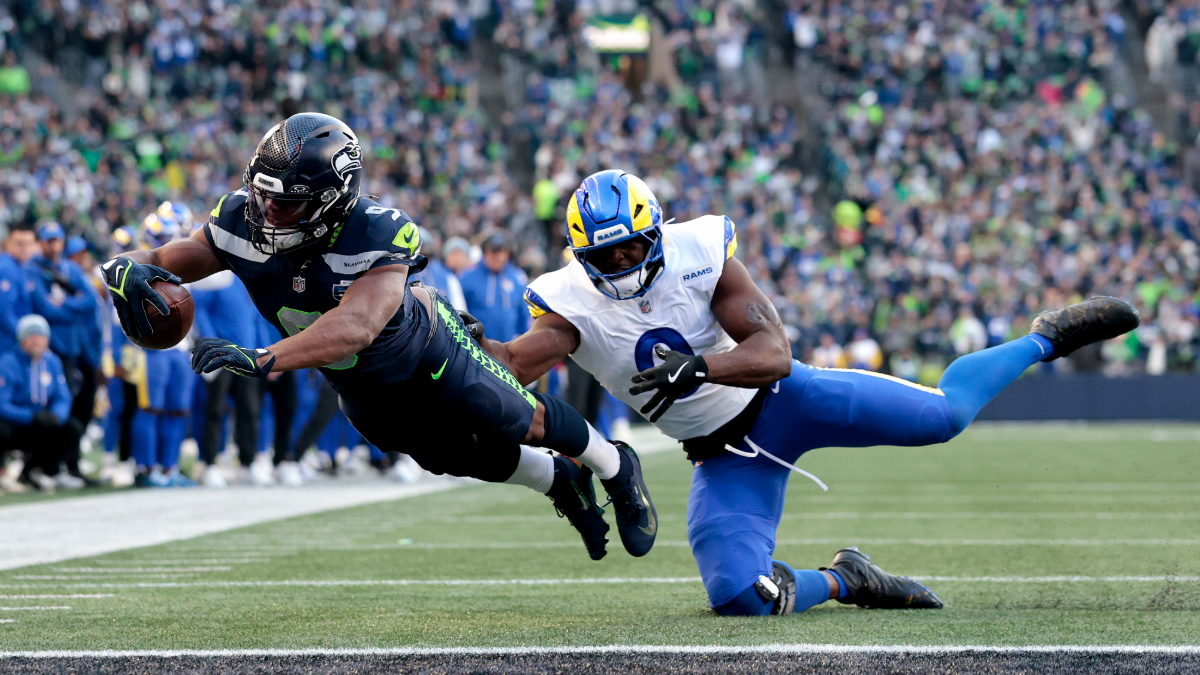
7. Seattle Seahawks do not use franchise tag on RB Kenneth Walker III
Nobody will ever mistake the NFL for a league built on loyalty.
Less than a month after earning Super Bowl MVP honors with the Seahawks, Walker is set to be a free agent as the Seahawks elected not to use the franchise tag (and pay what the Jets are paying to retain Hall).
Seattle could still try to work out a deal with Walker, but he’ll probably want to feel out his value on the free agent market — a market where he and Travis Etienne are the top running backs available
Walker’s impact with the Seahawks is indelible after he tallied 135 rushing yards and 26 receiving yards in Seattle’s 29-13 Super Bowl LX win over the New England Patriots. And his incredible postseason — 313 rushing yards and 4 TDs with 104 receiving yards in three games — couldn’t have been more timely for his free agent value.
Overall, Walker rushed for 3,555 yards, added 1,005 receiving yards and scored 31 TDs in four seasons with the Seahawks.
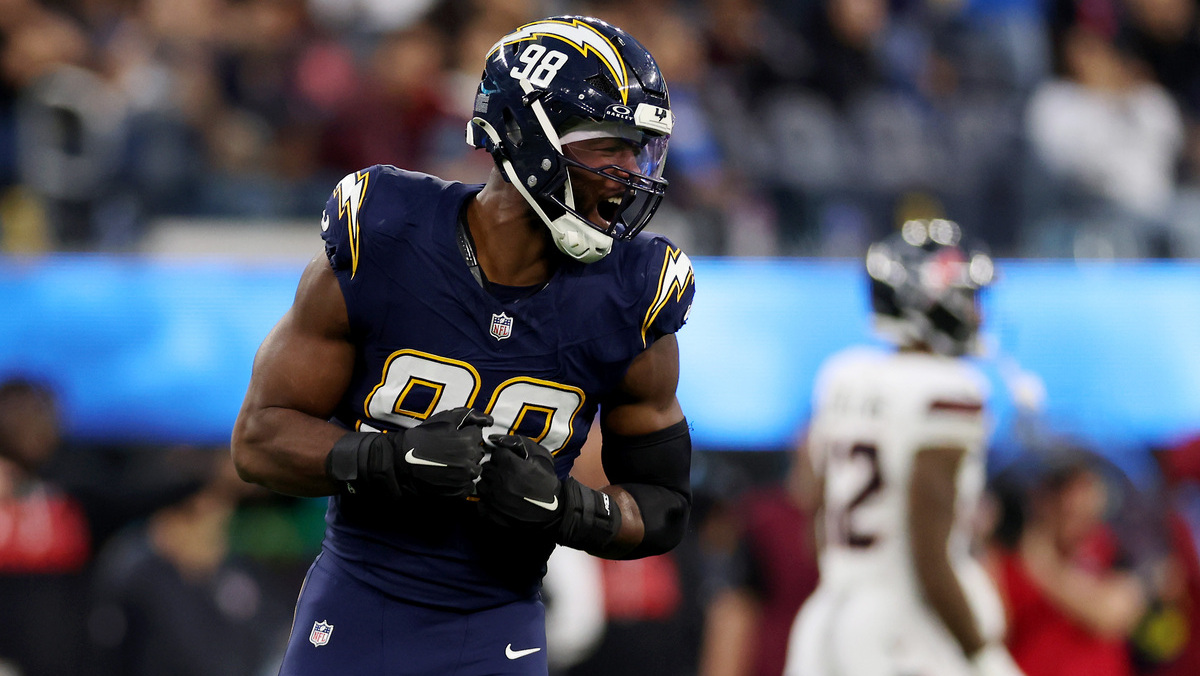
8. Los Angeles Chargers do not franchise tag EDGE Odafe Oweh
It was expected the Chargers would not use the expensive franchise tag on Oweh for what was projected to be over $27 million for 2026.
They have some depth at the position, led by emerging star Tuli Tuipulotu (team-high 13 sacks, 20 tackles for loss last season), and that’s frankly a ransom sum to pay.
The Chargers could still work out something long-term with Oweh, but expect a big market for the edge rusher, who had 7.5 sacks and 28 tackles in 12 games after coming over in a mid-season trade from the Baltimore Ravens. Even more impressive, he added 3 more sacks in the Chargers’ playoff loss to the Patriots.
Oweh had 0 sacks over the first five games of the season with the Ravens, but he did post a career-high 10 sacks there in 2024 and has 30.5 career sacks over five seasons after being drafted 31st overall out of Penn State by Baltimore in the 2021 NFL Draft.
Many have linked him as a potential target for the very same Ravens team that traded him away, as former Chargers defensive coordinator Jesse Minter is now Baltimore’s head coach.
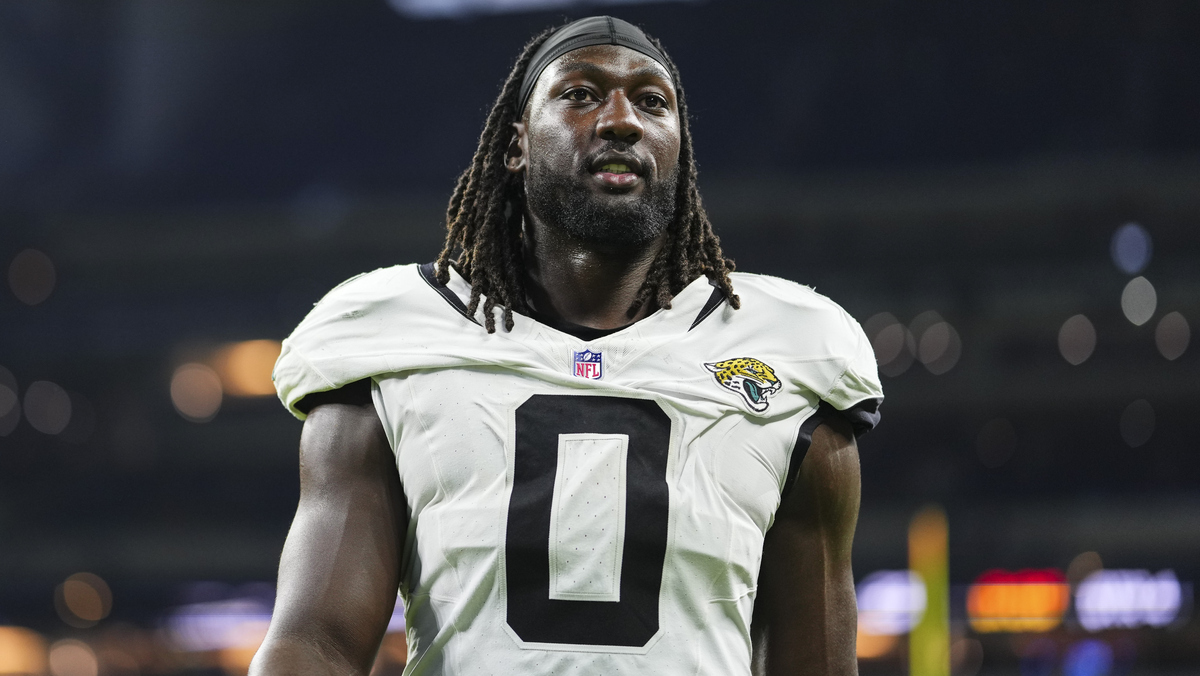
9. Jacksonville Jaguars do not franchise tag LB Devin Lloyd or RB Travis Etienne
We’ll lump these together as the Jaguars let two about-to-be-expensive stars walk into free agency, at least assuming a deal doesn’t get done the rest of this week.
The team had declined last year to pick up the fifth-year option for Lloyd, who then went on to have a career year under the new coaching staff.
Lloyd, the 27th overall pick in the 2022 NFL Draft out of Utah, earned his first Pro Bowl selection and second-team All-Pro honors after posting 81 tackles, 6 tackles for loss, 5 interceptions (including a return for TD) and 7 passes defended in 15 games.
The tackles were low for Lloyd after posting at least 113 in each of his first three seasons, but his well-rounded game and impact in coverage more than made up for that in terms of making him one of the most coveted linebackers on the market.
The Jaguars were in a tough spot after earlier declining his fifth-year option (projected to be around or a little over $13 million), though, as the franchise tag would cost them more than $26 million for Lloyd next season.
Jacksonville had also declined the fifth-year option on Etienne last year, but that made some sense in the moment as he had seemingly fallen out of favor with the previous coaching staff.
After starting his NFL career with back-to-back 1,000-yard rushing seasons with 316 and 476 receiving yards, respectively, those two years and 12 TDs in 2023, Etienne rushed for just 558 yards and 2 TDs in 2024.
But new head coach Liam Coen revived Etienne this past season as the back rushed for 1,107 yards and 7 TDs on 4.3 YPC (the second-best mark of his career) with 292 yards and 6 TDs receiving.
If Etienne and the Jags don’t salvage a new deal, he’ll be one of the most coveted FA running backs along with Walker.
10. Philadelphia Eagles do not franchise tag EDGE Jaelan Phillips
The Eagles paid a sizable price to acquire Phillips last November, sending a third-round pick to the Miami Dolphins.
The OLB/EDGE posted 2 sacks, 4 tackles for loss, 28 total tackles, 7 QB hits and a forced fumble in eight games for Philadelphia. Those aren’t overwhelming stats, but there are reports the Eagles were impressed with his fit are still interested in retaining the 6-foot-5, 266-pound Phillips who is just entering his age-27 season still with perhaps untapped upside.
He has 119 tackles and 28 sacks in 63 career games after being drafted No. 18 overall in 2021 by the Dolphins out of Miami.
Honorable Mention
Baltimore Ravens do not use franchise tag on C Tyler Linderbaum: Linderbaum deserves mention as he’ll be a highly coveted free agent, but the Ravens really had no choice here when it came to not using the franchise tag. Because the NFL lumps all offensive linemen together for calculating such figures, Linderbaum’s non-exclusive franchise tag number was projected at an astronomic $27.9 million — way above the market value for even the top centers in the league.